It’s the first question almost everyone asks, and honestly one of the hardest to answer well: how long does it take to build a villa in Dubai?
Get three contractors in a room and you might hear nine months, fourteen months, two years. Who’s right? Probably all of them — and none of them. Because how long it takes to build a villa in Dubai depends on your design, your plot, your decisiveness, and how smoothly the approvals go. I’ve watched a compact villa in Al Barsha go from paper to keys in eleven months, and a “simple” project in the Ranches stretch past two years because the owners redesigned the kitchen four times.
But here’s what doesn’t change: every villa project in Dubai follows the same sequence of phases. Once you understand them, you can plan like someone who’s done this before. Let me walk you through each one — with the honest durations, and the stories behind them.
Design and Paperwork: The Months Before the First Shovel
Nobody likes hearing that months will pass before anything physical happens. But the villa projects that finish fastest are almost always the ones that started slowest — on paper.
Phase 1: Design and planning (6–12 weeks). You sit down with an architect and a structural engineer and turn “we want four bedrooms and a majlis” into real drawings — floor plans, elevations, sections, 3D views. For a typical family villa of 4,000–7,000 square feet, six to twelve weeks is realistic. The honest truth about this phase: the clients who decide quickly move quickly. Every round of redesign adds weeks. I had a client once — lovely family, terrible deciders — who changed the staircase position three times. Each change cost us two weeks of redraws. It’s fine to be thoughtful; just know that indecision has a price tag measured in time.
One tip that saves real headaches: lock in your material palette now. Tiles, sanitary ware, kitchen finishes. Choosing them during design means no awkward pauses mid-construction while everyone waits on a shipment from Italy. If you’re weighing budgets alongside designs, our 2026 villa construction cost breakdown will give you a realistic sense of where the money goes before you fall in love with a marble you can’t afford.
Phase 2: Permits and approvals (4–10 weeks). Nothing gets built in Dubai without paperwork, and there’s more of it than most first-timers expect. Dubai Municipality is the main gatekeeper for building permits. Then, depending on your plot, you may need NOCs from the master developer — Emaar, Nakheel, Dubai Hills, they all have their own process — plus DEWA clearances for power and water, and Dubai Civil Defence sign-off on fire safety. Four to ten weeks is realistic if every document is in order. When does it drag? When drawings bounce back for corrections, or when you’re waiting on three different authorities at once. This is where an experienced consultant earns their fee — someone who knows the submission system can shave weeks off. And whatever you do, don’t let anyone suggest skipping permits. I learned that lesson watching a renovation collapse under the weight of someone else’s unpermitted extension.

From the Ground Up: Foundations, Structure, and Blockwork
This is when the dust starts flying and the neighbours start watching. It’s also when the project’s fate gets quietly decided.
Phase 3: Site preparation and foundation (6–10 weeks). The plot gets cleared, levelled, and fenced off. Then excavation, then the foundation — footings, raft slab, or piling, depending on the soil report. A quick word on Dubai soil: it’s sandy, which surprises no one, but a proper geotechnical investigation isn’t optional — it’s how the engineer decides what your house actually stands on. Near the coast or on reclaimed land, piling is common and adds time. And don’t let anyone rush the waterproofing. It’s buried, invisible, and absolutely critical. I once opened up a fifteen-year-old villa and found the waterproofing had been skipped entirely — the repair cost more than the original villa’s foundation. Foundations are where honesty is cheapest to practice and most expensive to fake.
Phase 4: Structure and blockwork (12–18 weeks). The satisfying part — concrete columns, beams, and slabs going up floor by floor, then block walls closing in the envelope. For a two-storey villa, twelve to eighteen weeks. Concrete needs its curing time between pours; there’s no shortcut that doesn’t cost you later. In summer, good contractors pour in the early mornings to beat the heat. I know this from experience — the summer we poured concrete at 50 degrees taught me that respecting the heat is the whole game. Rushed concrete work is behind so many of the structural defects we see years later. Patience here is structural, literally.
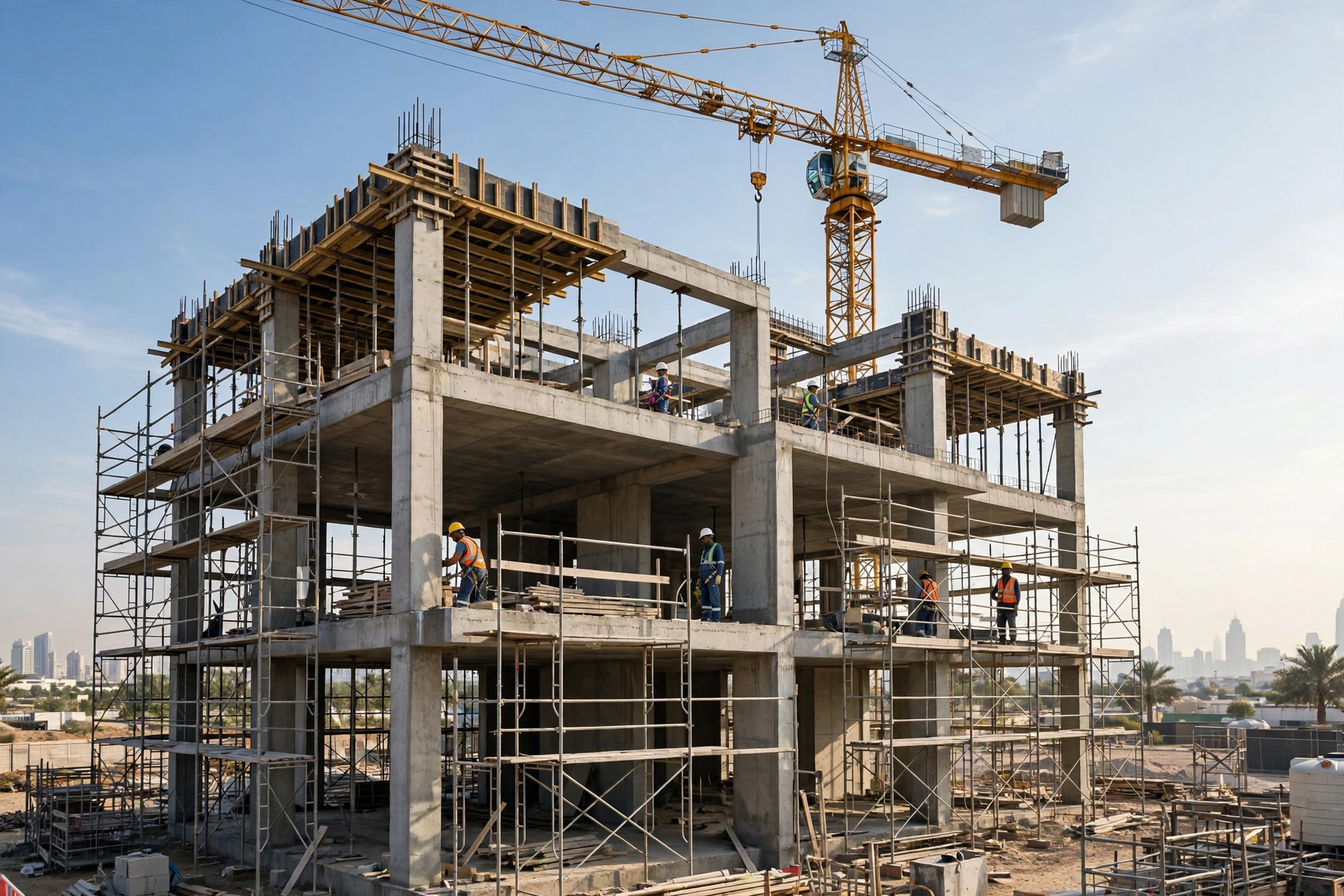
The Invisible Engine: MEP and Finishing Works

From the street, these phases look like nothing much is happening. Inside the walls, everything is happening. This is where villas are made or quietly ruined.
Phase 5: MEP works (8–14 weeks, overlapping). Mechanical, electrical, plumbing. In Dubai terms: the AC system (non-negotiable in this climate), all electrical wiring and distribution boards, plumbing and drainage, and increasingly the smart-home backbone. This overlaps with the tail end of the structure and runs eight to fourteen weeks total. The classic failure here isn’t bad workmanship — it’s bad coordination. The AC duct wants to go exactly where the plumbing line already went. Good contractors sequence this like choreography and test every system before the walls close up. Ask yours how they coordinate trades. The answer tells you a lot.
Phase 6: Finishing works (12–20 weeks). And now the transformation: concrete shell becomes home. Plastering, tiling, marble floors, false ceilings, paint, joinery, kitchens, wardrobes, sanitary fittings, façade work. Almost always the longest single phase — twelve to twenty weeks, more if you’re going high-end. Imported stone with a twelve-week lead time, bespoke joinery, intricate façade details: they all add up. Nearly every finishing complaint we hear — the uneven paint, the loose tile, the dripping tap — traces back to this phase being rushed. Finishing done properly can’t be hurried. It just can’t. This is also the phase where your earlier material decisions pay off or punish you; the client who locked their palette during design sails through, while the one choosing tiles in month nine stalls the whole site.
The Final Stretch: Testing, Snagging, and Handover
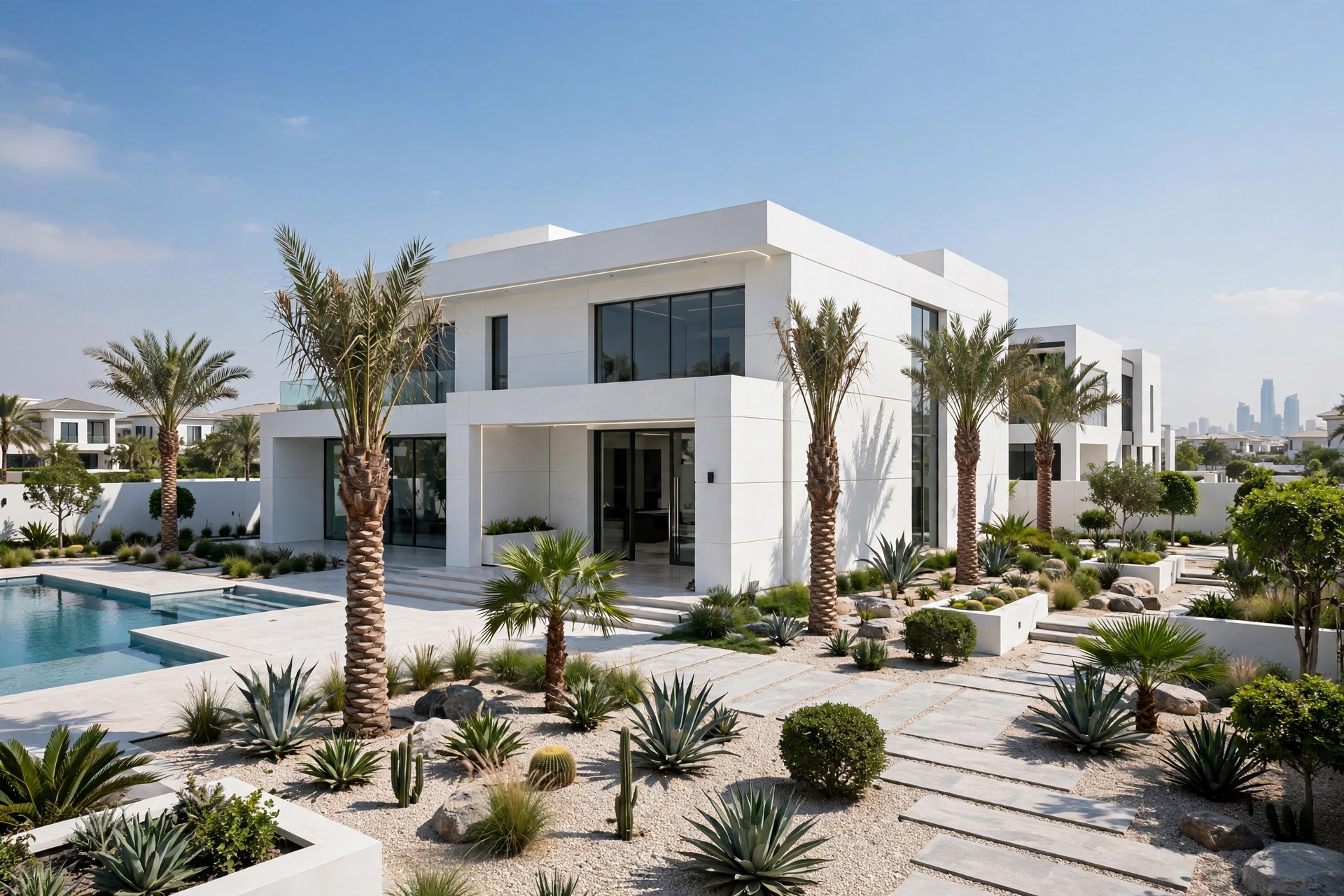
Phase 7: External works, testing, and handover (4–8 weeks). The home stretch. Pool, landscaping, boundary walls, gates, driveway. Every system gets tested and commissioned — electrical, plumbing, AC. Then the final inspections: Dubai Municipality and the relevant authorities walk through before issuing the completion certificate.
Don’t skip snagging. That’s the formal process of listing every minor defect before you accept the villa, and it’s your last moment of real leverage.
How Long to Build a Villa in Dubai: The Honest Total

Add it all up and a typical custom villa in Dubai runs 12 to 18 months, design to handover. Closer to twelve if the design is straightforward, the plot is clear, and you make decisions promptly. Pushing eighteen — or beyond — if it’s large, complex, or finished to a very high spec.
When timelines slip, and they often do, it’s usually one of four culprits: design changes mid-construction, materials arriving late, approvals dragging, or a contractor stretched too thin across too many sites. The antidote is unglamorous but effective: a contractor with a clear written programme of works, and regular site meetings where progress gets measured, not just discussed. I keep a framed photo in my office from a handover in Al Barsha — eleven months, door to door, not a single week lost. Speed like that isn’t luck; it’s the compound interest of a thousand small on-time decisions.
Building a villa is a big commitment, no question. But with realistic expectations and the right team, it can genuinely be enjoyable — there’s nothing quite like watching your own home rise out of the ground. Thinking about taking the plunge? Talk to our team about your plot and we’ll give you a straight, phase-by-phase timeline for your specific plans.
Frequently Asked Questions

What is the average time to build a villa in Dubai?
For a typical custom villa, 12 to 18 months from design to handover. Straightforward designs on clear plots with decisive clients finish closer to twelve months; large, complex, or high-spec villas can push past eighteen. Anyone promising nine months for a full custom build deserves some very pointed questions.
Which phase of villa construction takes the longest?
Finishing works — typically 12 to 20 weeks. Plastering, tiling, joinery, kitchens, and façade work are labour-intensive and unforgiving of rushing. Imported materials with long lead times can stretch this phase further, which is why locking your material palette during the design stage matters so much.
How long do Dubai Municipality approvals take for a villa?
Four to ten weeks if all documents are in order, covering the building permit, master developer NOCs, DEWA clearances, and Civil Defence approvals. Drawings that bounce back for corrections, or plots in communities with extra requirements, can extend this. An experienced consultant who knows the submission system is worth their fee here.
Can a villa be built faster in winter than in summer?
Marginally, yes. Summer heat forces night or early-morning concrete pours and slows certain activities, but a well-run site doesn’t stop for summer — it adapts. The bigger seasonal factor is Ramadan, when working hours shift. A realistic programme accounts for all of this upfront instead of discovering it in August.
What causes most delays in Dubai villa projects?
The four usual suspects: design changes after construction starts, late material deliveries, dragging approvals, and contractors spread too thin across multiple sites. The first is controlled by freezing the design early; the rest are controlled by hiring a builder with a written programme of works and a track record of finishing on time.
When should I start if I want to move in by a specific date?
Work backwards and add a buffer: take your target move-in date, subtract 12–18 months for design and construction, then subtract another two months as contingency. If you need to be in by next December, you should be talking to an architect now, not in six months. Hope is not a programme of works.