Every contractor who has survived a villa renovation Dubai project has one job he still replays at 2 a.m. This is mine.
It was a Tuesday in late August. The kind of Dubai August where the air hits you like a hot towel the second you step out of the car. The villa sat at the end of a quiet street in Arabian Ranches — fifteen years old, white walls, polite landscaping, bougainvillea climbing the boundary wall.
The owner, Khalid, met us at the door with karak chai in small paper cups and a smile that said he had already decided to trust us. He walked us through the house like a man touring a plan, not a building: new kitchen with an island, both bathrooms gutted and redone, all flooring replaced, new wardrobes, full repaint — and “just a small extension at the back for the majlis,” he added, like a minor footnote.
“Six weeks,” he said. “My family flies back from London in six weeks. Kids start school. Can you do it?”
My foreman Imran and I looked at each other. Six weeks, in August — the author should have said no, because “we will manage” are famous last words. But the chai was good and Khalid’s handshake was firm. We said yes.
The Six-Week Promise — and the Drainage Line Nobody Drew
Here’s the thing nobody tells you about that first meeting: it feels like the whole job. You walk through, you nod, you measure, you make the list, you drink the chai, and in your head the project is already half done. Kitchen, two bathrooms, flooring, wardrobes, paint, majlis extension. Imran was already sketching the kitchen layout on his clipboard while Khalid described the island he wanted — big enough for the kids to do homework on while dinner cooked.
We scheduled demolition for the following Sunday and ordered materials. Imran told the men it would be a tight job, and they nodded the way men nod when they hear “tight” and silently add two weeks in their heads. Everyone on site knew. Everyone except Khalid.
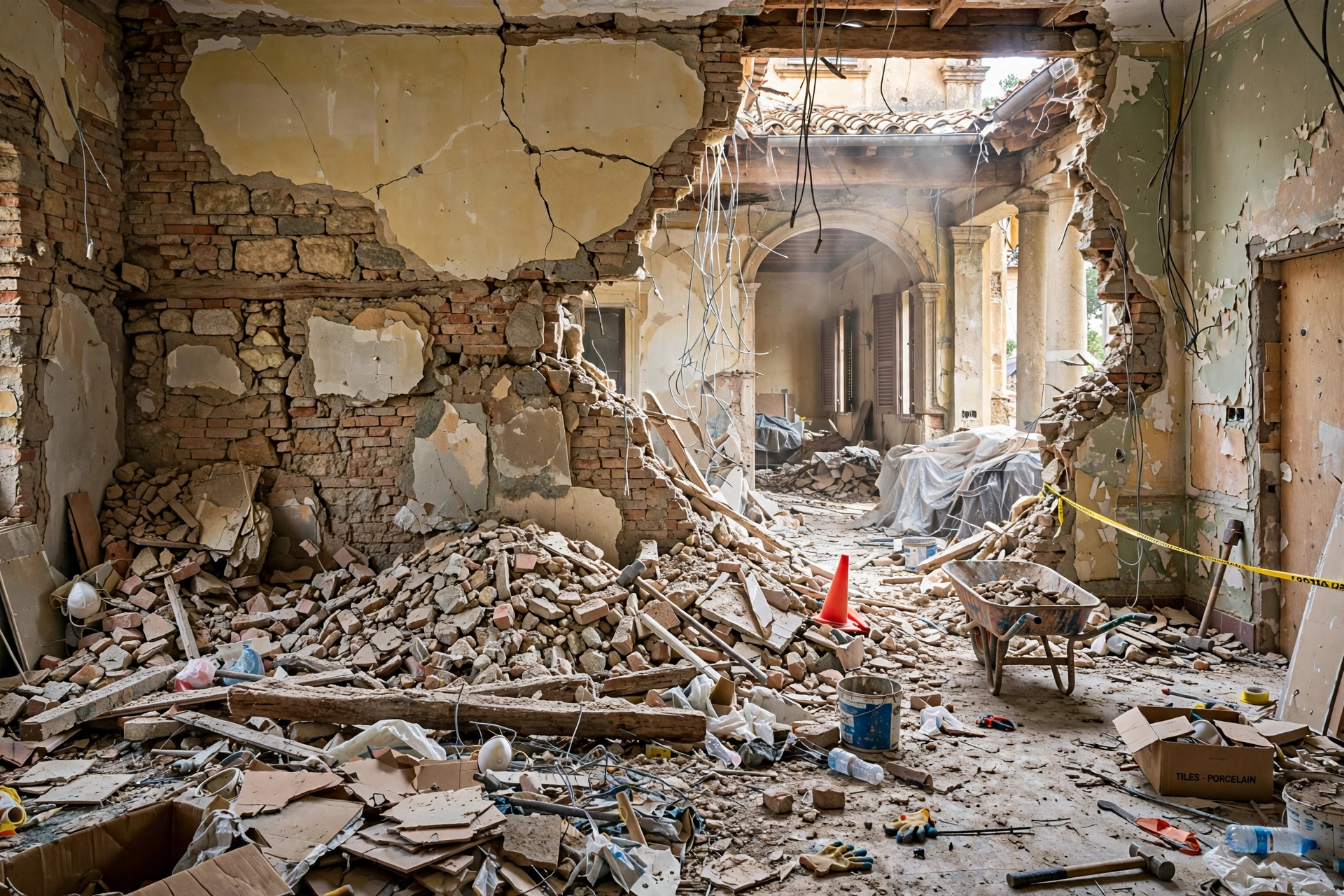
Demolition day. There’s a particular sound a sledgehammer makes on fifteen-year-old Dubai villa concrete — a dull, confident thud that says “I was built to survive, not to be replaced.” The kitchen floor came up in chunks. Under it, Imran found the first surprise: a drainage line running diagonally across the kitchen floor, exactly where the island was supposed to go.
“Bhai, yeh line to drawing mein thi hi nahi,” Imran called out, wiping sweat from his forehead. The line wasn’t on any plan. It was old, corroded in places, and carried wastewater from the upstairs bathrooms. You cannot build an island over a corroded live drainage line.
So the line had to move — rerouted around the kitchen perimeter, which meant cutting the slab, new waterproofing, and drawings for the municipality. A cosmetic kitchen job had just grown its first structural tooth. We called Khalid in London, and he said, “Do whatever is right. Just keep the timeline.” Famous last words, second edition.
Week Two: Termites and the Wall That Wasn’t Legal
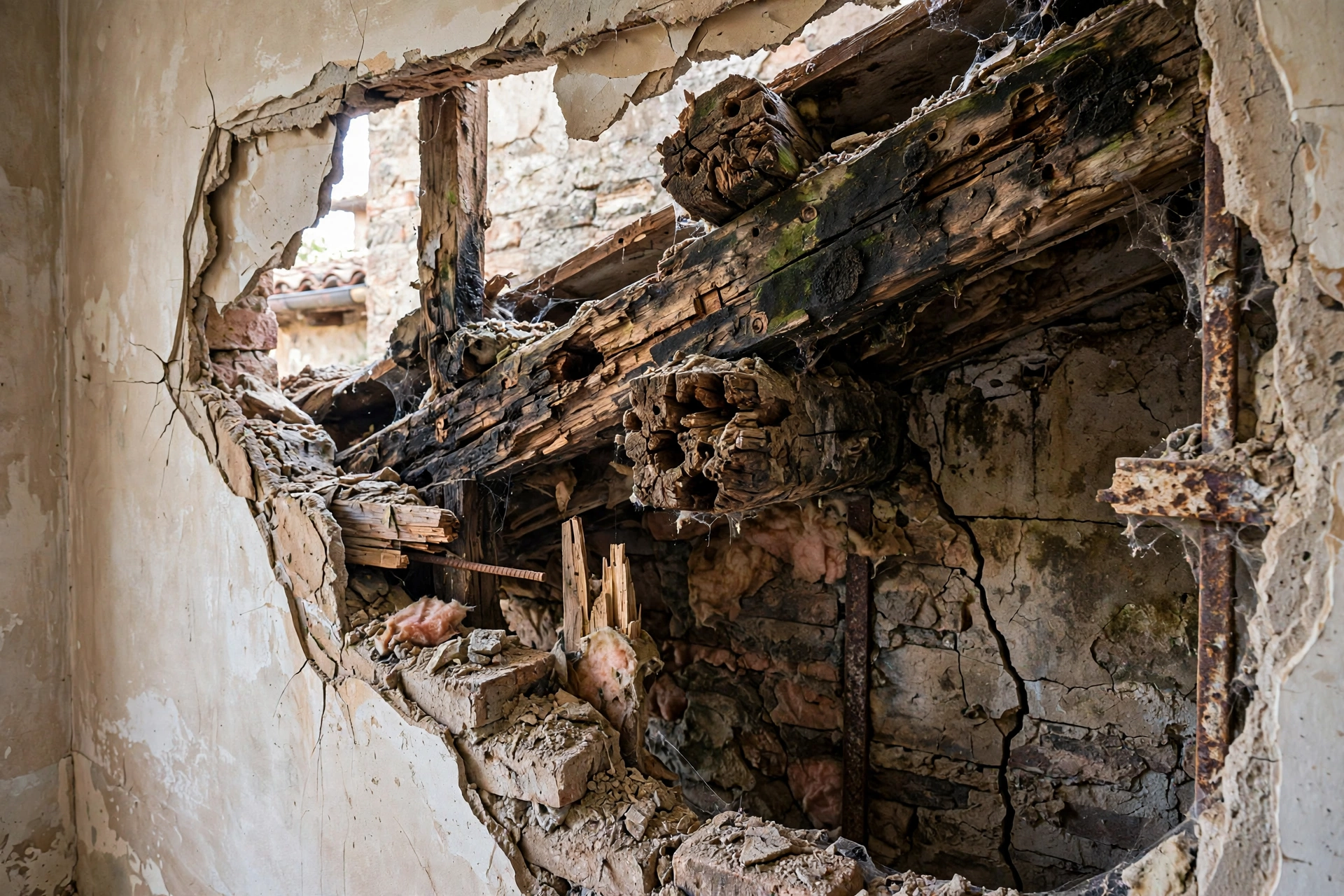
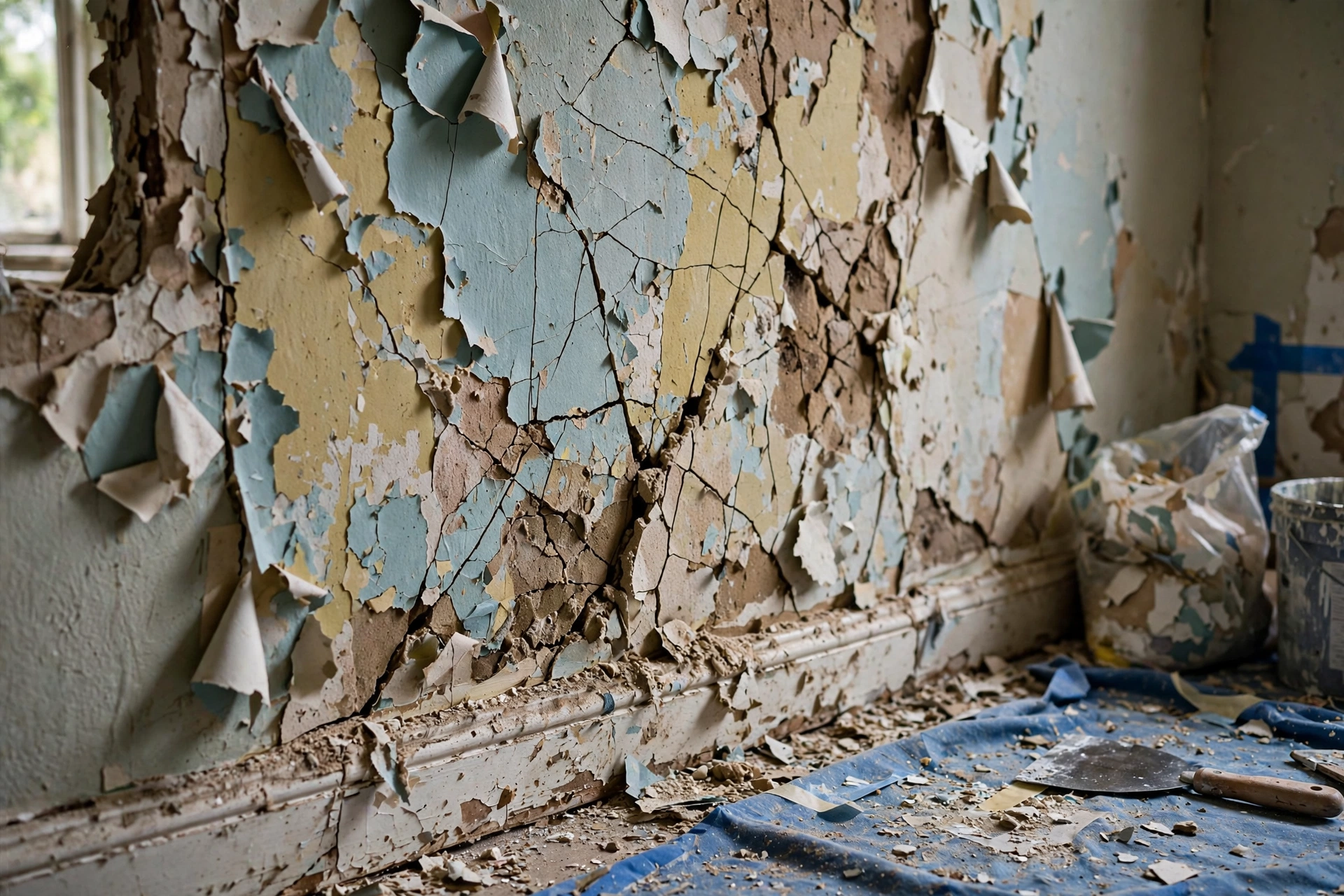
If week one was a warning, week two was the punch. We opened up the master bathroom to start the gutting, and Imran went quiet in a way I have learned to fear. Behind the tiles, the wooden framing was rotted black. He pressed a screwdriver into it and it sank in like the wood was made of stale cake.
“Bhai, yeh to poora khokhla hai,” he said. Hollow. Termites. In a fifteen-year-old villa, moisture had been seeping behind those tiles for years, and the termites had been feasting undisturbed. The framing had to come out — all of it, and the guest bathroom shared that wall, so it went too. Then a licensed termite treatment for the whole ground floor, because you never treat one corner when termites have been living rent-free.
Then the extension. Imran and I walked around the back with a measuring tape and the old drawings Khalid had dug out of a drawer. The previous owner had already built a small extension there — no permit, no foundation, a concrete box sitting on compacted sand with a prayer. The municipality drawings confirmed it: no record of that structure anywhere.
In Dubai, you don’t touch an unpermitted extension by pretending it’s legal — the municipality will find out, and the fine lands on the current owner’s head. We applied for a proper permit, demolished the illegal box, and rebuilt the majlis the legal way. The six-week cosmetic renovation was officially gone; what we had was structural repair, and my math said ten weeks, minimum.
The Honest Conversation Every villa renovation Dubai Client Deserves
Week three. The villa was a dust bowl — every surface grey, the air tasting like cement, the crew working with wet towels around their necks. Khalid had flown back early, and he stood in the middle of his gutted kitchen in a crisp white kandura, slowly turning in a circle.
“My family lands in nineteen days,” he said. Not angry. Just tired.
That was the moment. I could have smiled, said “inshallah, we’ll try,” and let the disaster arrive on moving day with no kitchen and a family sleeping in a hotel. Instead I asked him to sit down. Imran brought karak from the flask — the same small paper cups as the first day — and I laid it all out: the drainage, the termites, the illegal extension, the permit timeline.
“Khalid bhai, I can give you a villa that looks finished in nineteen days, or a villa that is finished in ten weeks. I cannot give you both.”
He was quiet for a long time. Then he laughed — one of those laughs that isn’t really a laugh — and said, “You’re the first contractor who ever told me bad news before I found it myself.” He moved the family flights by ten days, pushed the kids’ school start back a week, and called it “the most expensive karak of my life.” If you’re comparing contractors, it’s worth reading a solid guide to the essential checks before hiring a construction company in Dubai — because the contractor who tells you the uncomfortable truth on day twenty-one is the one you want on day one.
Ten Weeks, Not Six: Rebuilding It Right
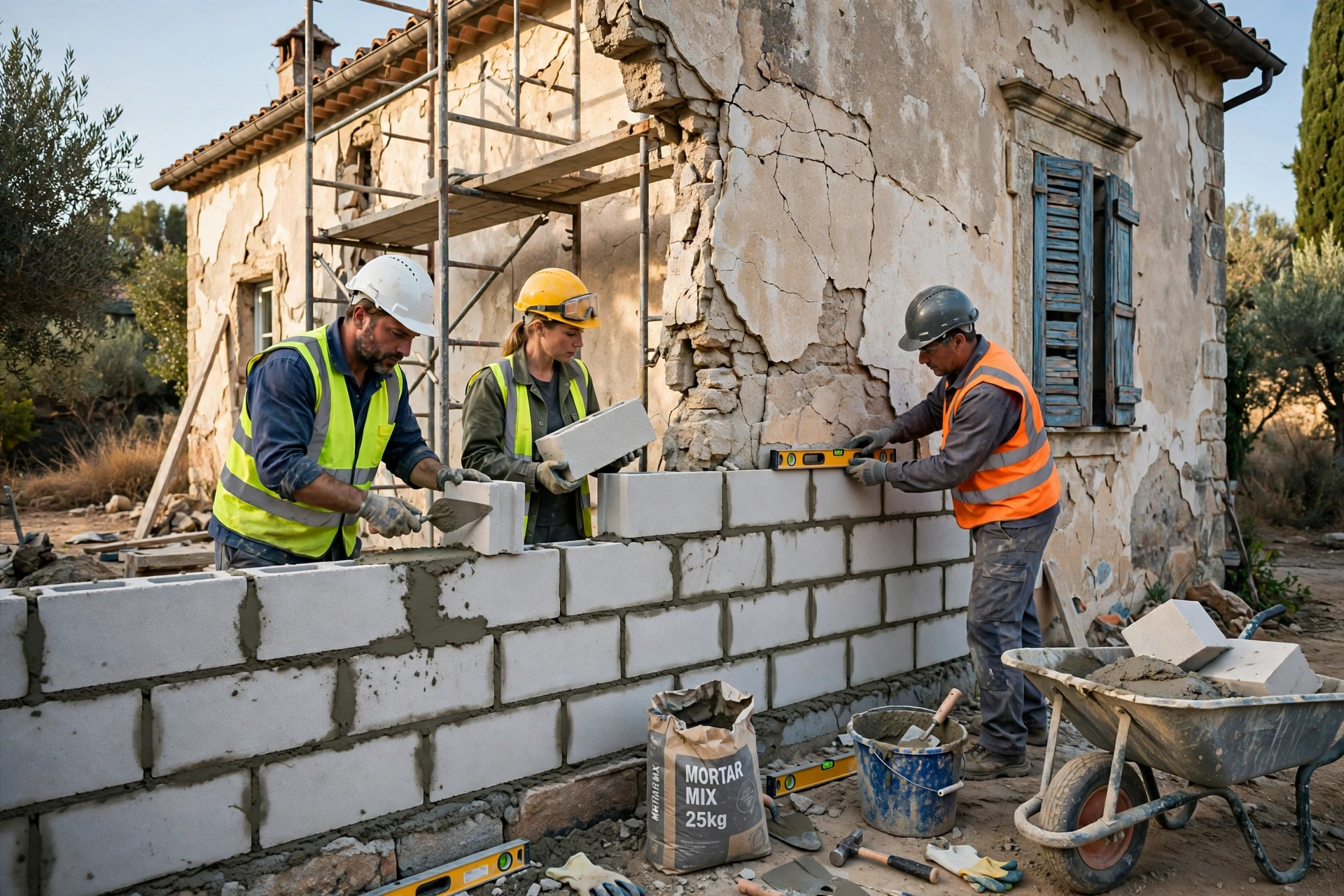
With the pressure valve released, the team did the best work of their careers. Imran ran the site like a general. The drainage reroute went in cleanly — new line, proper fall, fresh waterproofing, inspected and signed off. The termite treatment came with a certificate, and the majlis extension rose the legal way: permit approved, proper foundation, the works.
I’ll never forget the day the inspector came. Imran had the drawings laminated and laid out on a folding table in the dust, and the inspector actually smiled. “Good paperwork,” he said. In this business, that is high praise.
August in Dubai does not forgive slow workers. The crew started at six to beat the worst of the heat, broke during the midday hours like the law requires, and worked into the evenings under floodlights. Khalid showed up most days with karak for the whole team and knew every worker’s name by week six. The finishes went in during weeks eight and nine — the island he’d dreamed about, bathrooms with properly waterproofed framing, flooring on a slab that was actually sound.
Handover Day — and What It Taught Me
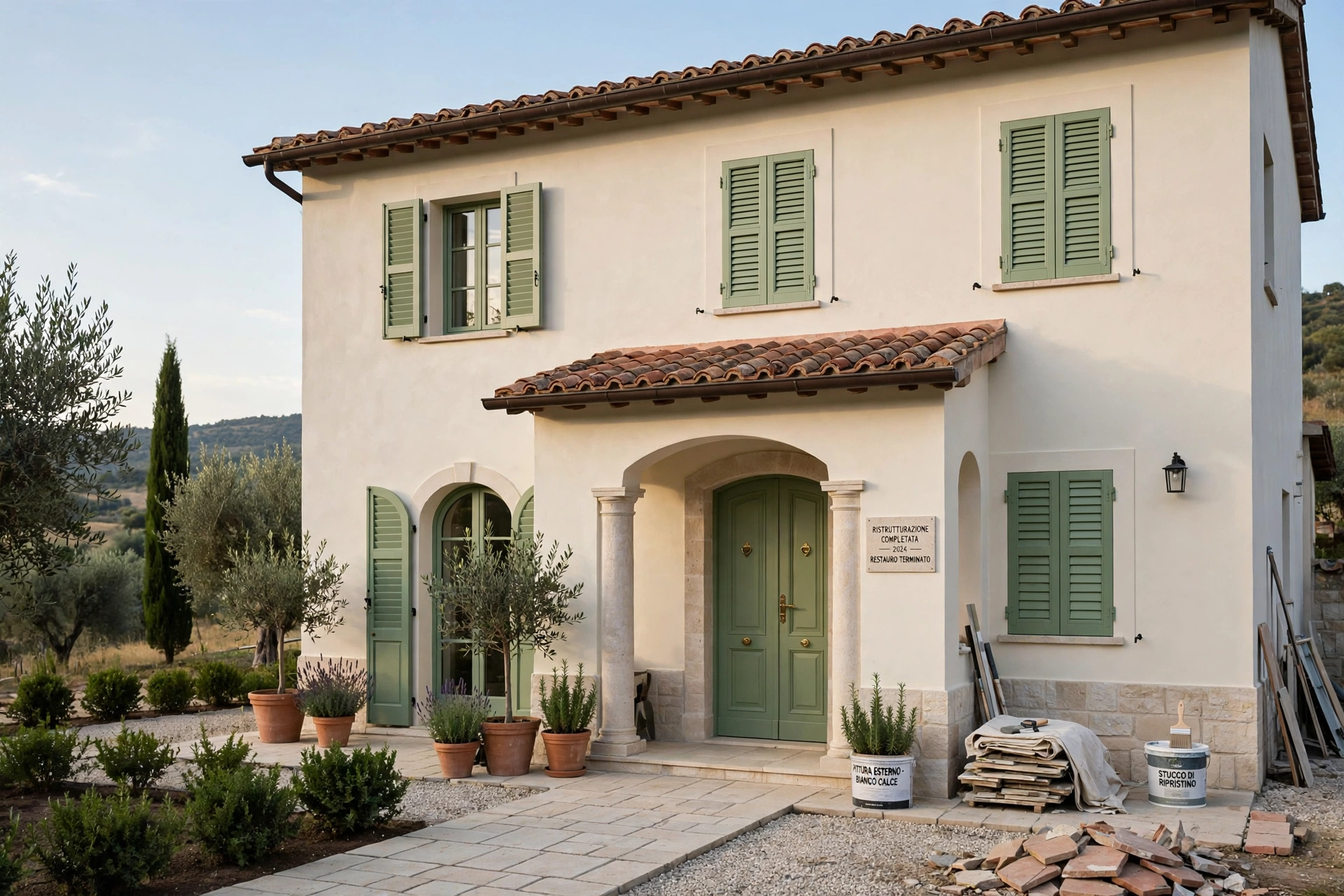
Ten weeks after that first Tuesday, Khalid’s family walked through the front door. His two kids ran straight to the kitchen island and climbed onto the stools like they’d been waiting their whole lives for it. His wife opened every wardrobe door one by one, smiling wider each time. And Khalid just stood in the majlis — the room that had nearly broken us. “Worth the wait,” he finally said. Then he made karak for us in his own new kitchen. That cup tasted better than the first one.
I’ve done dozens of villa renovations since, and whenever someone asks why a villa renovation Dubai project needs honest planning, I think of that dust-covered kandura and the termite-eaten framing. If you’re starting your own project, a practical home renovation guide for Dubai — where to start and what to avoid will save you from the mistakes we see every month.
Here’s what Khalid’s villa taught me. First: add thirty percent to any timeline quoted for a villa over ten years old. Not because contractors lie — because fifteen-year-old villas hide things: drainage lines, termite damage, unpermitted work from previous owners. The villa doesn’t care about your moving date.
Second: keep ten to fifteen percent of your budget in an untouched contingency. Khalid’s drainage reroute, termite treatment, and extension rebuild added nearly twelve percent to the original quote — and because he’d kept a reserve, there was no panic and no cutting corners on finishes. A detailed 2026 cost breakdown for villa construction in Dubai helps you set that budget realistically before you sign anything.
Third: pull the municipality drawings before you sign a contract, not after demolition starts. We’d have known about the unpermitted extension before the first hammer swung. It costs almost nothing to check, and it can save you weeks.
Fourth: never build over a live problem to protect a deadline. A cosmetic finish over a corroded drainage line or termite-eaten framing isn’t a renovation — it’s a time bomb with nice tiles. The nineteen-day “finished” villa would have started leaking within a year, and Khalid would have paid twice.
Fifth — the one I tell every client now: hire the contractor who tells you the uncomfortable truth. The one who says “ten weeks, not six” while holding karak in a paper cup. Anyone can promise a date; few will risk the job to protect your house. If you want a team that works that way, take a look at our renovation and construction services — and ask us the hard questions first. We like those.
Frequently Asked Questions
How long does a villa renovation in Dubai usually take?
A cosmetic refresh of a newer villa can take six to eight weeks, but a full renovation of a villa over ten years old usually needs ten to sixteen weeks once walls and floors are opened up. Hidden issues like old plumbing, termite damage, or unpermitted structures can add several weeks.
Do I need a municipality permit for my villa renovation?
Yes for anything structural: extensions, layout changes, drainage or plumbing reroutes, and facade work all need Dubai Municipality approval. Purely cosmetic work like painting or flooring replacement usually doesn’t — but confirm the permit scope before demolition begins.
What hidden problems are most common in older Dubai villas?
The big three are corroded or undocumented drainage lines, termite damage behind bathroom and kitchen walls, and unpermitted extensions built by previous owners. A pre-renovation inspection and a check of municipality drawings catch most of them early.
How much contingency budget should I keep?
Keep ten to fifteen percent of your total budget in reserve for surprises found after demolition. On older villas, hidden structural or pest issues can easily consume that buffer.
Can we live in the villa during the renovation?
For a full renovation with demolition and plumbing work, it’s far better to move out — the dust, noise, and water shutoffs make daily life miserable and slow the crew down. For light cosmetic work in one or two rooms, living in is possible if the contractor seals off the work zones properly.
How do I choose the right contractor for a villa renovation in Dubai?
Choose a licensed contractor with verifiable villa experience, solid municipality permit knowledge, and references you can actually visit. Be wary of anyone who promises an unusually fast timeline without inspecting the property first.