49.8 degrees at four in the afternoon — and our concrete was still two hours away. Welcome to pouring concrete in Dubai summer.
That was last August, on a villa plot in JVC, and I remember thinking what every builder in Dubai thinks at least once a season: this city was not designed for afternoons. Your boots stick to the sand. The site cabin air conditioner hums like a tired animal.
The clients were a young couple, recently moved back from London with two kids and a phone full of Pinterest boards. They wanted the slab poured before September, so the blockwork could rise while the children settled into their new school. Reasonable in March. In August, it is asking for a marathon at noon.
But we had given our word, and in this business your word is the only thing heavier than concrete. So we poured at fifty degrees. There is a right way to do this and a long list of wrong ways, and the wrong ways end with cracks you can fit a coin into. This is the story of how we did it right — the night pour, the ice, the 1:30 a.m. karak.
Concrete Has a Memory
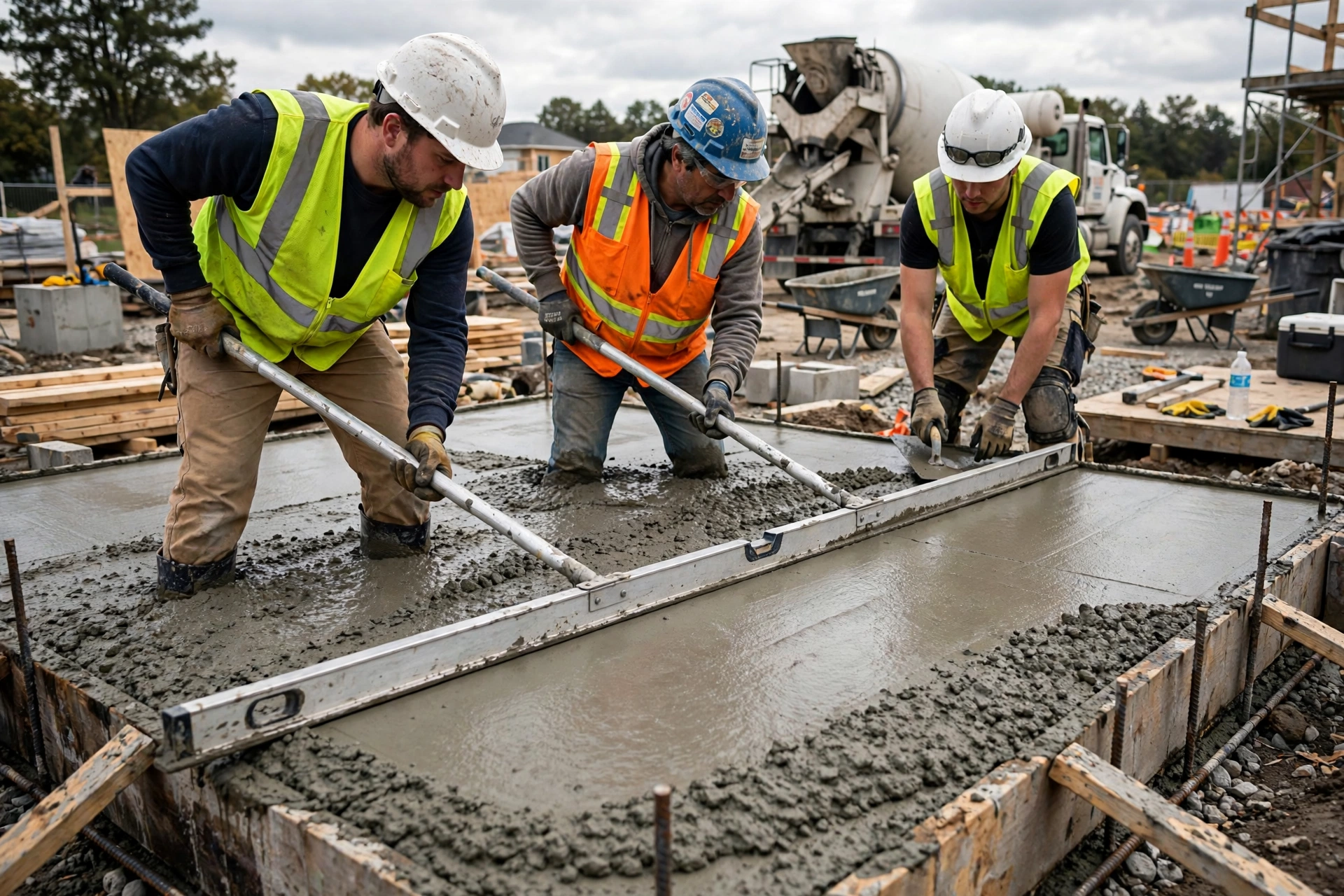
Here is the thing nobody tells you until you have paid for the lesson: concrete remembers everything you do to it in the first few hours. Every shortcut, every skipped check, every minute baking in a mixer drum under a white sun gets written into its bones.
The science is straightforward. Concrete hardens through hydration — water reacting with cement, building the crystal structure that gives a slab its strength. Heat accelerates that reaction. At fifty degrees, the surface can set while the inside is still moving, and the slab tears itself apart trying to shrink at two different speeds. The result is plastic shrinkage cracking: jagged lines opening up within hours.
I learned this the hard way years ago on a driveway in Al Barsha. I was younger, the budget was thin, and I told myself a midday pour would be fine if we simply worked fast. It was not fine. Two days later I stood staring at a lightning-bolt crack running the full length of the driveway, wide enough to slide a coin into. I replaced it at my own cost. That slab remains the most expensive classroom I ever attended. I later wrote down the full story of that cracked villa wall so nobody else pays for the same mistake twice.
Concrete Pouring in Dubai Summer: The Night Pour Playbook
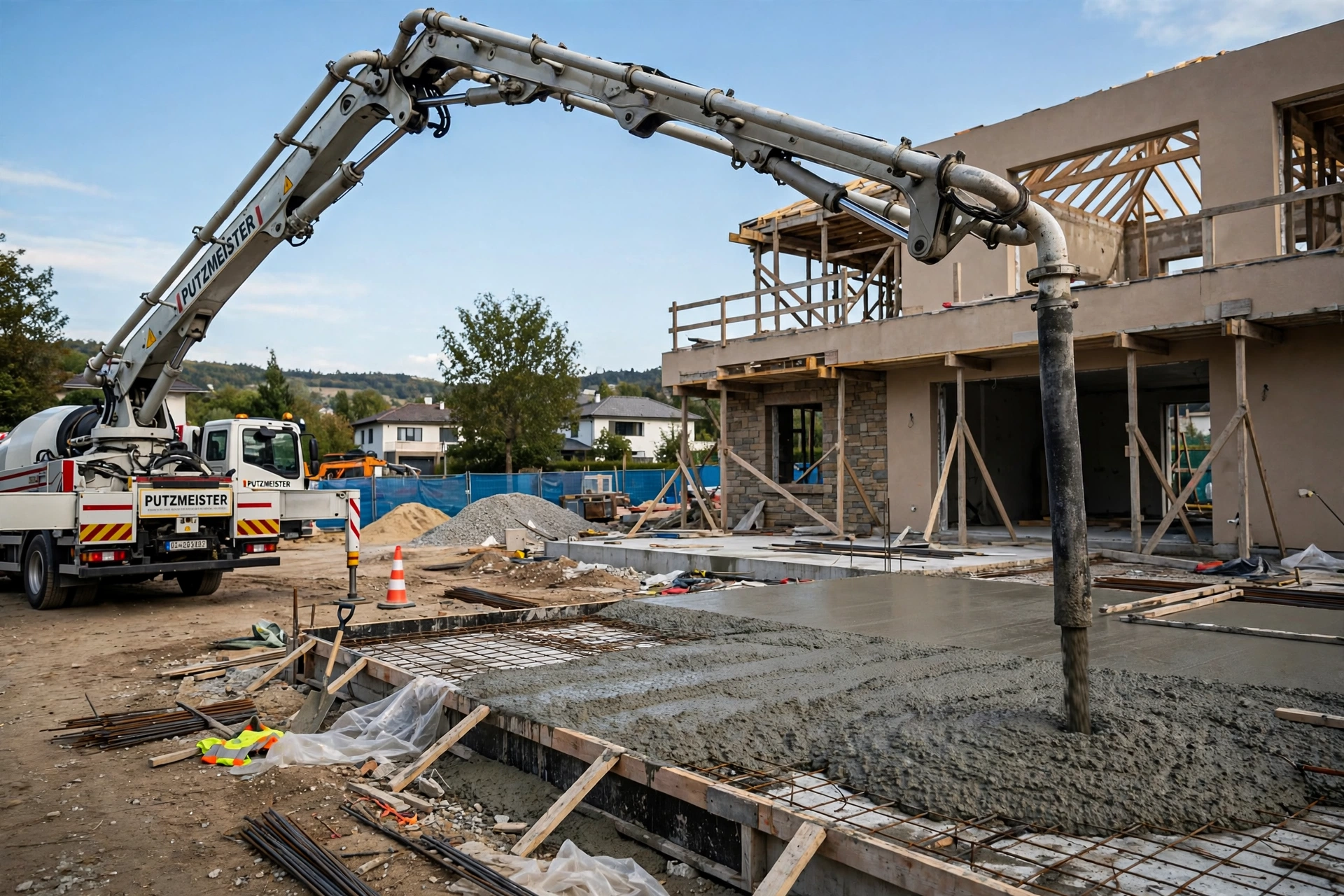
When the couple called from their new flat in JVC that July, the wife asked the question every client asks: “Are you sure this is safe to do in August?” I told her the truth — it is safe if you respect the heat, and dangerous if you fight it. We would not pour at noon. We would pour at night, when Dubai finally exhales. That single decision is what separates successful concrete pouring in Dubai summer from expensive failure.
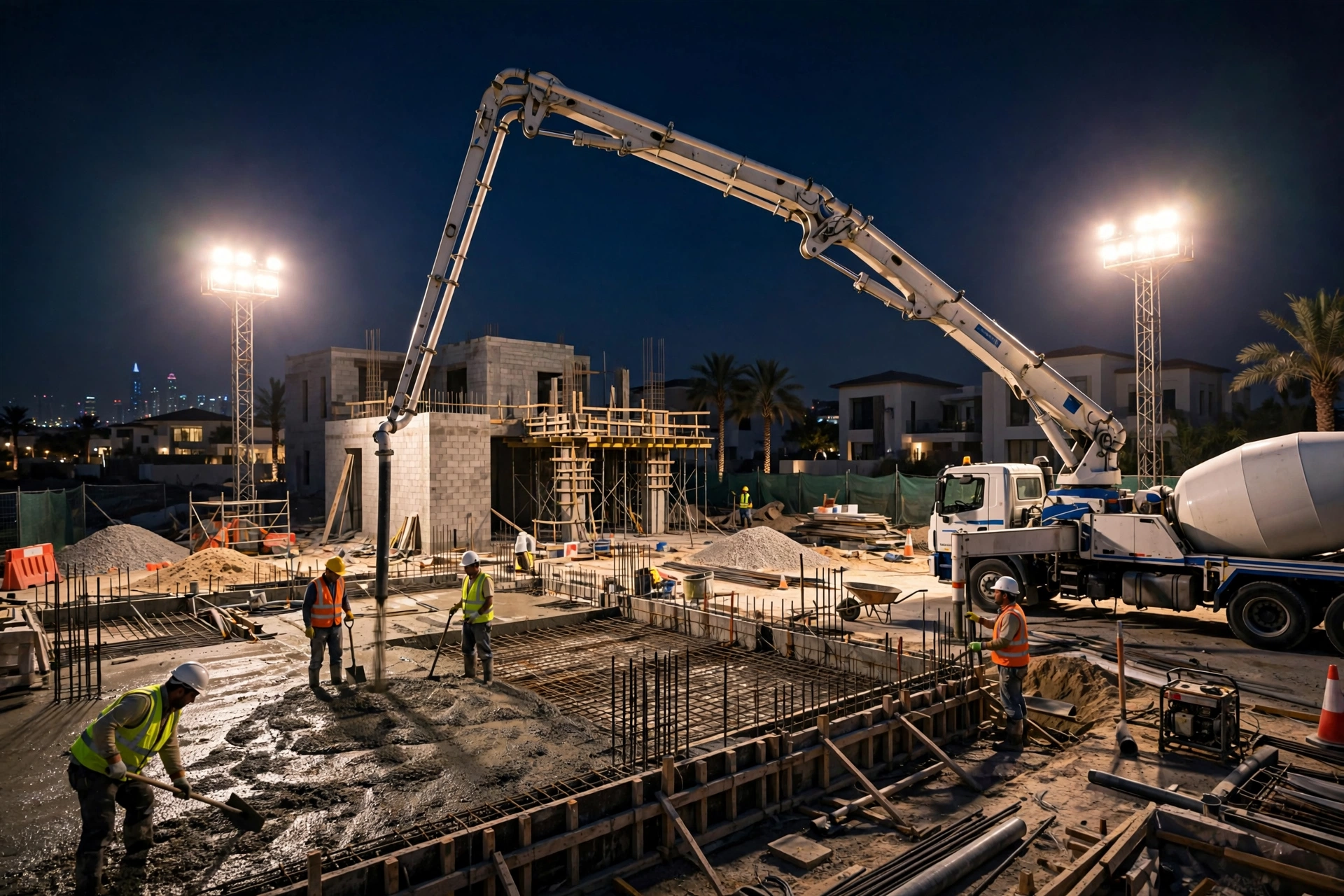
A night pour is not just “pouring later.” We scheduled six trucks from our batch plant in Al Quoz for an 11 p.m. start, staggered twenty minutes apart so no truck ever waited long on site. A mixer drum turning under floodlights at midnight is far kinder to concrete than the same drum at 2 p.m. — temperatures drop ten to fifteen degrees and evaporation slows to something manageable.
By nine, Imran — our site engineer — was walking the grid with a torch. “Boss, one board on grid C is loose,” he called out. “Five minutes.” We checked the reinforcement cover, the spacer blocks, the levels. Everything gets checked twice at night, because surprises are expensive when the only light comes from the tower lamps. If you are hiring a builder, ask who actually stands on site during your pour — the engineer or a sleepy foreman. Our guide to the ten essential checks before hiring a construction company in Dubai starts with exactly this question.
The first truck rolled in at 10:55 p.m., and we did the night’s least glamorous and most important job: we took the concrete’s temperature. It must arrive below 32°C at discharge. The batch plant had replaced part of the mix water with crushed ice and dosed a retarding admixture to slow the set — both standard Gulf practice, perfectly safe when a proper lab designs the mix. Ice does not weaken concrete; it buys you time, and the retarder holds the hydration reaction back just enough that the slab sets evenly instead of flashing off at the surface.
We ran a slump test on every truck — a cone of fresh concrete, lifted, measured. Too stiff and it will not flow around the steel; too wet means somebody added water on the road, an instant rejection. One truck arrived reading hot after a breakdown on Hessa Street. The plant dispatched a replacement and the hot load went back. That is the standby plan nobody talks about: keep one extra truck in the schedule and never be sentimental about rejecting a bad load.
The pour itself is choreography. The pump boom swings, the hose man guides the flow, and two men work the vibrators — releasing trapped air, never over-vibrating, never touching the steel. At midnight the site sounds like a strange orchestra: the diesel thrum of the pump, the clink of hose couplings, somebody shouting “thoda left!” across the grid.
By half past one, four trucks were done and the slab was taking shape under the floodlights, a dark mirror stretching across the plot. That is when Rashid appeared with the karak.
Rashid’s Karak Chai at 1:30 AM
Every site in Dubai runs on karak, but Rashid’s karak is a registered landmark among our crew. He is our foreman — twenty-two years in the Gulf, hands like sandpaper, and a sixth sense for tired crews. At 1:30 a.m. he walked the grid with a tray of paper cups, steam curling in the floodlight glare, cardamom and condensed milk cutting through the diesel smell. “Engineer sahab,” he grinned, “slab bhi, chai bhi.”
We stood on the edge of the wet concrete and drank it in three gulps. Somebody laughed about the afternoon thermometer; somebody else said the slab looked like black glass. These are the moments the glossy project photos never show — the crew, half-asleep and completely awake at once, holding a pour together with skill and tea.
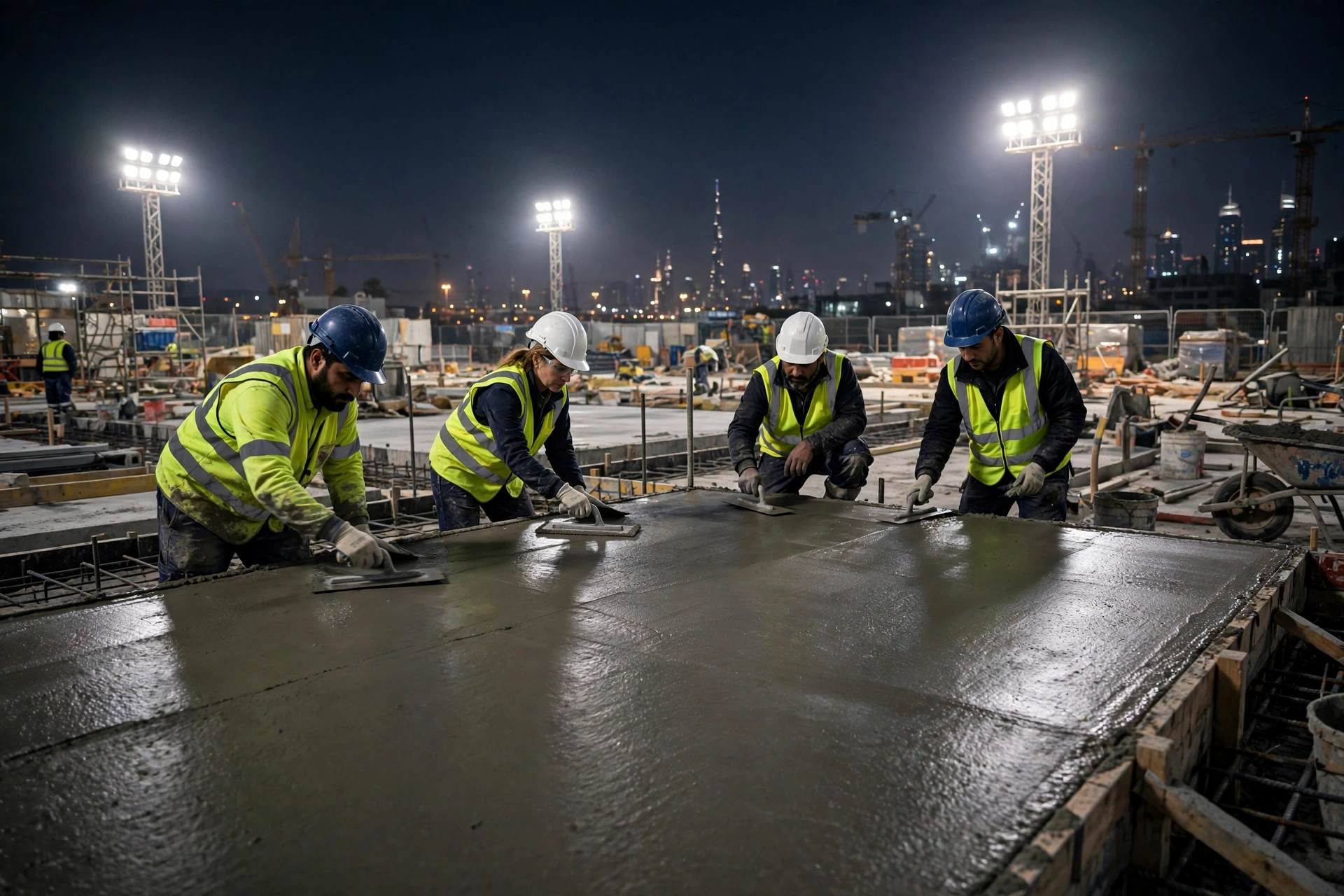
Then it was back to the trowels. Power floating a slab is an art nobody appreciates until they have walked a bad one. The ride-on machine circled the dark surface while hand trowellers worked the edges it could not reach — kneeling on boards, reading the concrete like bakers reading dough. Rush the finish and you trap bleed water under the surface; wait too long and the window closes. Rashid watched the youngest troweller like a hawk. “Slow,” he murmured. “Concrete is patient. You be patient.”
The last truck finished at twenty past three. The pump boom folded like a tired arm. We stood around the finished slab in the sudden quiet. There is a particular silence after a good pour — the sound of twenty men exhaling at once.
The Seven Days After the Pour
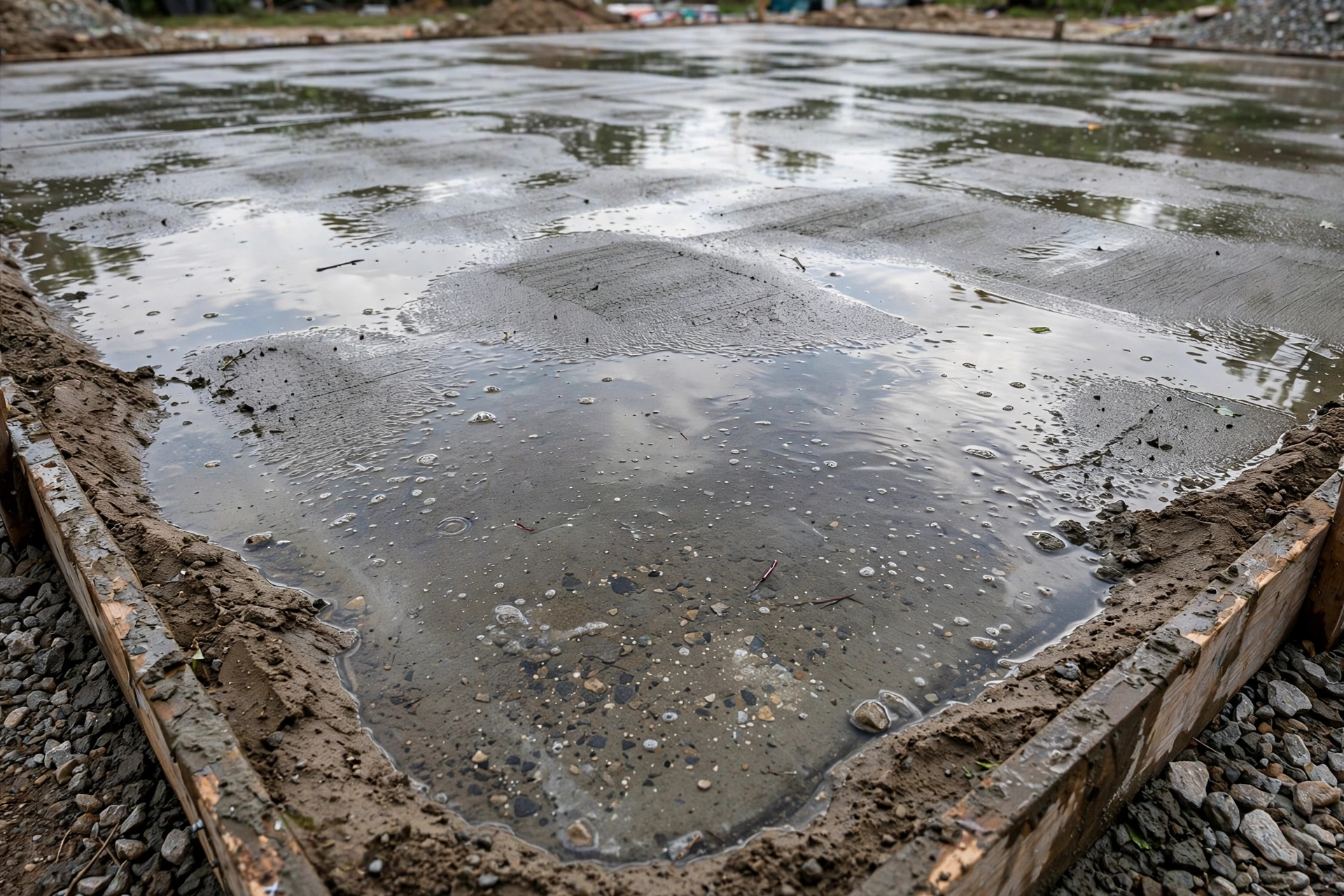
If the pour is the wedding, curing is the marriage. Everything we did at night would have been wasted if we had let the August sun have that slab the next morning. Concrete needs moisture to keep hydrating for days after it sets; dry it out early and the surface never reaches full strength.
So at dawn, while the couple’s kids were still asleep in their flat, we covered the entire slab in wet burlap and started the routine: soak it, keep it soaked, and do not let the wind or the sun steal the water. For seven days a watchman re-wet the burlap every few hours, and the slab stayed wrapped like a patient in bandages. It looks absurd — a brand-new villa slab dressed in sacks — and it is the single most important thing we did all week.
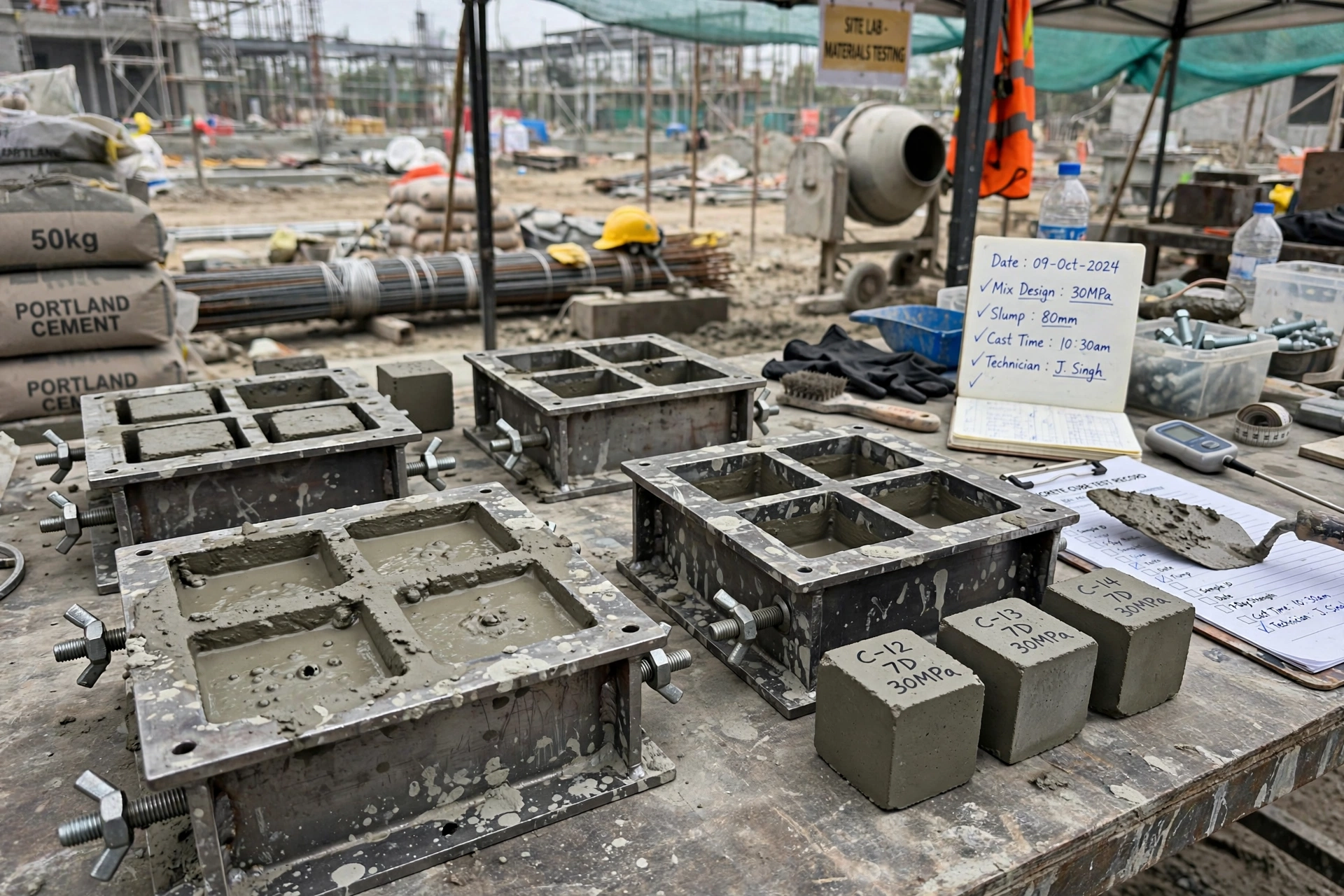
When the lab crushed the test cores at 28 days, they came back 8% above the required strength. I sent the couple the report with a photograph of the wrapped slab, and the husband — an engineer himself — replied with three words: “Worth the wait.” They moved in before winter, and the slab under their feet is the one we poured at midnight in August. You do not beat the Dubai summer. You pour alongside it.
Before You Hire: Ask Your Contractor These Questions
If you are planning a villa in Dubai, summer concreting will find you sooner or later — a realistic villa construction timeline almost always crosses at least one August, and that is when concrete pouring in Dubai summer becomes your problem too. Ask your contractor five questions before the first truck arrives. One: will you pour at night, and at what hour does the crew actually start? Two: how do you control concrete temperature — ice, admixtures, or just hope?
Three: what is your curing plan, exactly, and for how many days? If the answer is “we spray water for two days,” walk away. Four: who supervises the pour on site — name the person, not the job title. Five: what happens when a truck arrives hot or late? A contractor with no answer for the bad truck has no plan at all. If you want a team that answers all five without blinking, get in touch with our team.
Frequently Asked Questions
Can you pour concrete in a Dubai summer at all?
Yes — most of Dubai’s towers and villas were poured through summer months. The key is never pouring in the afternoon heat. Professional contractors shift pours to the night, control concrete temperature with ice and admixtures, and cure hard for a full week. Summer pouring is a solved problem; afternoon pouring is the problem.
Are night pours really safer than daytime pours?
Significantly. At 11 p.m. in August the air is typically 10–15 degrees cooler than at 2 p.m., wind settles, and evaporation slows. That gives the concrete a calm, even set instead of a panicked surface flash.
What is the ice in the concrete for — and is it safe?
Batch plants replace part of the mix water with crushed ice to bring fresh concrete below 32°C at discharge. It is completely safe and standard across the Gulf when a proper lab designs the mix. Retarding admixtures are often added as well, slowing the set so the slab hardens evenly instead of cracking at the surface.
How long must a concrete slab cure in UAE heat?
Seven days minimum for a villa slab, and the method matters as much as the duration. We cover slabs in wet burlap and keep it continuously damp, re-wetting every few hours. Never accept a two-day cure in August — the strength you lose in week one never comes back.
Will my slab still crack in summer heat?
Structural cracking is almost always a process failure, not a weather failure. A night pour with temperature-controlled concrete and a disciplined seven-day cure produces a slab that tests above its design strength. Ask your contractor for the 28-day test results; the numbers do not lie.
How do I choose a contractor I can trust with a summer pour?
Ask who supervises the pour by name, what hour night pours start, how they control concrete temperature, and what their exact curing schedule is. Then ask for summer-project references with test results to match. A contractor who answers all of this clearly — and rejects a bad truck without hesitation — has poured through August before.