The most expensive contractor in Dubai is the one you hire twice.
Here’s something we’ve learned watching projects go right — and wrong — across Dubai: choosing the right construction company in Dubai matters more than almost any other decision you’ll make. More than the tiles. More than the paint colour. A good contractor makes the whole thing feel manageable. A bad one? You’ll be thinking about them long after the dust settles, and not fondly.
Dubai’s construction scene moves fast and it’s properly regulated, which is good news. But quality still varies enormously from one company to the next. I once watched a villa owner in JVC discover — mid-renovation — that his “contractor” had no trade licence at all, just a borrowed one and a confident smile. The project stalled for four months while we untangled it. So before you sign anything, work through these ten checks. They take a little effort upfront. They save a lot of pain later.
Hiring a Construction Company in Dubai: Start With the Paper Trail
The boring paperwork is where the serious builders separate themselves from the smooth talkers. Start here, and don’t feel awkward about it — any legitimate company expects these questions.
Check 1: Verify the trade licence. This is non-negotiable. Every legitimate construction company in Dubai has to hold a valid trade licence from the Department of Economy and Tourism (DET). Ask to see it — not a blurry photo on WhatsApp, the actual document — and check two things: that it’s current, and that it covers the kind of work you need. Building contracting, renovation, fit-out — they’re different activities, and the licence should say so. The company name on the licence has to match the name on your contract and invoices, exactly. I once saw a contract where the licence name and the company letterhead differed by one word. “Just our trading name,” they said. It wasn’t.
Check 2: Check registration with the relevant authorities. A trade licence is the starting point, not the whole story. Depending on your project, a contractor may also need registration with Dubai Municipality for structural work, plus approvals from the RTA or Dubai Civil Defence for certain jobs. Ask which authority approvals they hold — and whether those actually cover your type of project. A contractor who’s properly registered answers this in one breath. One who isn’t will change the subject. I learned this the hard way on the renovation that nearly broke us, when we discovered a previous owner’s unpermitted extension sitting on our client’s plot. Dubai Municipality does not negotiate with optimism.
Check 3: Confirm the insurance is real and current. Construction is risky work — that’s just the nature of it. Your contractor should carry contractor’s all-risk insurance and third-party liability cover as a minimum, plus workmen’s compensation for everyone on site. Ask for the actual certificates and check the dates. It takes five minutes. A scaffold pole once fell onto a neighbour’s car on a site near ours — not our site, but I watched the contractor’s insurance handle it cleanly while the owner slept easy. If something goes wrong on your site, you want the contractor’s policy paying for it, not your savings.

Proof, Not Promises: Portfolios and References
Anyone can talk a good project. The question is whether they’ve actually delivered one. This is where you stop listening to claims and start looking at evidence.
Check 4: Look at real, finished work. Any decent contractor should show you projects they’ve actually completed — similar in scope to yours, ideally. Photos are a start. Visiting a finished site is better. When you look, don’t just admire the lobby; check the corners, the paint lines, the way doors close. That’s where workmanship shows. And here’s a red flag I’ve seen more than once: a portfolio full of glossy renders and stock images, but nothing real. Renders are promises. Finished buildings are proof.
Check 5: Talk to past clients. Portfolios show you the destination. References tell you about the journey — and the journey is where most of the stress lives. Ask for two or three recent clients you can actually call, then ask the questions that matter: How was the communication? Did they hit their dates? When problems came up — they always do — how did the contractor handle them? A company that’s proud of its work hands over references without blinking. One contractor I know keeps a WhatsApp list of past clients who’ve agreed to take reference calls. That kind of confidence is worth more than any brochure.
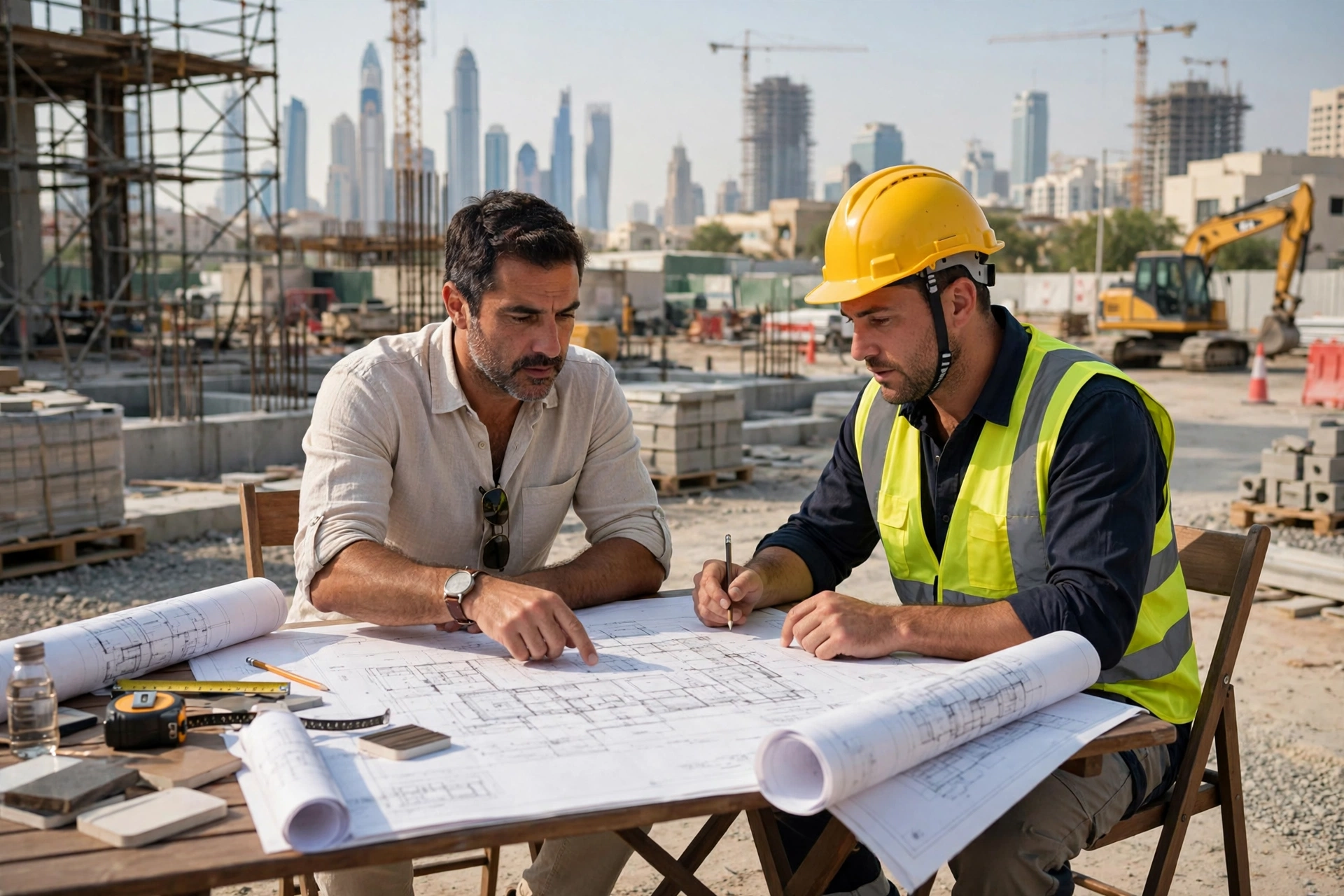
The Money Rules: Contracts, Payments, and Aftercare
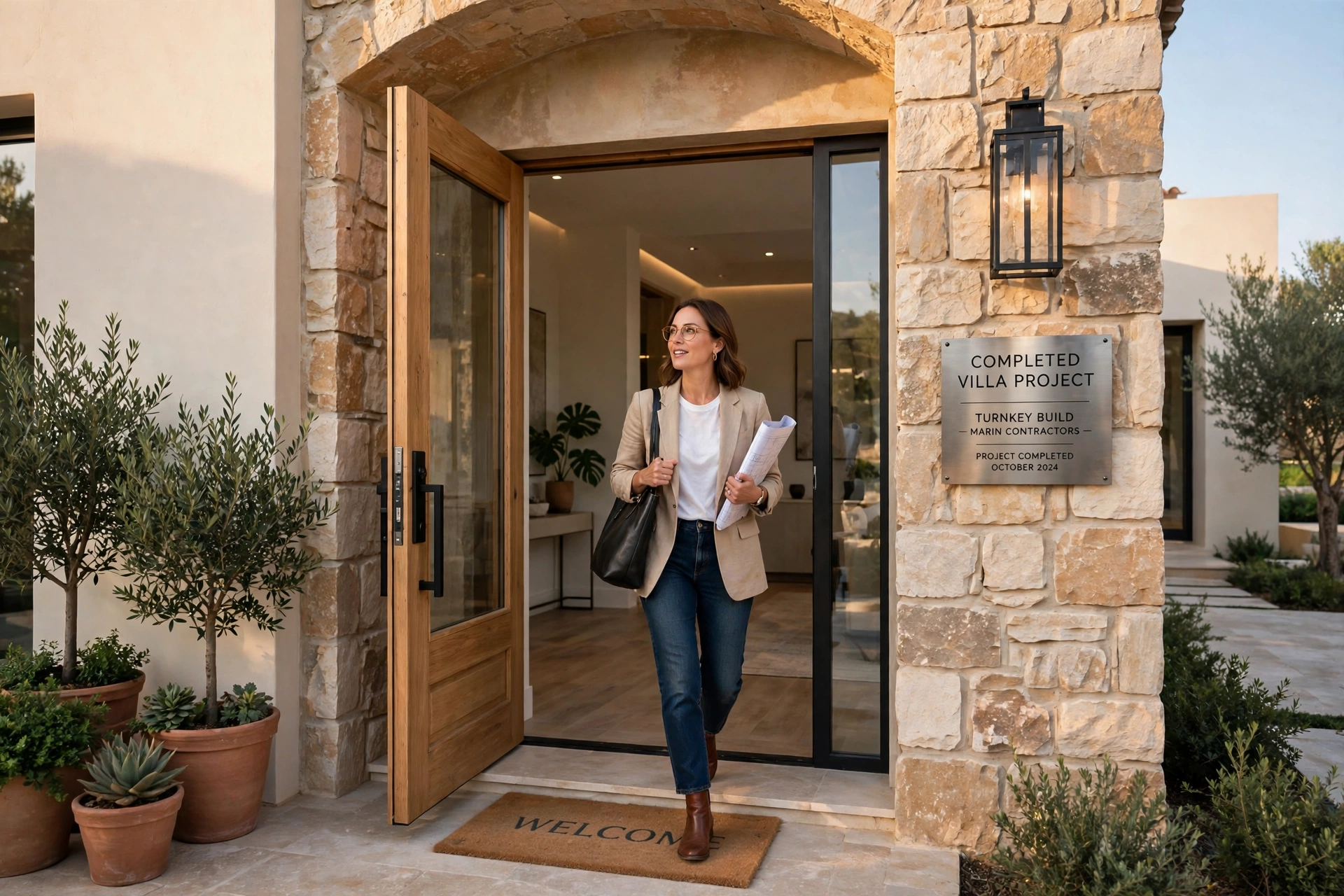
This is where most villa owners in Dubai get hurt — not because they’re careless, but because the money conversation feels awkward. Make it un-awkward. Your builder expects it.
Check 6: Get everything in a detailed written contract. Never — and I mean never — start work on a handshake. A proper contract spells out the scope of work, the materials and finishes, the total price, the payment schedule, the timeline with milestones, the defects liability terms, and exactly how changes to the scope get priced and approved. On bigger jobs you’ll often see FIDIC-based contracts, which is a good sign. On smaller ones, the contract just needs to be thorough and crystal clear. Having a legal professional glance over it before you sign is money well spent. I tell clients: if a builder rushes you past the contract, they’re telling you who they are.
Check 7: Tie payments to milestones, not promises. Watch out for anyone asking for a huge chunk of money before a single worker shows up. That’s not how reputable contractors operate. A fair payment schedule follows the work: a reasonable mobilisation advance, then payments released as each stage is certified complete. Tie every payment to something you can see and measure. And hold back a small retention — a percentage kept until the defects liability period ends. It’s your leverage, and you’d be surprised how quickly snag items get fixed when there’s money still on the table.
Check 8: Nail down the defects liability period. Even good work can develop faults after handover — a paint defect here, a plumbing niggle there. That’s normal. What’s not normal is having no recourse when it happens. Make sure your contract includes a defects liability period — twelve months is standard in Dubai — during which the contractor comes back and fixes defects at their own cost. Get it in writing, along with how you report a defect and how quickly they’ll respond. Vague promises here become expensive arguments later. The builder who answers his phone after handover is the one you want; this clause makes sure he has to.

The Tells Nobody Talks About: Safety and Honesty
The last two checks aren’t on most lists, but after fifteen years on Dubai sites, I trust them more than almost anything else.
Check 9: Ask who handles permits — and listen carefully. In Dubai, permits aren’t optional extras. Dubai Municipality building permits, NOCs from the master developer, community approvals — most significant work needs one or more of these. A competent contractor should tell you, plainly, which permits your project needs and who’s responsible for getting them. If someone suggests quietly skipping permits to “save time”? Walk away. That shortcut has ended more projects than it’s ever saved. I’ve written about what happens when a cracked villa wall reveals shortcuts taken years earlier — the bill always comes due, usually in August.
Check 10: Take their safety standards seriously. Dubai takes site safety seriously, and your contractor should too. Ask about their health and safety policy, how sites are supervised, and whether teams actually follow Dubai Municipality’s safety requirements — not just on paper. Here’s the thing: a contractor who cuts corners on safety will cut them everywhere else too. It’s one of the most reliable tells in the business. When I walk a site, I look at the barricades and the fire extinguishers before I look at the blockwork. Culture shows up in the unglamorous details.
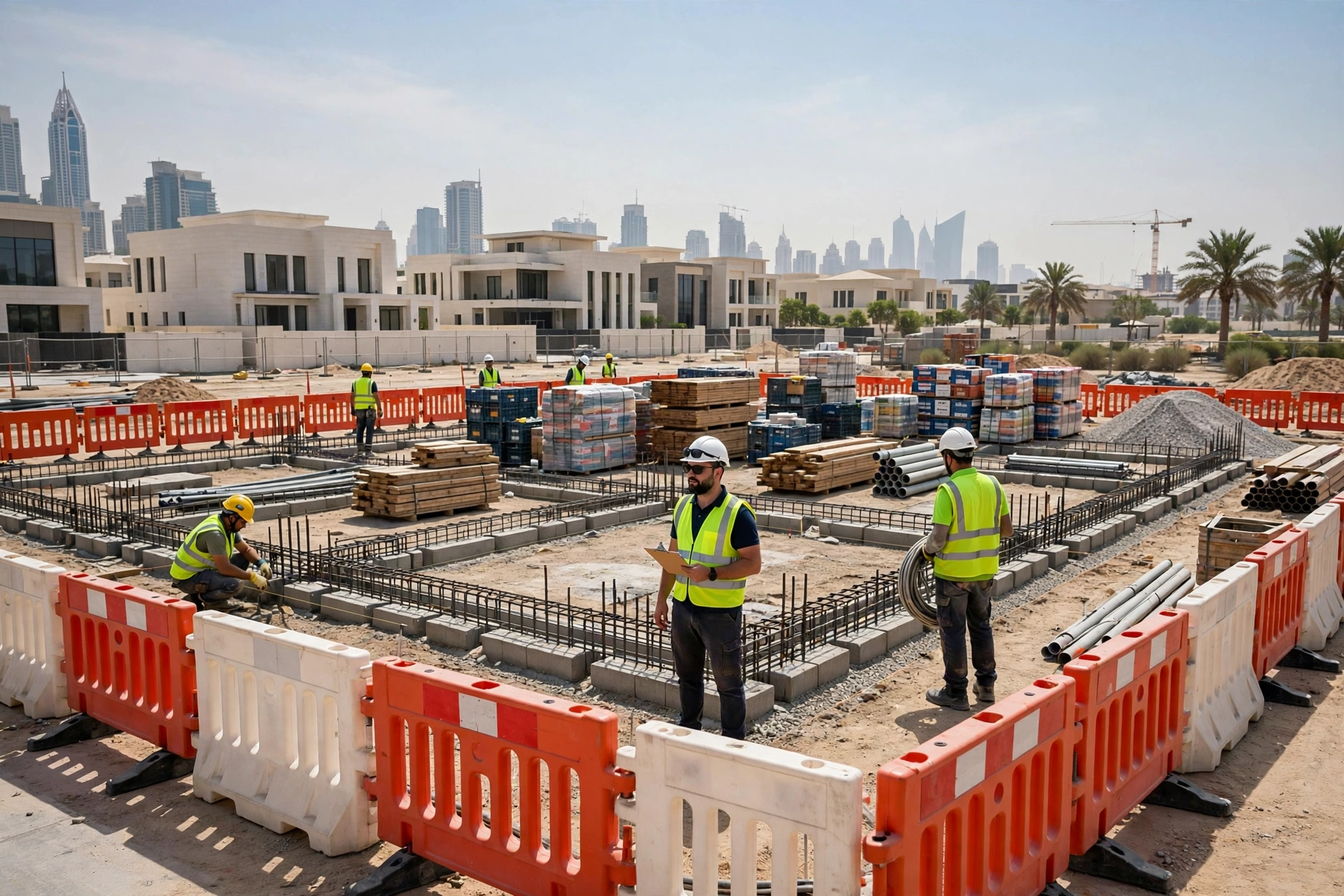
Choosing a contractor in Dubai isn’t really about finding the cheapest quote. It’s about finding a licensed, insured, accountable partner who’ll still answer the phone after handover. Check the credentials, read the contract like it matters — it does — and ask the uncomfortable questions now rather than later. If you’re weighing your options, talk to us first; an honest conversation about your project costs nothing, and it might save you everything.
Frequently Asked Questions

How do I verify a construction company’s trade licence in Dubai?
Ask the company for a copy of their trade licence issued by the Department of Economy and Tourism, then check that it’s current, that the listed activities cover your type of work (building contracting, renovation, fit-out), and that the company name matches their contract and invoices exactly. A legitimate contractor provides this without hesitation.
What insurances should my Dubai contractor carry?
At minimum: contractor’s all-risk insurance, third-party liability cover, and workmen’s compensation for everyone on site. Ask for the actual certificates and check the expiry dates. If a worker is injured or neighbouring property is damaged during your project, these policies are what stand between you and the bill.
Is it normal for Dubai contractors to ask for large upfront payments?
No. Reputable contractors ask for a reasonable mobilisation advance and then tie every subsequent payment to a completed, certified milestone. Be wary of anyone demanding a huge sum before work begins, and always hold back a retention percentage until the defects liability period ends.
Do I need permits for a villa renovation in Dubai?
Almost certainly yes for anything structural. Dubai Municipality building permits, NOCs from your master developer, and sometimes Civil Defence approvals are required. Your contractor should be able to name exactly which permits your project needs. Anyone who suggests skipping permits is not someone you want building your home.
What is a defects liability period and how long should it be?
It’s the period after handover — twelve months is standard in Dubai — during which the contractor must return and fix any defects at their own cost. It should be written into your contract with a clear process for reporting defects and a response timeframe. Without it, you’re paying for someone else’s mistakes.
Should I get my construction contract reviewed by a lawyer?
Yes, especially for villa builds or major renovations. A legal professional will spot vague scope definitions, unfair payment terms, and missing liability clauses that a layperson misses. It’s a small cost relative to the project, and the cheapest insurance you’ll ever buy.