The best hour on a Dubai villa construction site is the one before the noise starts.
I reach the gate at 5:30 in the morning, and for a few minutes the whole plot belongs to me. The villa is taking shape in Arabian Ranches — second row from the park, the kind of street where every other house seems to be either brand new or about to be. Right now ours is neither. It is a concrete skeleton with its ribs showing, and I love it at this hour.
The security guard, an old Sudanese man named Haj Adam, waves me through without looking up from his tea. He has seen my car enough times. “Engineer,” he says, which is what he calls everyone who isn’t carrying a shovel. I stopped correcting him a long time ago.
I do my first walk alone. This is the ritual nobody pays me for and the one I would never skip. In the blue half-light I can see yesterday’s work with fresh eyes: the columns we cast, the slab edges, a stack of blocks waiting like a promise. The air is still cool — cool being a relative word in Dubai, meaning it hasn’t yet decided to punish you. By nine it will have made up its mind.
The Orchestra Tunes Up
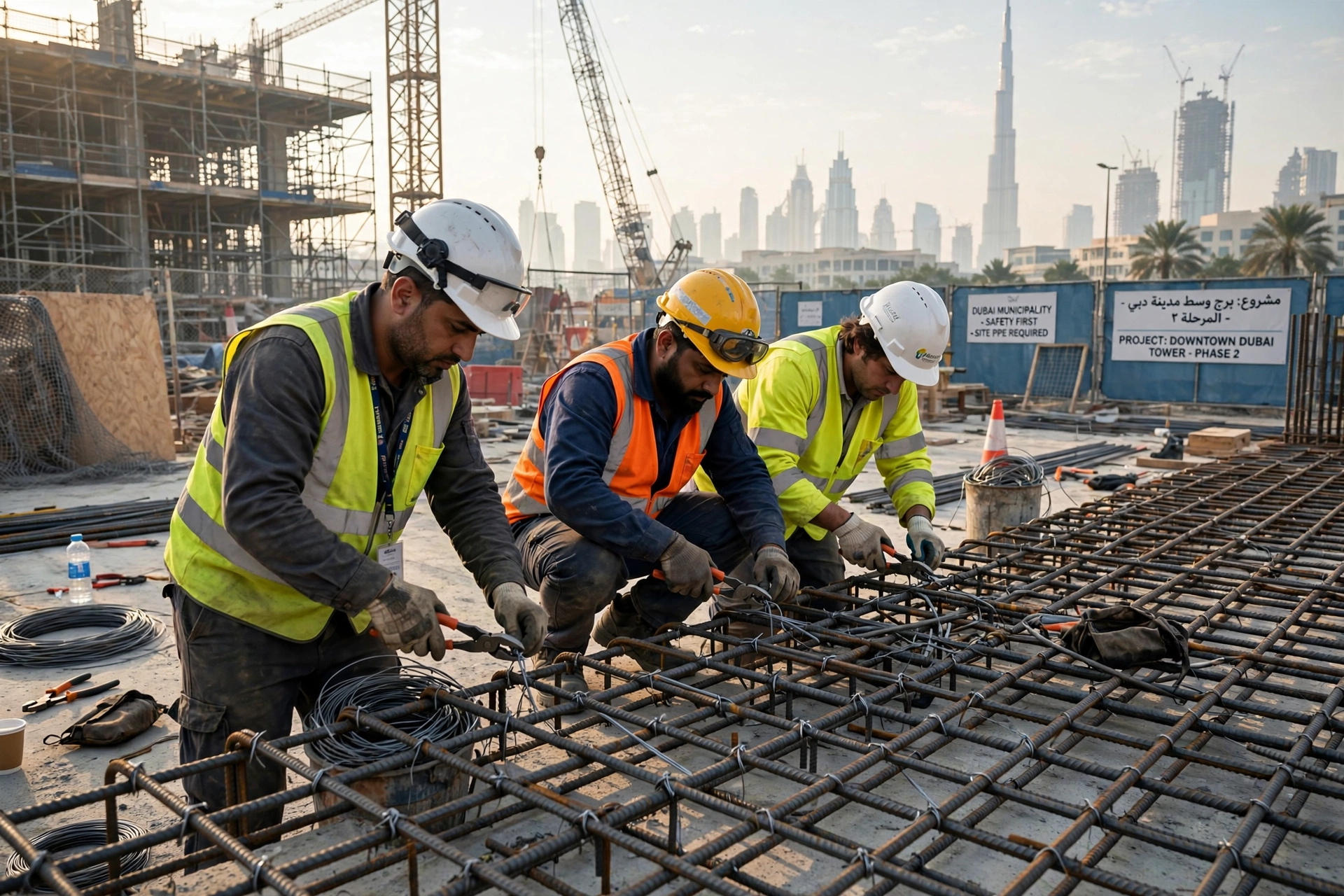
By six the buses start arriving. White coasters pulling up one after another, doors sighing open, men climbing out still half-asleep and already laughing about something. Within twenty minutes the quiet is gone, and I don’t miss it. This is the sound a site is supposed to make.
The steel fixers are always first to their corner. They work the way musicians tune instruments — bending, cutting, tying rebar with a rhythm that looks casual until you try it yourself. I tried once, years ago, on my first site. My hands were bleeding in an hour, and the foreman, a patient man from Kerala, took the pliers from me the way you’d take scissors from a child. “Engineer,” he said — on site, everyone is engineer — “your job is to watch.”
He was right, and he wasn’t. Watching is the job, but watching properly is harder than tying steel. You have to know what right looks like before the concrete hides it forever.
Up above, the tower crane operator climbs his ladder to the cab — a small glass box in the sky where he will spend the next ten hours moving tonnes of material with a joystick and a radio. I have never envied anyone less. The masons set up their lines and levels, the electricians start chasing walls for conduits, and somewhere a cutting saw screams awake. The day has officially begun.
Karak at Ten
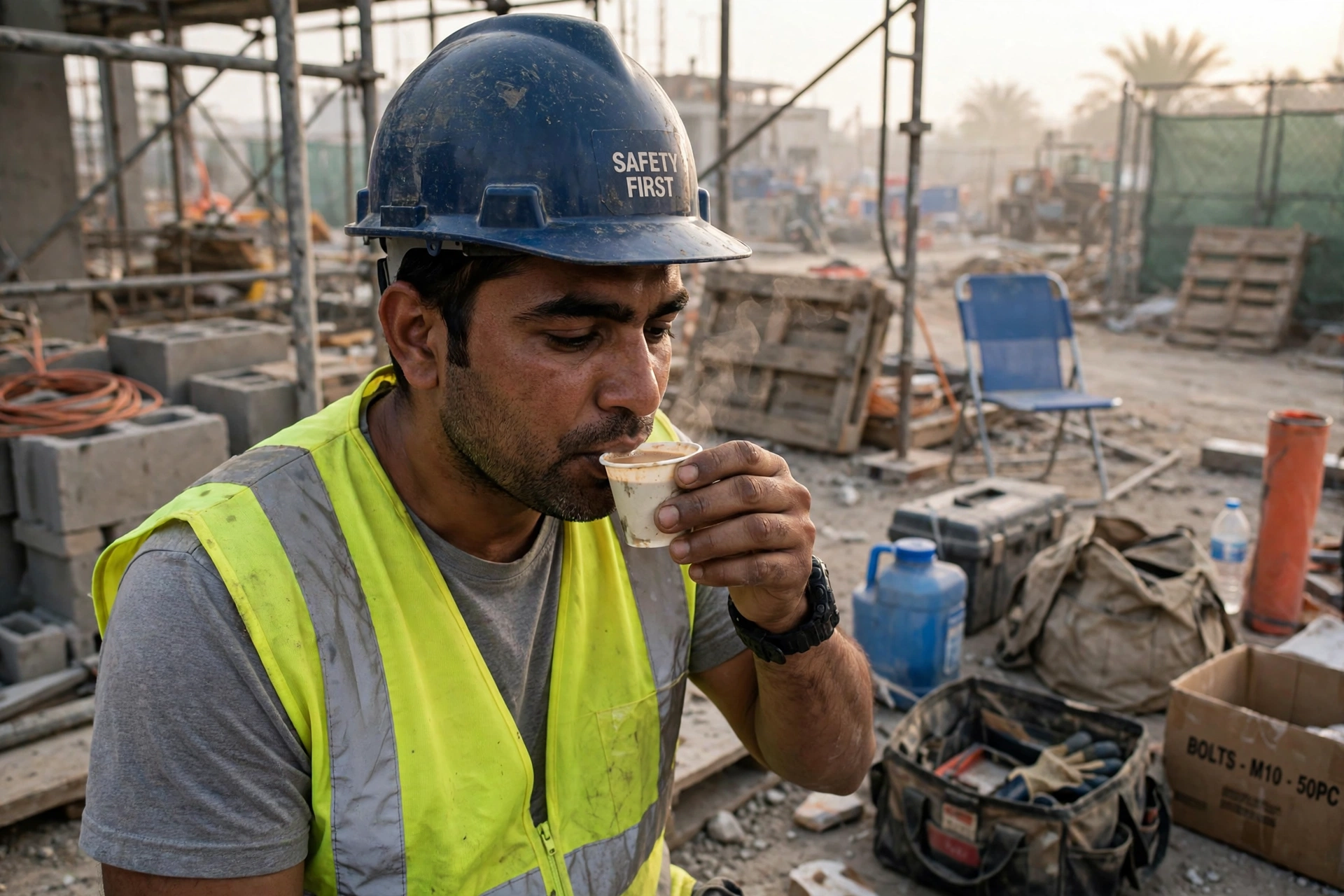
At ten o’clock, everything stops for karak. This is not written in any contract, and it is the most strictly enforced rule on the site.
The tea boy — well, he is forty-five, but everyone calls him the tea boy — appears with a tray of small plastic cups, and the whole site exhales. Steel fixers, masons, the driver, me. We stand in the shade of the half-built ground floor and drink tea that is mostly milk and sugar and somehow exactly what the morning requires.
This is where I learn more than in any progress meeting. Over karak I hear that tomorrow’s block delivery might come up short, that the new mason’s trowel work is clean but slow, that somebody’s cousin needs a job (the answer is always maybe next month). A site runs on these ten minutes. Men who drink tea together tell you the truth about the work. Men who don’t, don’t.
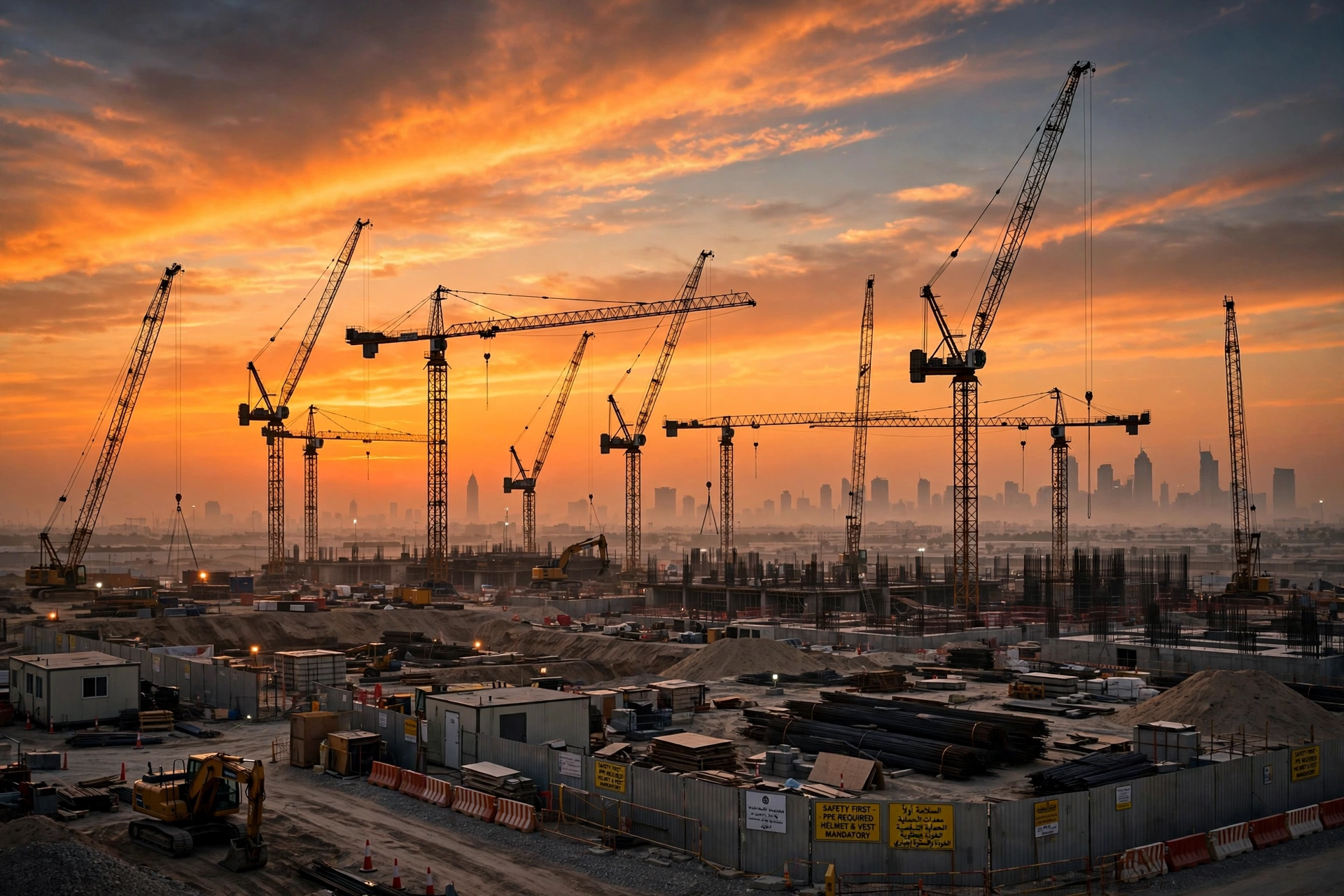
Someone always asks me when the villa will be finished, as if I carry the date in my pocket. “Before the summer melts us,” I say, which gets a laugh every time, because it is both a joke and the actual plan. Dubai summers don’t forgive slow sites. We once watched a neighbor’s project stall through August, and the summer we poured concrete at 50 degrees taught me everything I know about working with the heat instead of against it.
The Wall That Wasn’t Straight
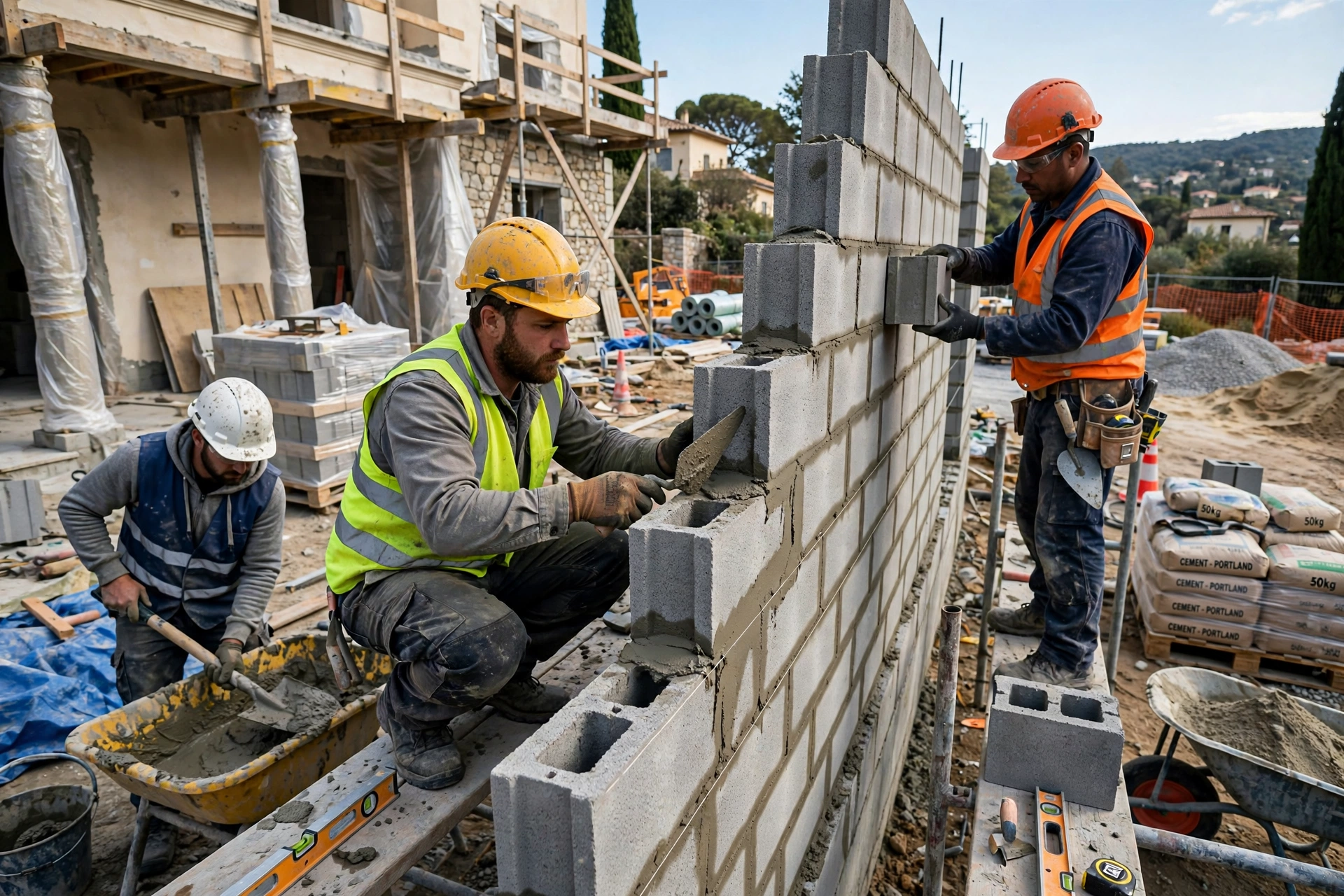
After the break I walk the first floor with the foreman, and we find it: a block wall in what will be the master bedroom, leaning out of plumb by the thickness of a finger. You would never see it unless you held a level against it. The mason who built it is a good worker having a bad morning. It happens.
Here is the thing about construction that nobody tells clients: a wall that is slightly wrong today becomes a door that doesn’t close next month, a tile line that wanders in three months, a crack that appears in a year and gets blamed on “the soil.” Small wrongs compound. My whole job, really, is catching them while they are still small.
We take the top courses down and rebuild. It costs us two hours. The mason is embarrassed; I tell him I’ve seen worse, which is true, and that I’d rather rebuild it now than explain it later, which is also true. He nods and builds it right the second time. Nobody shouts. Shouting is for people who weren’t watching in the first place.
I wrote once about what a cracked villa wall taught me about building in Dubai, and the lesson is the same here: cracks and defects are almost never mysteries. They are small mistakes that nobody caught in time. This wall, caught at ten-thirty in the morning, cost us two hours. Caught a year later, it would have cost the client a fortune.
Why I Still Walk Every Dubai Construction Site Myself
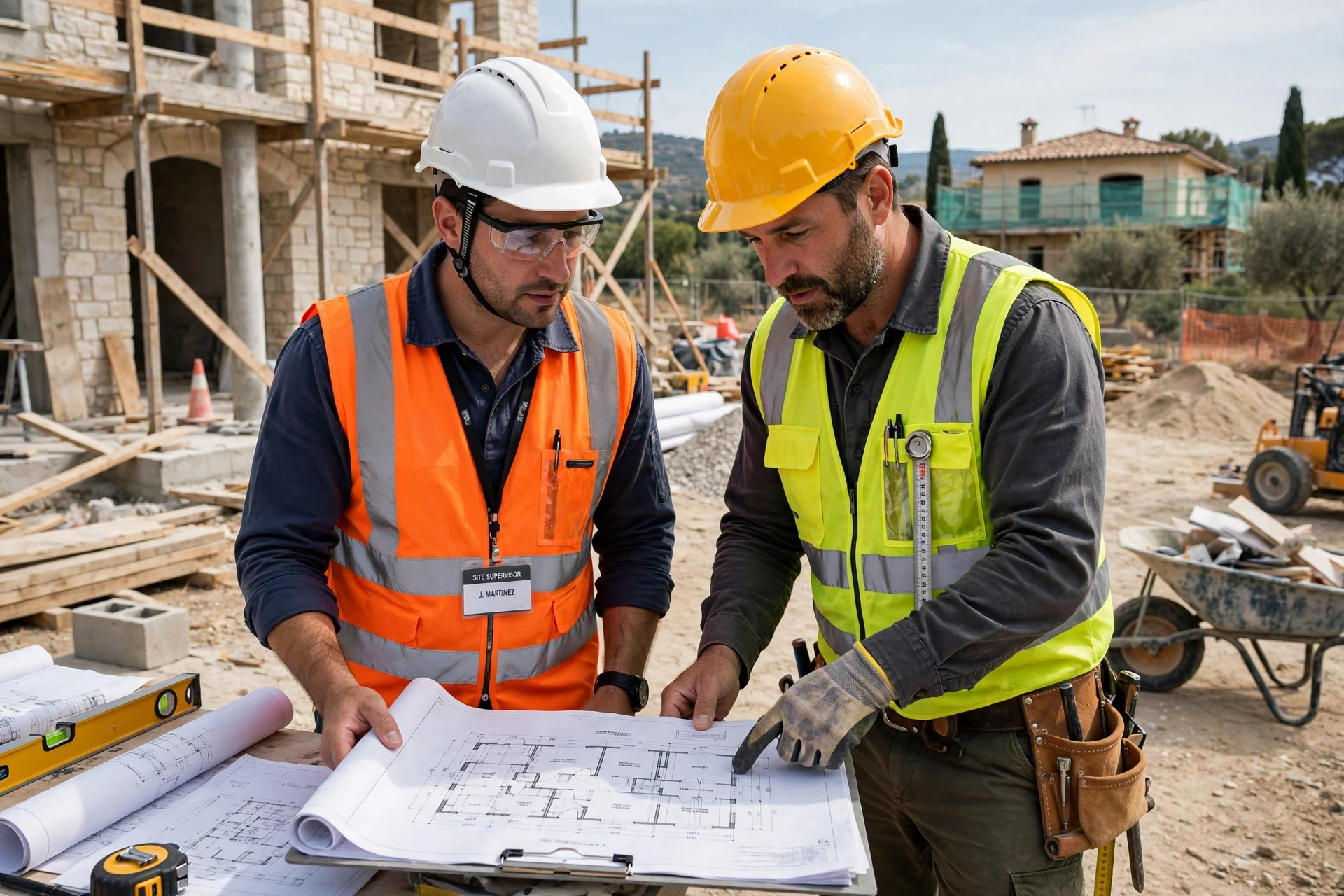
By noon the site is at full volume and the heat is doing its daily demolition work. The thermometer on the site office wall reads 44, which for June counts as merciful. The crew works in the shade of the structure where they can, water bottles appearing and emptying like magic tricks.
Someone from the municipality’s inspection team stops by unannounced — this happens on Dubai construction sites, and it’s a good thing. He checks the barricades, the fire extinguisher near the welding corner, the scaffold ties on the back elevation. Everything is in order because everything is in order every day, not because he came. That’s the whole trick with inspections: there is no trick.
After lunch I sit with the foreman and go through tomorrow’s pour schedule. A slab pour in this heat means planning around the sun — we start before dawn or we don’t start at all. The batch plant confirms the mix design, the pump is booked, the ice is ordered. In a Dubai summer, you cool concrete with ice or the concrete teaches you why you should have.
Then the client calls. Not a complaint — a question. She wants to know if the staircase will really get morning light the way we promised. I walk up to the half-formed stairwell, stand where she will stand, and call her back. “Yes,” I tell her. “At eight in the morning, the sun will be exactly here.” She goes quiet for a second, and I can hear her smiling. This is the part of the job that never gets old.
People ask me why I still come to site every single day when I have engineers and foremen. It’s a fair question. The honest answer is that you cannot find a leaning wall on a video call. You cannot smell that the concrete arrived a little too dry from a spreadsheet. A site needs eyes on it — human eyes, every day — before small things become expensive things.
Sunset Tells the Truth
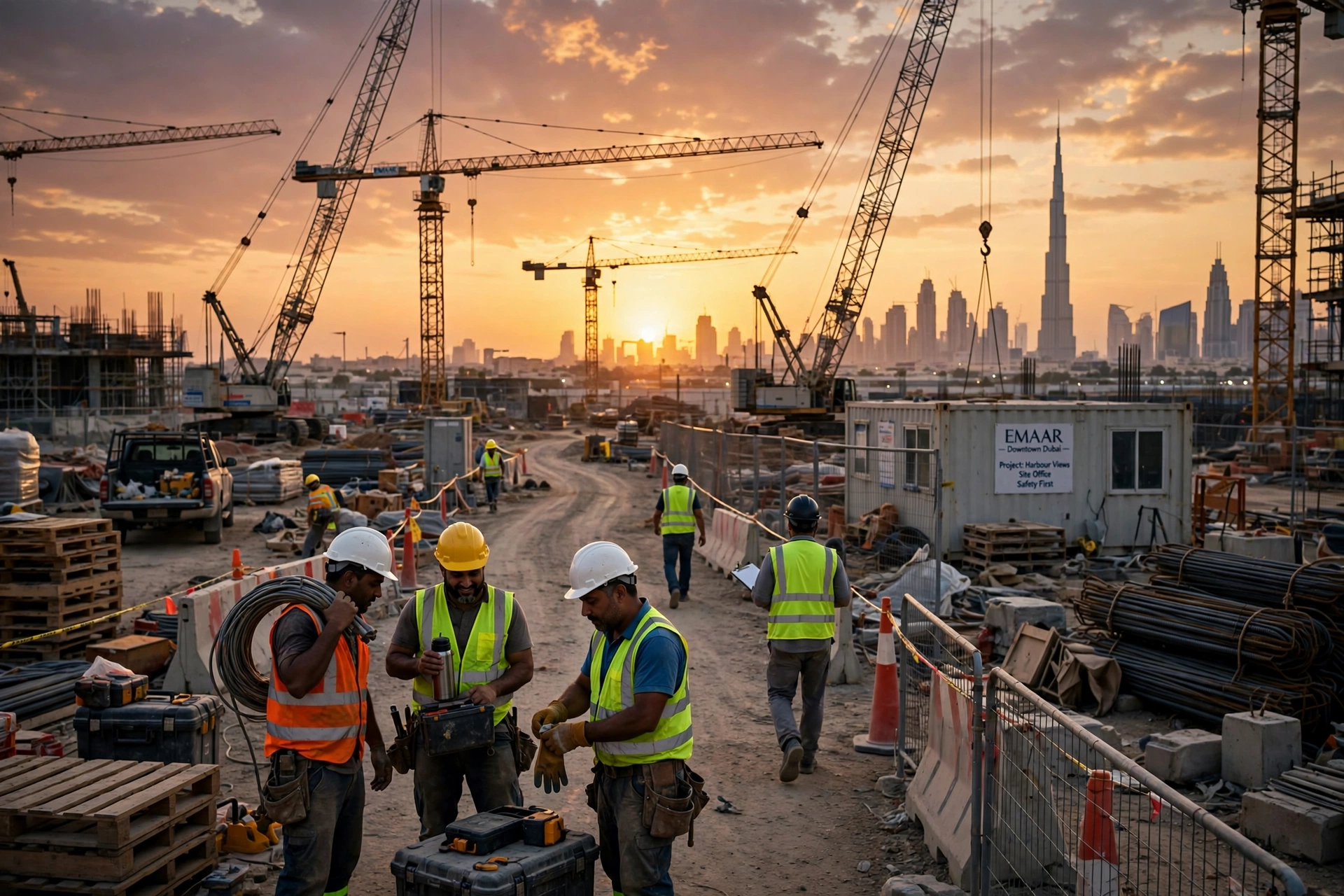
By five the light turns gold and the site starts winding down. Tools get cleaned, the crane parks its hook, the buses line up again. I do my last walk, slower this time, because this is the walk where the day shows you what it did.
And there it is. The staircase we formed this morning now stands complete. The first-floor walls have grown a full course higher. The conduits the electricians chased are neat dotted lines across the blockwork. Yesterday this was a flat slab with rebar sticking out of it like questions. Today it is unmistakably a house. You can stand where the living room will be and look out at the park through the space where the window will go.
The clients stopped by at noon — a young couple, first villa, nervous in the way all first-time builders are nervous. I walked them through and showed them the rebuilt wall, because I always show the thing we fixed. Trust, I have learned, is not built by hiding the mistakes. It is built by showing the corrections. That lesson comes from the same place as the villa handover that moved a client to tears — honesty, applied daily, in small doses.
Driving out past Haj Adam’s gate, he raises his tea in a small salute. “Engineer,” he says. The sun is dropping behind the cranes, and for a moment the whole site looks like it is made of copper.
Anyone can sign a contract in an air-conditioned office. But the house gets built out here — in the heat, in the dust, one straight wall at a time. If you’re thinking about building your own villa, take a look at our construction services and then come watch a site at sunrise. It’ll tell you more about a builder than any brochure.
Frequently Asked Questions
What time does a typical Dubai construction site start in the morning?
Most villa sites in Dubai start around 6:00 to 6:30 AM, especially in summer, when the cooler early hours are used for the heaviest work like concrete pours. Dubai Municipality restricts noisy work at certain hours, so legitimate contractors plan their schedules around both the heat and the noise regulations. I do my own walkthrough at 5:30 before the crew arrives.
How do builders in Dubai handle the extreme summer heat?
With planning, not heroics. Concrete pours happen at night or before dawn, the concrete mix itself is cooled with ice, workers rotate through shaded rest breaks with water, and heavy lifting is scheduled for cooler hours. A contractor who treats 50-degree days like normal days is a contractor to worry about.
What is karak chai and why does it matter on a construction site?
Karak is a strong, sweet, milky tea — the unofficial fuel of every Gulf construction site. At ten in the morning, everything stops for it. Beyond the caffeine, it’s where the real site intelligence flows: delivery delays, quality concerns, and crew issues surface over karak long before they reach a progress report.
How often should a client visit their villa construction site?
Weekly visits are plenty for most clients, and a good contractor will send photo or video updates between visits. Daily presence isn’t your job — it’s your builder’s. What matters is that someone qualified walks that site every single day, catches the leaning walls, and tells you honestly what they found.
What should I look for when I visit my own construction site?
Look at the things nobody photographs for brochures: are the wall edges plumb, is the site tidy, are materials stored properly off the ground, is safety gear being used? Ask the foreman to show you one thing they fixed this week. The answer — or the lack of one — tells you everything about the culture on that site.
Why is daily supervision so important in villa construction?
Because construction errors compound. A wall that’s slightly off-plumb today becomes a door that won’t close next month and a visible crack next year. Daily supervision catches mistakes while they’re two-hour fixes instead of two-month disasters. That’s not a sales pitch — it’s physics.