He called me on a Tuesday afternoon, and I could hear the exhaustion in his voice before he said a word. His restaurant in Business Bay was supposed to open in six weeks. The contractor had promised him forty-five days, start to finish. He was sitting in an empty concrete box, paying full rent on it, watching his opening date slide further away every single day — the kind of story anyone in commercial construction Dubai hears far too often.
He opened two months late: two months of rent on a space earning nothing, two months of staff salaries with no revenue, two months of watching competitors fill his tables. If there is one thing I have learned from years of commercial construction in Dubai, it is this: the buildings are the easy part. It is everything around the building — the approvals, the landlord, the timeline fantasy — that decides whether you open on time or open at all. This is the guide I wish someone had handed him before he signed anything.
Fit-Out or New Build? Know Which Game You’re Playing

Almost every commercial project in Dubai falls into one of two buckets, and the bucket decides everything: approvals, budget, timeline, even which contractor you should hire.
A fit-out means taking a shell-and-core unit — the bare concrete box most towers and malls hand over — and turning it into your space: partitions, flooring, ceilings, MEP changes, finishes. This is the bread and butter of commercial construction in Dubai. Offices on Sheikh Zayed Road, retail units in malls, restaurants in JLT — when people say commercial construction Dubai, fit-outs are what they usually mean.
A new build means starting from bare ground: warehouses in Dubai Investments Park, standalone retail buildings, industrial facilities in JAFZA — full permits, full structural work, and a timeline measured in months, not weeks.
Then there is the grey zone: change of use. A Jumeirah villa converted into a clinic, an office turned into a nursery — the walls barely change, but the approvals change completely. I once watched a client in a DIFC tower discover, three weeks into “a simple office refresh,” that DIFC runs its own authority, separate from Dubai Municipality. That cost him a month. Know which game you are playing before you spend a dirham.
Commercial Construction Dubai: The Approvals That Can Shut You Down
Dubai’s approval system for commercial work is clear, well-defined, and completely unforgiving if you try to improvise. I have seen a fit-out sealed shut mid-project because the contractor started without Civil Defence-approved drawings — three weeks lost and a fine that would have covered the permit ten times over.
First, the landlord NOC. Nothing starts without a No Objection Certificate from the building owner or master developer, and in malls and commercial towers the landlord brings their own rulebook — the fit-out bible. Permitted working hours, how materials come up (service lifts only, usually after 10pm in malls), where debris goes, design standards your shopfront must meet. Read all of it. The landlord’s rules can be stricter than the government’s, and they enforce them with your refundable deposit.
Second, Dubai Municipality. Building and renovation permits run through the Municipality’s system — your contractor normally handles the drawings, MEP plans, and structural submissions. A straightforward office fit-out usually clears in two to six weeks.
Third, Dubai Civil Defence, the one people underestimate. Alarms, sprinklers, emergency exits, fire-rated materials — all inspected before you can occupy. Plan for it from the design stage, because moving a sprinkler head in the final week before opening is the most expensive kind of surprise there is.
Fourth, activity-specific approvals. Restaurants need food safety clearances and proper grease management — grease traps are non-negotiable. Clinics, gyms, and nurseries each have their own regulators with their own checklists. Know yours before you design around them.
Fifth, trade licence alignment. Your activity has to match your licence — confirm with the Department of Economy and Tourism before construction starts. In free zones like DMCC, DIFC, or JAFZA, the zone authority runs its own approval track; mainland experience does not automatically transfer. And do not forget DEWA — commercial electrical load and metering is a separate process from residential, so confirm the load early.
Timelines: The Lie Every Business Owner Tells Themselves

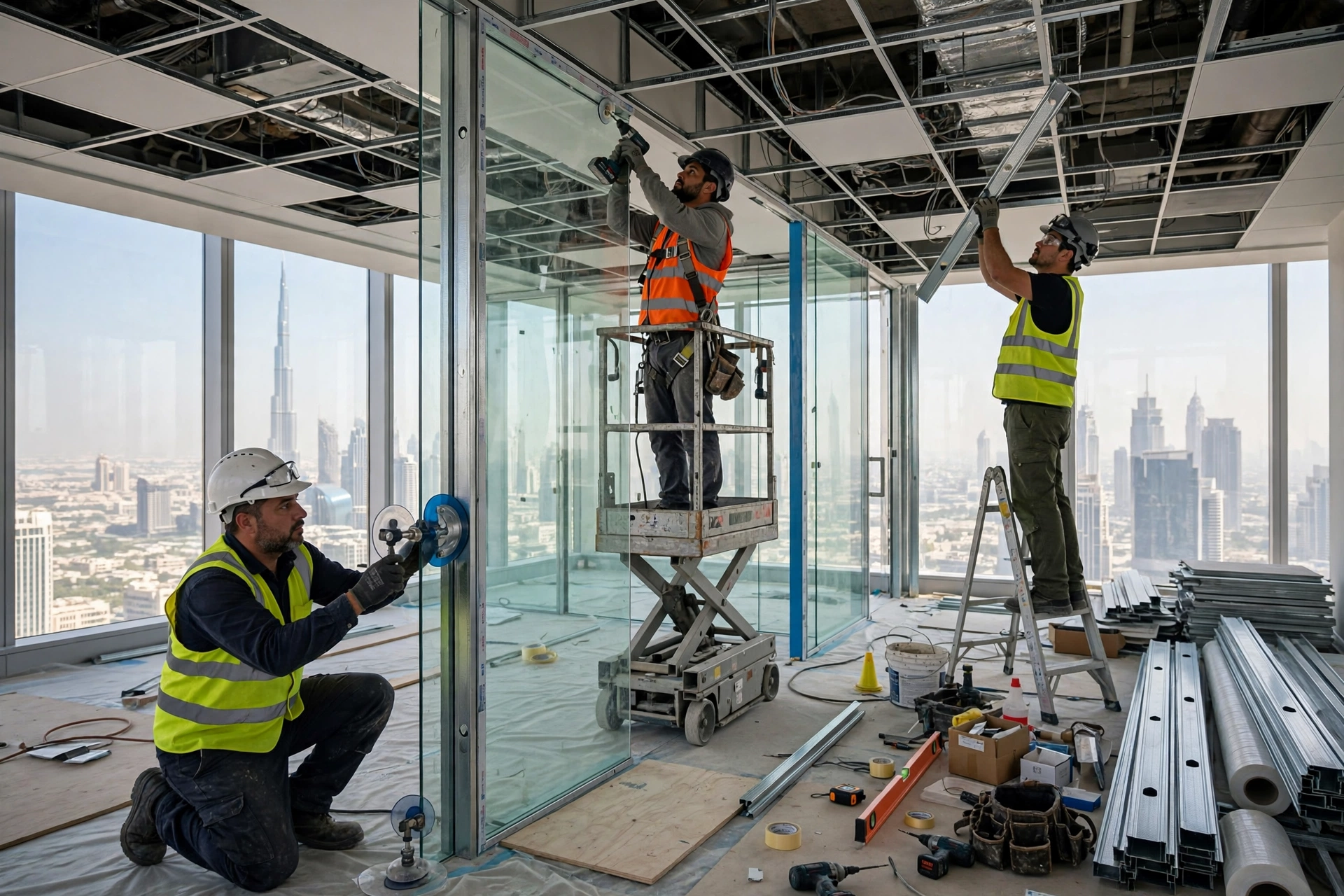
Every business owner I have worked with has told themselves the same lie: it will be faster than it is. Here is what realistic looks like. Design and planning takes two to six weeks. Everyone wants to rush it — do not. A design change on paper costs almost nothing; the same change mid-construction costs a fortune.
Approvals take two to six weeks, overlapping with the back end of design. Construction takes six to sixteen weeks: a standard office fit-out is eight to twelve, restaurants and retail run longer. Then snagging and handover — one to two weeks of inspections, defect fixes, and final clearances.
Remember the restaurant owner from the start of this story? His contractor quoted forty-five days for a full restaurant fit-out in a mall unit. Mall fit-outs need night-shift hours, service-lift bookings, and landlord inspections at every stage — I have never seen a proper restaurant fit-out finish in forty-five days, and he paid rent on an empty box for two extra months. Timelines are the part everyone argues with me about, and it is a lesson I first learned on residential sites — how long building really takes in Dubai has a way of humbling every schedule.
Work backwards from your opening date and add real buffer. Starting three to six months early is sensible for most fit-outs — and remember that Ramadan hours and peak summer heat slow sites down; a schedule that ignores them is fiction.
Budgeting: Where the Dirhams Really Go
Anyone quoting commercial construction Dubai without seeing drawings is guessing. As a rough guide from real projects: a basic office fit-out runs AED 80 to 150 per square foot, mid-range AED 150 to 250, premium AED 250 to 350 and beyond. Restaurants are their own animal — commercial kitchens, grease systems, and brand finishes usually land between AED 250 and 500 per square foot.
A few disciplines separate smooth projects from painful ones. Demand itemised quotes — lump sums hide things. Sort must-haves from nice-to-haves early: structure, MEP, and compliance are non-negotiable, while the imported stone feature wall can be value-engineered if the budget tightens. I once swapped a client’s Italian marble feature wall for a local stone with the same feel at a third of the price — no customer has ever noticed.
Keep a ten to fifteen percent contingency, especially in older buildings. Count the hidden costs too: authority fees, landlord deposits (often AED 10,000 to 50,000), DEWA deposits, temporary utilities, furniture and equipment — ask for the complete picture, not just the construction number. And nail the payment schedule — milestone-based, always, with retention held until snagging is done. Reputable contractors do not need huge sums upfront.
Choosing the Right Contractor (The Decision That Eclipses Everything)

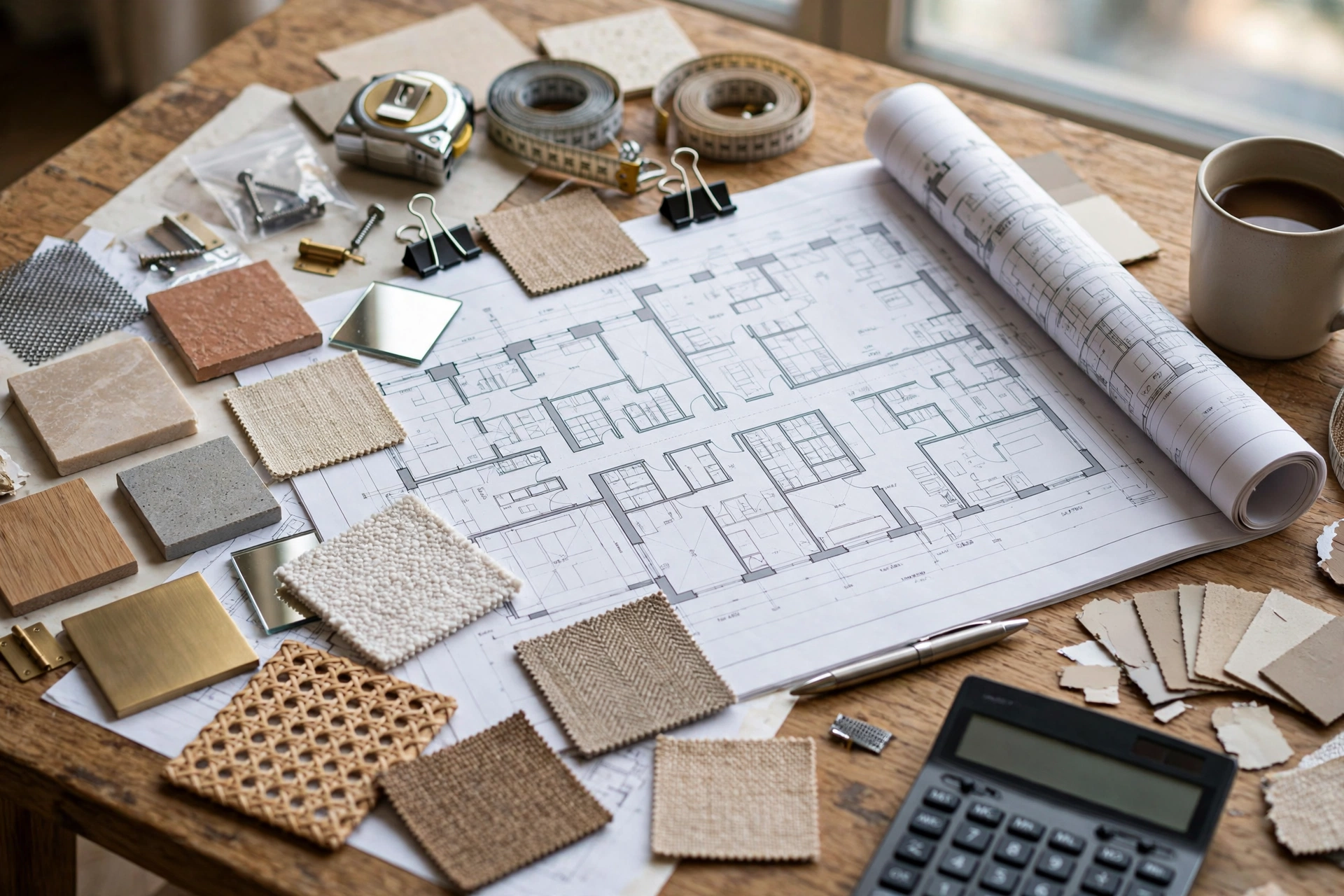
Honestly? This choice outweighs everything else in this article combined. The best drawings in Dubai cannot survive a bad contractor, and a great contractor can rescue mediocre drawings.
Start with relevant experience: an office fit-out specialist and a restaurant build-out specialist are different animals. Find someone who has done your kind of project more than once, in your kind of building — and verify their commercial licence covers your category of work. Thirty seconds now, enormous peace of mind later.
Favour contractors with in-house MEP, joinery, or civil teams — they coordinate better and fix problems faster than those who subcontract every trade out. Judge their communication during tendering — if getting answers is hard before you have signed, imagine mid-construction. And check references you can visit: see finished projects, call past clients, and ask the most revealing question of all — how did they handle problems?
I keep a personal list of the 10 essential checks I run before hiring any construction company in Dubai — steal it before you sign anything. And the eternal warning: a bid far below everyone else’s is not a bargain. It is usually missing scope, cutting corners, or lining up variations to inflate the final price later.
When you are ready to talk specifics, speak to a commercial construction team that handles fit-outs and new builds across Dubai every week — bring your drawings, your landlord’s fit-out bible, and your target opening date, and get an honest read on all three.
Staying Open While They Build Around You

Renovating while operating? Then disruption management is not a nice extra — it is the project. Phase the work so part of your operation stays live, and push noisy, dusty tasks outside business hours — in malls that usually means nights, so budget for night-shift rates. Tell staff, customers, and neighbouring tenants what is happening; uncertainty frustrates people more than noise. And protect finished areas with proper dust barriers — cheap insurance.
If you have ever lived through a renovation at home, you know the drill — the same principles apply at commercial scale (for the residential side, here is where to start with a renovation in Dubai and what to avoid). For new premises, coordinate everything as one plan: fit-out, IT, furniture, staff relocation. Be operational on day one — not “mostly ready, give us two more weeks.”
Your pre-start checklist: trade licence covers the intended activity — confirmed. Landlord NOC secured, fit-out guidelines read in full. Designs finalised before tendering, because changes later are brutally expensive. Contractor’s licensing and insurance verified. Scope, timeline, and milestone-based payments agreed in writing. Authority inspections and final clearances planned in from the start.
Commercial construction Dubai rewards preparation, plain and simple. Plan properly, pick partners carefully, respect the approvals — and you will land closer to schedule and closer to budget. It is not luck. It is homework.
Frequently Asked Questions
How long does a typical office fit-out take in Dubai?
A standard 5,000 to 10,000 square foot office fit-out takes eight to twelve weeks of construction, plus two to six weeks each for design and approvals. Plan three to six months from first sketch to move-in.
Do I need Dubai Municipality approval for an office fit-out?
Yes. Fit-outs and renovations need Municipality permits, with drawings and MEP plans submitted through the permit system — your contractor or consultant normally handles this. You will also need your landlord’s NOC and Civil Defence clearance before occupying the space.
What is a landlord NOC and why does it matter?
A No Objection Certificate is written permission from the building owner or master developer to carry out your works. In malls and towers it comes with a fit-out bible covering working hours, material delivery, and design standards. No NOC means no work — starting without one risks fines and a shutdown.
How much does a commercial fit-out cost per square foot in Dubai?
Basic office fit-outs run AED 80 to 150 per square foot, mid-range AED 150 to 250, and premium spaces AED 250 to 350 or more. Restaurants typically cost AED 250 to 500 per square foot. Always add a ten to fifteen percent contingency on top.
Can I keep my business running during renovation?
Yes, with planning. Phase the work so part of the operation stays live, schedule noisy tasks outside business hours, use dust barriers, and communicate the timeline. Night shifts cost more — budget for them upfront.
What happens if I start construction without permits?
You risk fines, a stop-work order, and a sealed site until approvals are in place — I have seen it happen mid-fit-out, and the delay costs far more than the permit ever would. Unpermitted work can also void your landlord NOC and cause problems with your trade licence and insurance.