Step into a well-designed majlis on a winter evening and you feel it before you analyze it: cool air, low warm light, the faint smell of oud in the curtains, seating that pulls you into conversation instead of lining you up like an audience. Step into a bad one and you feel that too, usually as an echo. Too much marble, chairs against bare walls, a chandelier blasting white light into everyone’s eyes. Majlis design Dubai homeowners get right isn’t about spending more. It’s about understanding what the room is for and designing everything, from the door position to the curtain weight, around that purpose.
This guide walks through traditional majlis design the way it actually gets built here: layouts that respect privacy, materials that handle the climate, decor with genuine character, and honest costs in dirhams.
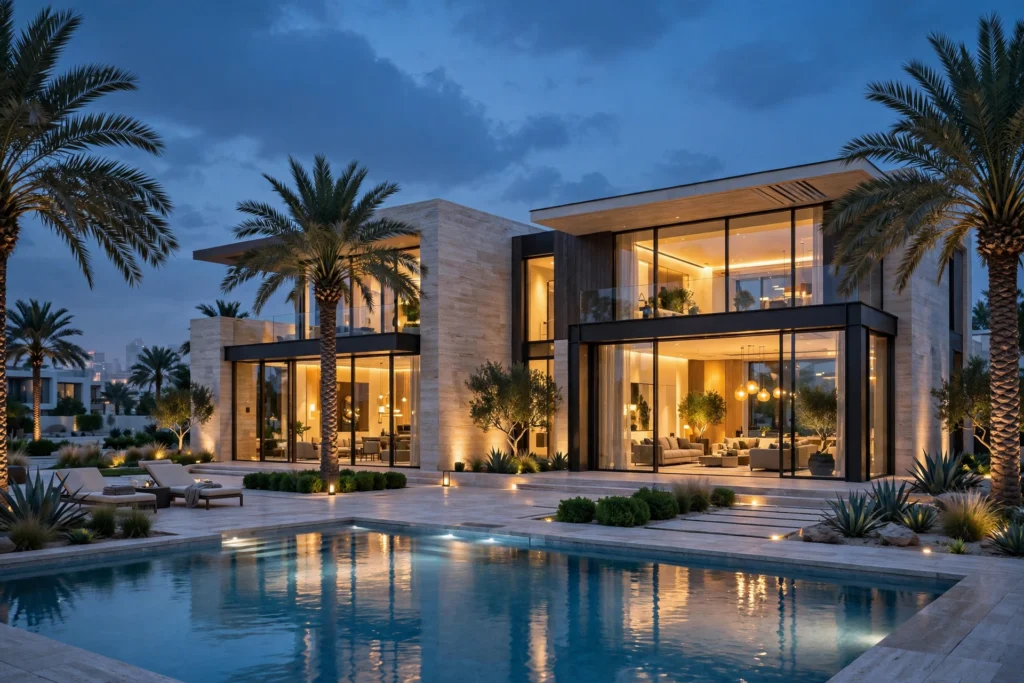
What a Majlis Is For (Design Follows Purpose)
A majlis is not a living room, and designing it like one is the first mistake. It’s a reception space: the room where you receive guests, where the men of the family host visitors, where conversations happen over coffee and dates. Everything about it serves hospitality. Seating faces inward for conversation, not outward toward a television. The atmosphere is calm and generous, not entertaining.
In many Dubai villas the majlis sits as a separate block or has its own entrance, so guests never walk through private family areas. That’s not a quirk; it’s the point. Privacy for the household, dignity for the guest. Keep asking one question of every choice: does it serve the guest’s comfort and the family’s privacy? If yes, keep it.
Women’s majlis spaces follow the same principles with their own character, often warmer in palette and softer in texture. The guidance in this article applies to both; the differences are in styling, not in the underlying rules.
Layout: The Rules That Actually Matter
Seat around the edges, keep the middle open. Traditional majlis seating runs along the walls in an L or U shape, leaving the center clear. Guests arrive, greet everyone, and find a seat without climbing over people. A low, generous central coffee table anchors the arrangement. Resist filling the middle with furniture. Empty floor in a majlis is not wasted space; it’s working space.
Control the sightlines from the door. Nobody should open the majlis door and look straight at seated guests. The classic fix is a small entrance lobby or a partition screen, even a well-placed mashrabiya panel, that breaks the direct view and gives arriving guests a moment to compose themselves.
Size it to the guest list, then add margin. As a rough guide, allow about 80cm to 1m of seating width per person along the walls. A majlis hosting ten to twelve guests wants roughly 5 by 7 meters; smaller and latecomers perch awkwardly. But bigger isn’t automatically better. An oversized majlis with four guests feels empty and kills conversation. Match the room to real life, not aspirations.
Put the practical things close. A guest washroom within a few steps, a discreet counter for the coffee setup, and a place for shoes near the entrance. These unglamorous decisions separate a majlis that hosts smoothly from one where the host keeps disappearing.
Floors, Walls, and Ceilings
Floors: Marble looks grand in photographs and feels cold and loud in person. The traditional answer is a large, high-quality carpet over the hard floor: it warms the room, softens footsteps, and tames the echo. If you love the marble, keep it in the entrance lobby and carpet the seating area. Layering a big central rug over fitted carpet looks rich if the patterns don’t fight.
Walls: Flat painted walls make a majlis feel unfinished no matter the furniture. The traditional toolkit: gypsum paneling with Islamic geometric patterns, wood wainscoting to chair-rail height, or textured plaster in warm neutrals. Paneling adds visual depth and helps acoustics. Keep the palette warm: sands, taupes, deep greens, warm greys.
Ceilings: this is where lighting lives, so plan them together. A false ceiling at 3 to 3.2 meters with cove detailing gives the classic soft perimeter glow. Avoid the grid of identical downlights; it reads as office, not hospitality. With high ceilings, one large traditional lantern or restrained chandelier, hung low enough to feel intimate, works beautifully.
Light, Air, and Quiet
These three decide whether guests linger or make excuses, and they’re the most commonly botched.
Light warm and low. Aim for 2700K to 3000K color temperature, dimmable everywhere. The formula that never fails: cove lighting for the general glow, a few lamps for pools of warmth near seating, one decorative centerpiece. Avoid a single bright overhead source; harsh top light flattens faces and nobody relaxes under interrogation lighting. Put it all on a dimmer so the host sets the mood in one touch.
Cool it like a crowded room, because it is one. Twelve guests in a closed majlis generate serious heat, and Dubai evenings are warm eight months of the year. Give the majlis its own AC zone and thermostat, sized for occupancy rather than square meters. A separate fan coil unit is the professional answer; sharing the living room’s zone leaves the majlis freezing when empty or stuffy when full. And keep outlets from blowing directly onto seated guests.
Kill the echo. Hard floors, bare walls, and high ceilings turn conversation into a muddy blur. Soft furnishings are acoustic treatment in disguise: carpet, upholstered seating, heavy curtains, and paneling all absorb sound. If the room still rings, discreet acoustic panels behind fabric finish the job invisibly.
A note on oud and ventilation. Bukhoor and oud are part of the welcome, but in a sealed air-conditioned room the smoke lingers and the AC recirculates it. Crack a window briefly after guests settle, or run the fresh-air mode on the AC for a few minutes. Small thing, big difference to the next group of guests.
Decor and Textiles
This is where character lives, and where restraint pays.
Seating: the great debate is traditional floor-level seating versus raised sofas. Low, deep seating along the walls, built as a continuous banquette or as generous individual pieces, is the most authentic and the most comfortable for long conversations. Modern raised sofas work too, especially for elderly guests, and many families mix: a raised section near the entrance, traditional low seating beyond. Whichever you choose, depth matters more than style. Shallow, upright seating looks formal and feels like a waiting room.
Curtains: heavy, full, and functional. Floor-to-ceiling drapes in a rich fabric do four jobs at once: they darken the room for afternoon gatherings, insulate against glass heat, absorb sound, and look magnificent. Sheers underneath give you a daylight option. This is not the place for flimsy ready-mades.
The statement pieces: one large carpet with real presence, one piece of calligraphy art or a carved panel, a pair of brass lanterns or a traditional coffee set displayed properly. Then stop. A majlis crowded with decor feels like a shop. Three strong pieces beat thirty small ones every time.
Mashrabiya screens deserve a special mention. Used as a room divider, a window screen, or a door insert, they filter light into those beautiful geometric shadows, add privacy without walls, and telegraph “majlis” instantly. Modern laser-cut versions in wood or metal are widely available here and cost a fraction of hand-carved work.
What a Majlis Costs in Dubai (Real AED Numbers)
Refresh (AED 15,000 to 25,000): repaint in warm tones, new curtains, a large carpet, updated lighting (warmer bulbs, a dimmer), and soft furnishings. For a majlis with good bones, this transforms the room in under a month.
Full traditional fit-out (AED 40,000 to 70,000): gypsum wall paneling, false ceiling with cove lighting, new carpet and curtains, seating (banquette or sofas), decor pieces, and a dedicated AC zone adjustment. This is the complete job most families actually commission.
Luxury (AED 100,000+): custom woodwork, hand-cut mashrabiya, marble and brass detailing, designer furniture, full smart lighting and climate scenes. No real ceiling; it depends on materials and craftsmanship hours.
Standalone majlis block: if you’re building a separate majlis structure in the garden, construction alone typically runs AED 1,200 to 1,800 per square foot before interiors, plus Municipality permits. It’s a significant project, but for families who host constantly, it’s also the one that gets used every single week.
As always, get itemized quotes: carpentry, gypsum, electrical, AC, curtains, carpet, and furniture as separate lines. “Complete majlis, AED 50,000” tells you nothing about where the money goes.
Timelines
A refresh (paint, curtains, carpet, lighting tweaks): two to four weeks, most of it waiting on curtain stitching and carpet delivery. A full fit-out (paneling, ceiling, AC work, furniture): six to ten weeks. Custom woodwork and hand-cut screens are the long poles; order them first, the day you approve the design, not after the gypsum is done. And if Ramadan or Eid gatherings are your deadline, add a buffer. Every contractor in Dubai is slammed in the two months before.
A Short Note on Etiquette, Built Into the Design
A few design decisions carry cultural weight. A separate guest entrance, or at least a path that avoids family living areas, is the most appreciated feature. An ablution-friendly washroom nearby gets noticed by every guest who uses it. A discreet shoe spot keeps the carpet beautiful. And a quiet prayer corner within reach saves the awkward mid-visit disappearance. None of this costs much; all of it says the host thought about the guest.
The Room That Remembers
Long after the marble in the lobby stops impressing anyone, the majlis keeps working. It’s where deals get discussed, where sons bring their friends, where the old men hold court on Thursday nights. Design it for that life: seating that invites long stays, light that flatters, air that’s cool without being cold, and a door that opens onto privacy. Get the layout honest and the atmosphere warm, and the decor almost takes care of itself. A great majlis isn’t decorated. It’s composed, one deliberate decision at a time, around the oldest purpose a room can have: making a guest feel honored to be there.