Everyone talks about the villa. Nobody talks about what it stands on. In Dubai, the ground matters more than almost anywhere — because it’s not what most expect. Ask a new landowner what they picture under their plot: rock, or firm earth. Then excavation starts, the shovel sinks, and sand pours back as fast as it’s dug out. Dubai has surprisingly varied ground, and your foundation must be designed for YOUR plot — not your neighbor’s.
What Dubai’s Ground Is Actually Made Of
Dubai sits on sand, but “sand” hides variety. Coast/Creek: marine deposits — loose sand with shell fragments, water table 1-2m below surface. Inland: wind-blown aeolian sand, drier, looser. Then sabkha (near old coastal flats): salt-encrusted spongy layer that compresses unevenly, corrodes concrete/steel, holds water. Underneath: denser calcarenite or rock — the question is always how deep, answered by soil investigation.
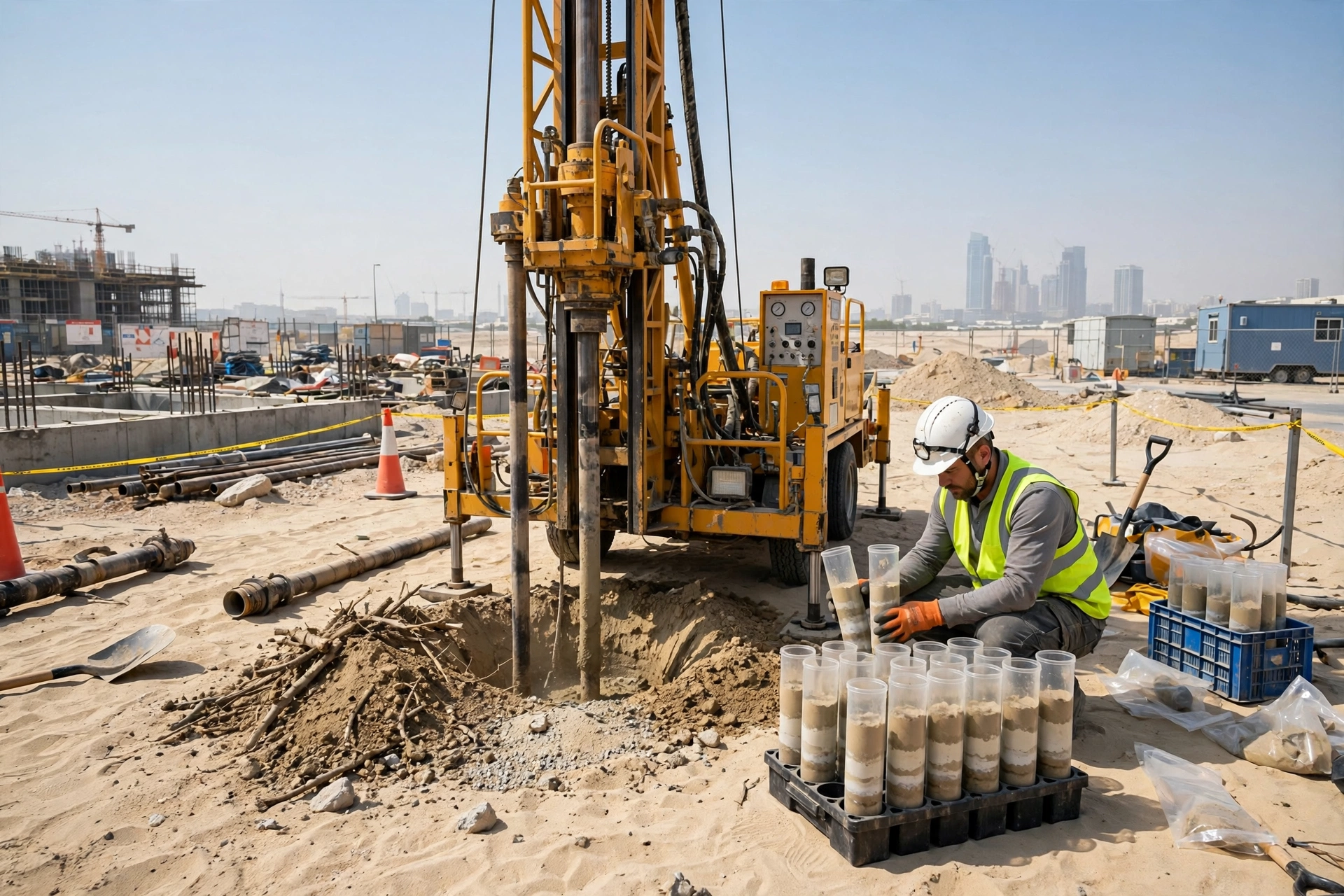
The Borehole: The Cheapest Money You’ll Spend on Your Villa
Before drawings finalize: boreholes 10-20m deep, SPT tests, water table measurement, lab chemical analysis. The geotechnical report tells your engineer: bearing capacity per layer, water location, and groundwater chemistry (Dubai’s is often saline/high sulfate — attacks ordinary concrete). The report dictates concrete mix: sulfate-resistant cement in aggressive ground. A villa with wrong concrete in sabkha won’t fail this year — it fails quietly years later, underground.
Raft, Strip, or Piles: Which Foundation Your Villa Gets
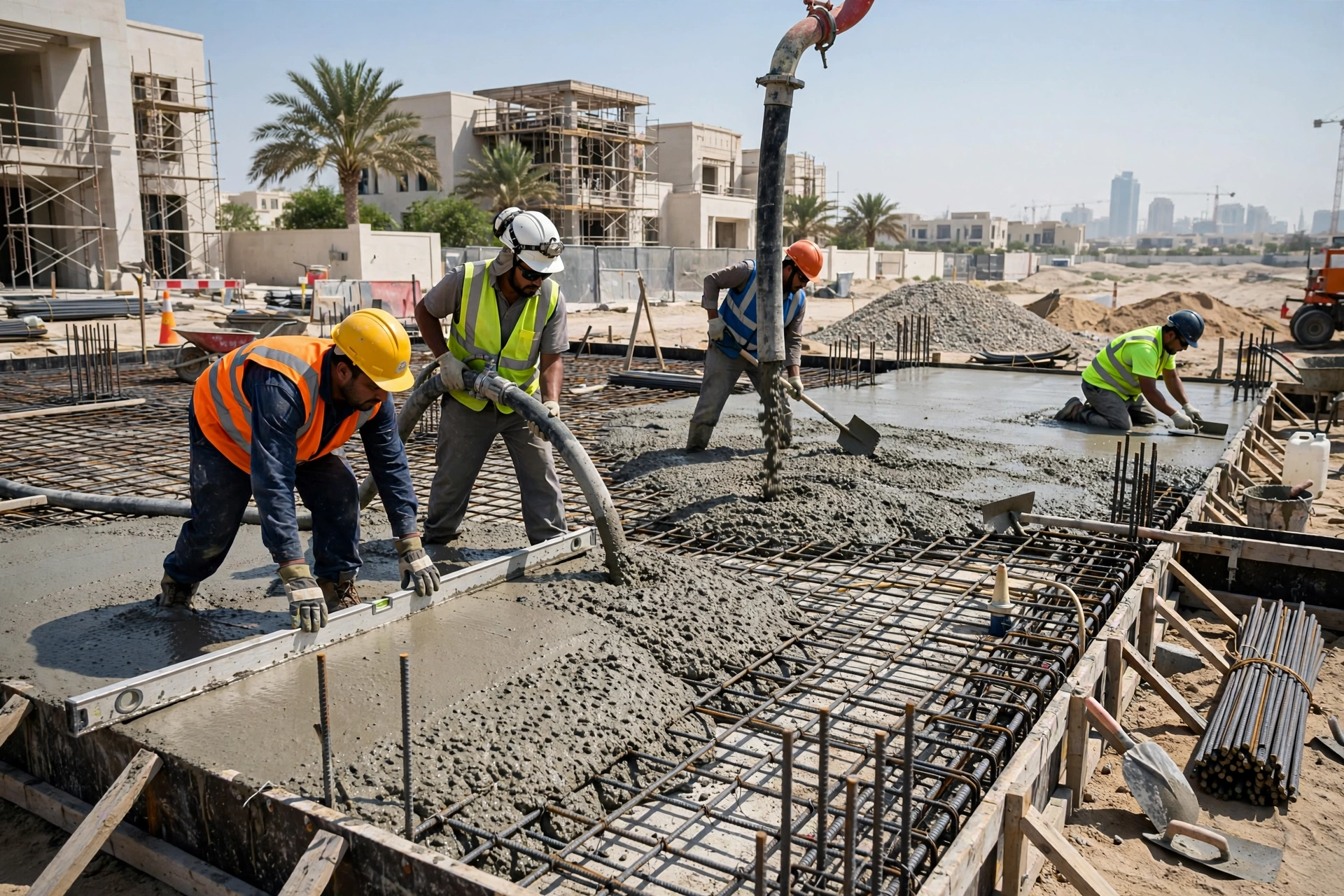
Raft: thick reinforced slab under entire footprint — most common for modern Dubai villas, spreads load, handles loose sand, forgiving. Strip footings: concrete strips under walls — older approach, concentrates loads; risky on variable soil (causes diagonal cracks). Piles: deep columns to dense layer/rock — for coastal loose saturated sand, sabkha, high water table. Most expensive, but on bad ground the only honest option. Two identical villas on different plots can legitimately need different foundations.
Dewatering: Dubai’s Open Secret
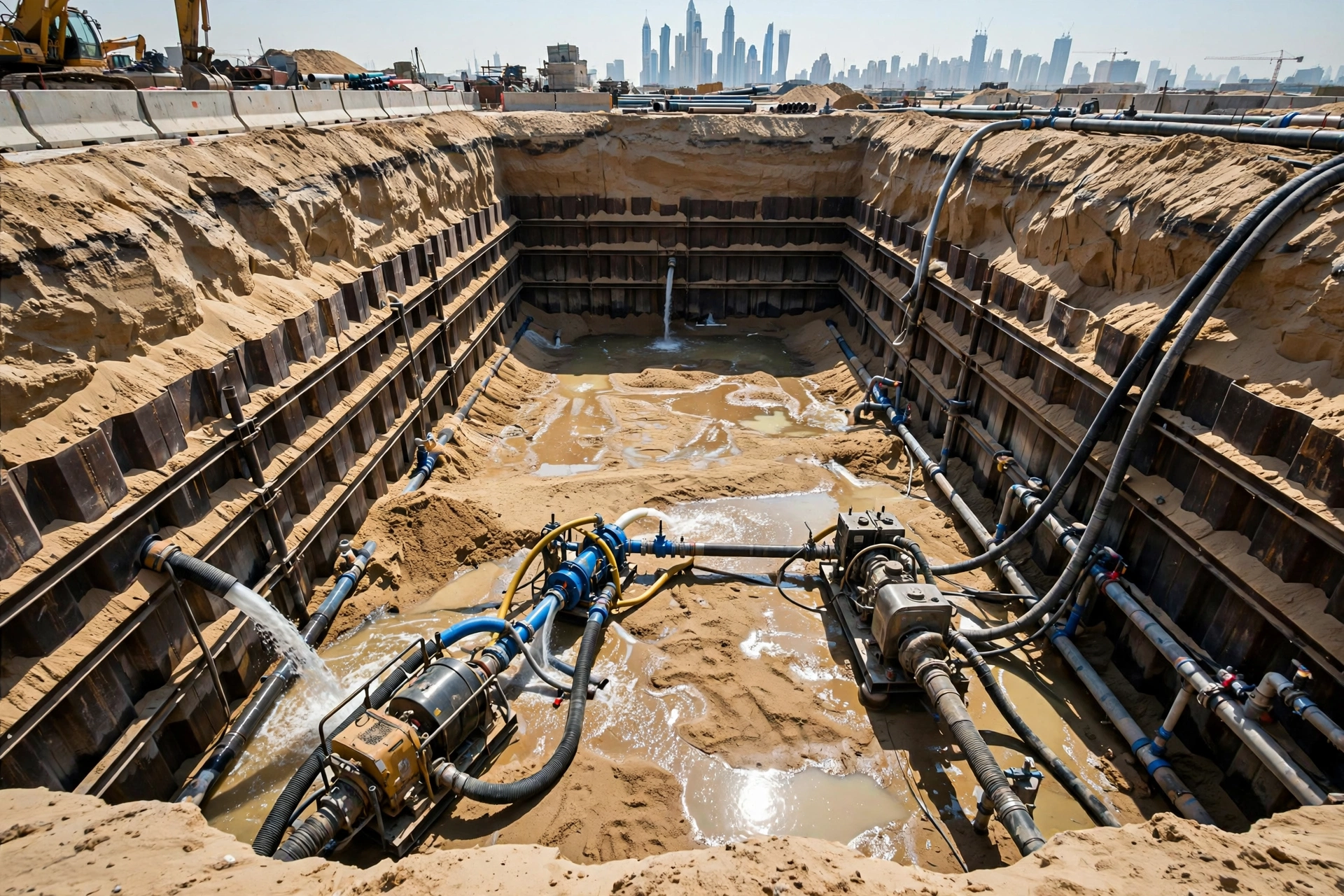
On many plots you can’t dig without pumping water first — water table so high the excavation fills like a bathtub. Dewatering (wells/wellpoints) pumps groundwater down during excavation. Needs approvals; discharge must go somewhere legal; aggressive pumping can settle neighbors’ ground. Ask upfront: is dewatering needed, who handles permits, discharge plan? “We’ll see when we dig” is a red flag — the soil report already told you.
What Happens When the Ground Gets Ignored
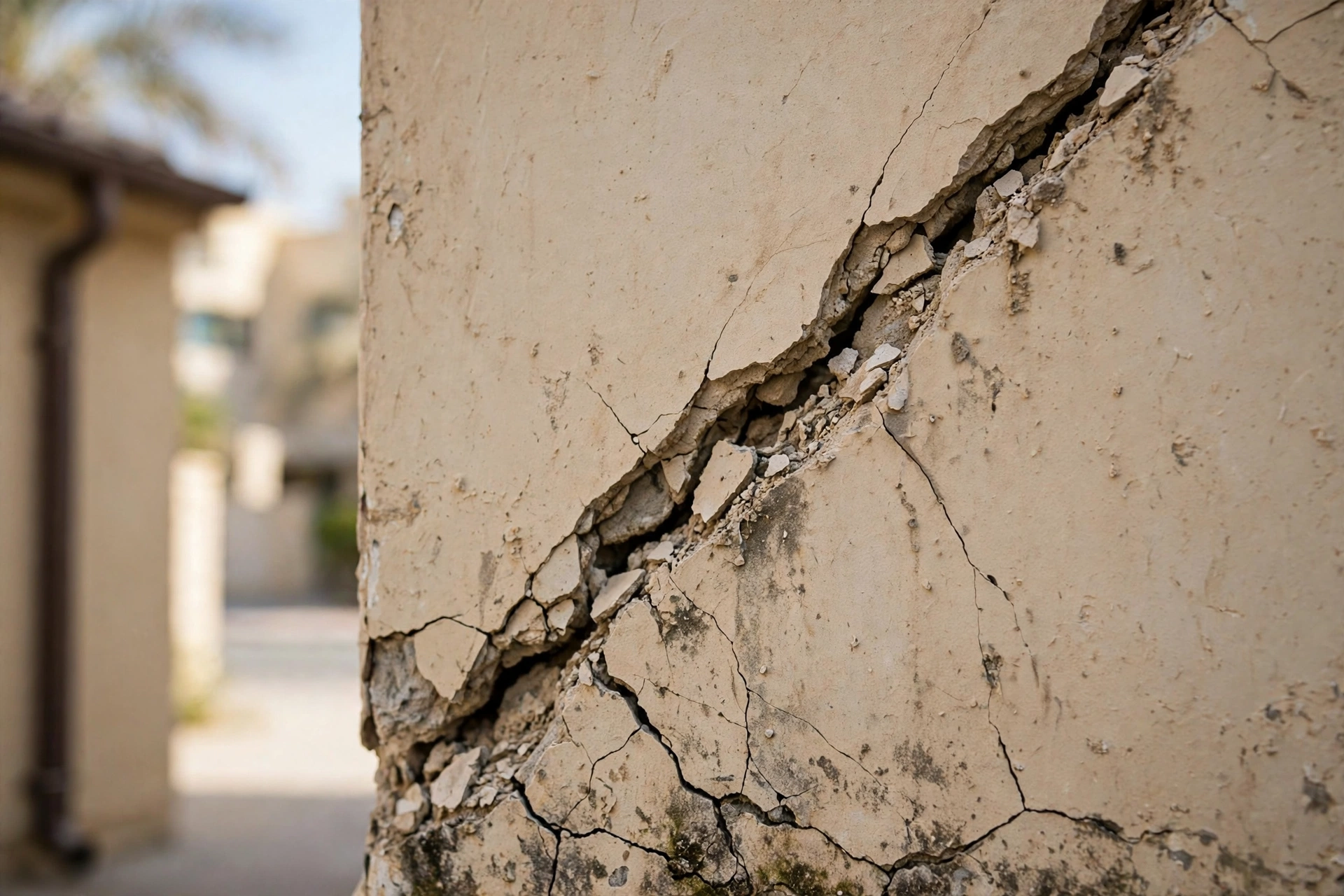
Skipping boreholes or “using the standard foundation” leads to: differential settlement (one corner sinks more — doors stick, tiles crack, diagonal cracks above windows); water damage from below (damp, peeling paint in high-water-table areas without waterproofing); corrosion (sabkha salts eating foundation concrete over years, invisible until structural). Every problem traces to: foundation designed for the building, not the ground.
What the Municipality Requires — and What to Ask Your Engineer
Dubai Municipality REQUIRES a geotechnical investigation report for new construction permits — not optional. Ask your engineer: What did boreholes find (show me the soil profile)? Where’s the water table and when measured? Why this foundation type? What concrete spec protects against groundwater chemistry? What’s the dewatering plan? What settlement is allowed and how monitored? Ask before concrete is poured, when answers can still change outcomes.