Every project in Dubai starts with a confident completion date in the contract. Ask around and you’ll find that date is treated more like a wish than a commitment. Delays here are rarely one dramatic disaster — they’re a dozen small friction points, each shaving days or weeks until the timeline is unrecognisable. Once you know where the friction lives, you can plan around most of it.
Permits and Approvals: The Queue Nobody Controls
The most common delay sits at a desk, not on site. Projects need Dubai Municipality approvals, plus Civil Defence, drainage, and master developer NOCs. Each runs its own timeline. One correction — a mislabelled drawing — sends the file to the back of the queue. Fix: hire an experienced approvals coordinator, double-check submissions, never mobilise until the permit is in hand. Also plan for forgotten NOCs: road access, shoring, utility clearances. Discovering a DEWA cable in your excavation is a delay you never get back.
The Midday Break and the Ramadan Slowdown
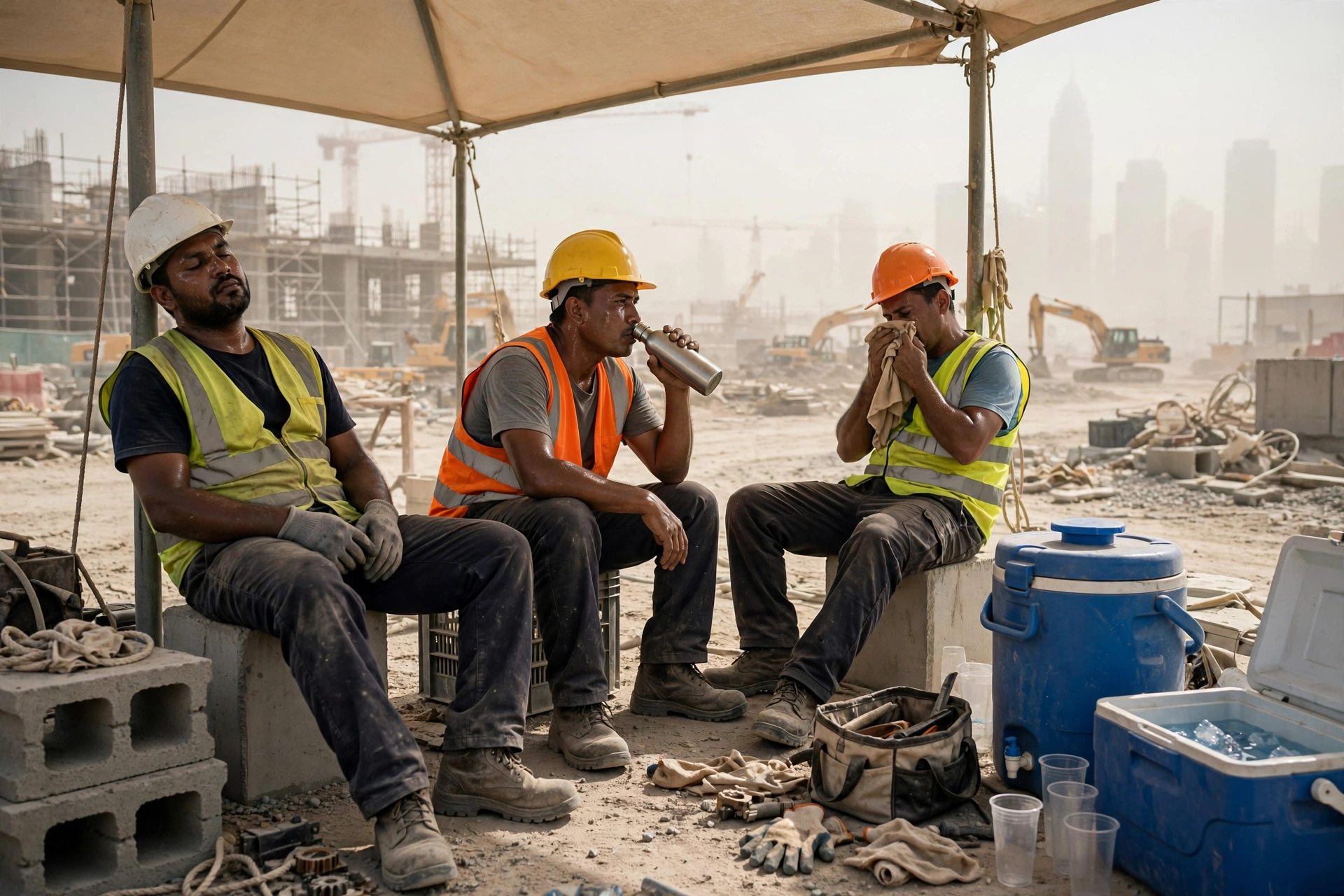
From mid-June to mid-September, the midday work ban prohibits outdoor labour roughly 12:30 to 3:00 pm — law, not suggestion. You lose more than 2.5 hours; the shoulder hours are less productive too. Then Ramadan shortens hours and slows the supply chain. Add Eid, National Day, New Year — a realistic programme marks these explicitly and shifts heavy outdoor work away from peak summer. If your contractor’s timeline doesn’t account for these, it’s fiction.
Materials: The Supply Chain You Can’t See
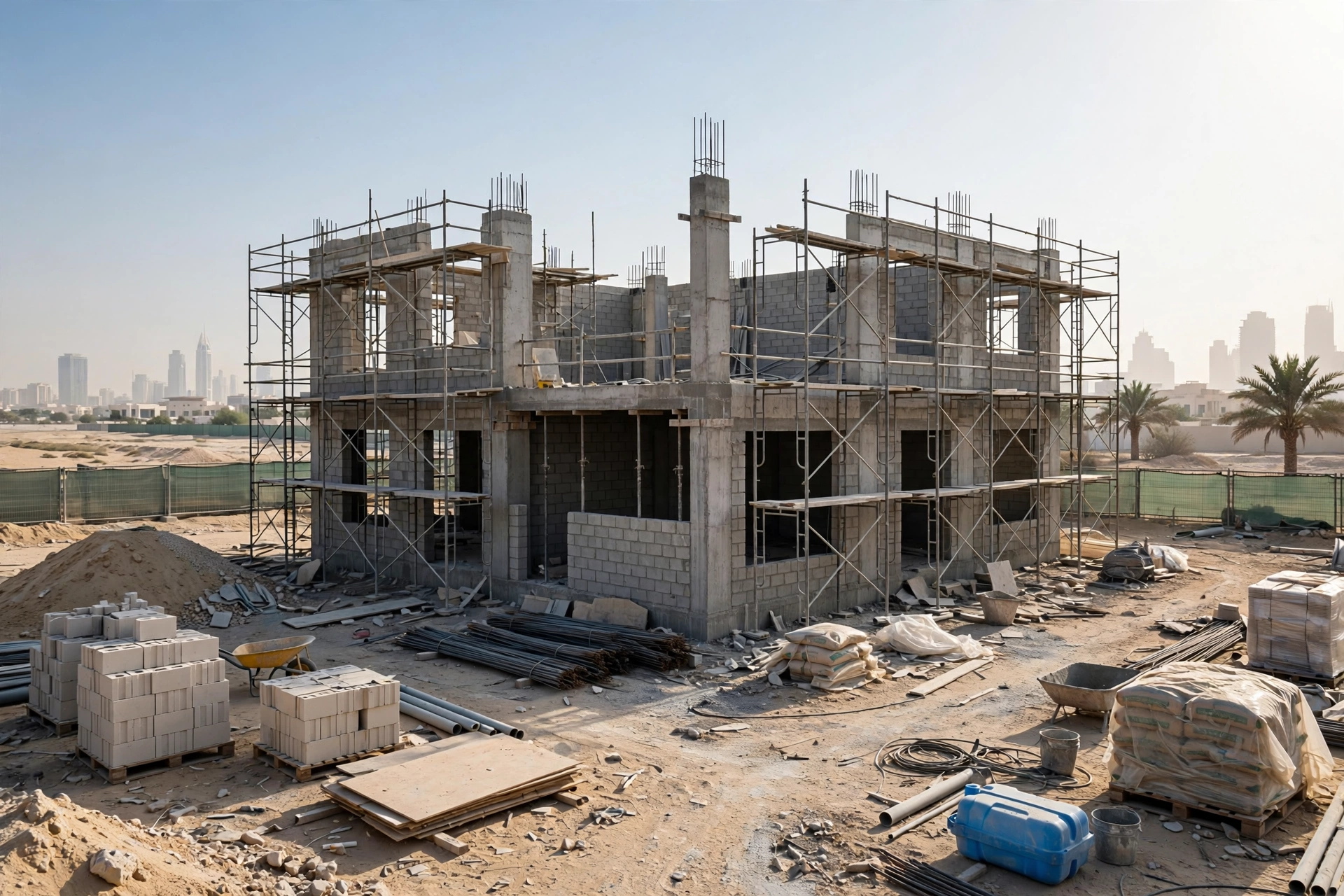
Dubai builds with imports — stone, sanitary ware, elevators arrive by sea via Jebel Ali. When a vessel delays, your site waits. Defence: order long-lead items (elevators, chillers, facade panels) the moment design freezes, not when site is ready. Keep a procurement schedule tracked weekly alongside construction. A contractor who can’t tell you when AC units arrive hasn’t thought about it.

Design Changes Mid-Build: The Expensive Habit
Moving a staircase after slab is cast, changing facade material mid-build — every change means revised drawings, approvals, demolished work, reordered materials. Prevention: spend real time with 3D views before construction, freeze the design, put formal change-control in the contract. Decide finishes early — “we’ll decide later” becomes procurement delays.
Cash Flow: The Quiet Site Killer
Many delays are payment delays in disguise. Contractor funds labour and materials weeks before certification. Late client payments slow the site; underbidding contractors starve your project. Protect both sides: pay on time, check contractor financial health, use milestone-linked payments with retention and liquidated damages.
DEWA Connections and the Final Stretch
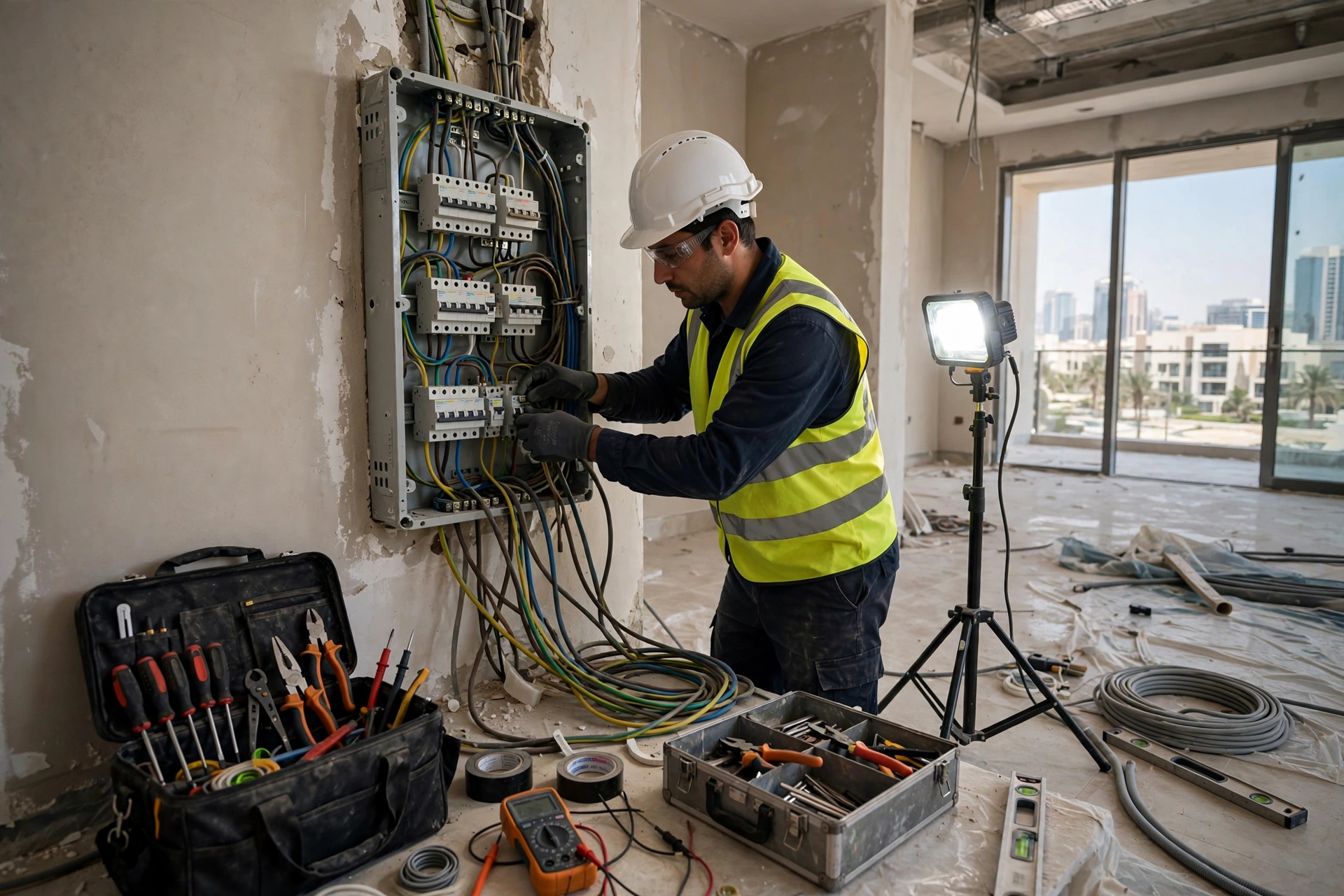
The cruellest delays hit at the end. DEWA permanent connection has its own inspections and doesn’t care your furniture arrives next week. Start DEWA applications early, schedule commissioning as a proper phase, insist on realistic snagging.
Building Delay-Proof Into Your Plan
A delay-resistant project has visible buffers where risk is, a tracked procurement schedule, weekly progress meetings with written minutes, and honest delay classification in the contract. Projects that finish on time aren’t lucky — they’re honest about obstacles from day one.