A bathroom renovation in Dubai fails or succeeds long before the first tile is picked. We say this after years of tearing out other people’s mistakes: the bathrooms that end up beautiful are the ones where the layout was settled on paper, the waterproofing was done properly, and nobody moved a drain on a whim halfway through. Get those three right and the tiles almost take care of themselves.
Bathrooms here live a harder life than bathrooms anywhere else we’ve worked. Steam from hot showers in summer, hard water that leaves scale on everything, cleaning products strong enough to bleach grout, and AC running all day pulling moisture through every gap. A bathroom that looks fine on handover day can start peeling, leaking and smelling within two years if the invisible work was skipped. This guide covers what to plan, what to spend, and what to watch — from a contractor that renovates bathrooms across Dubai every week.
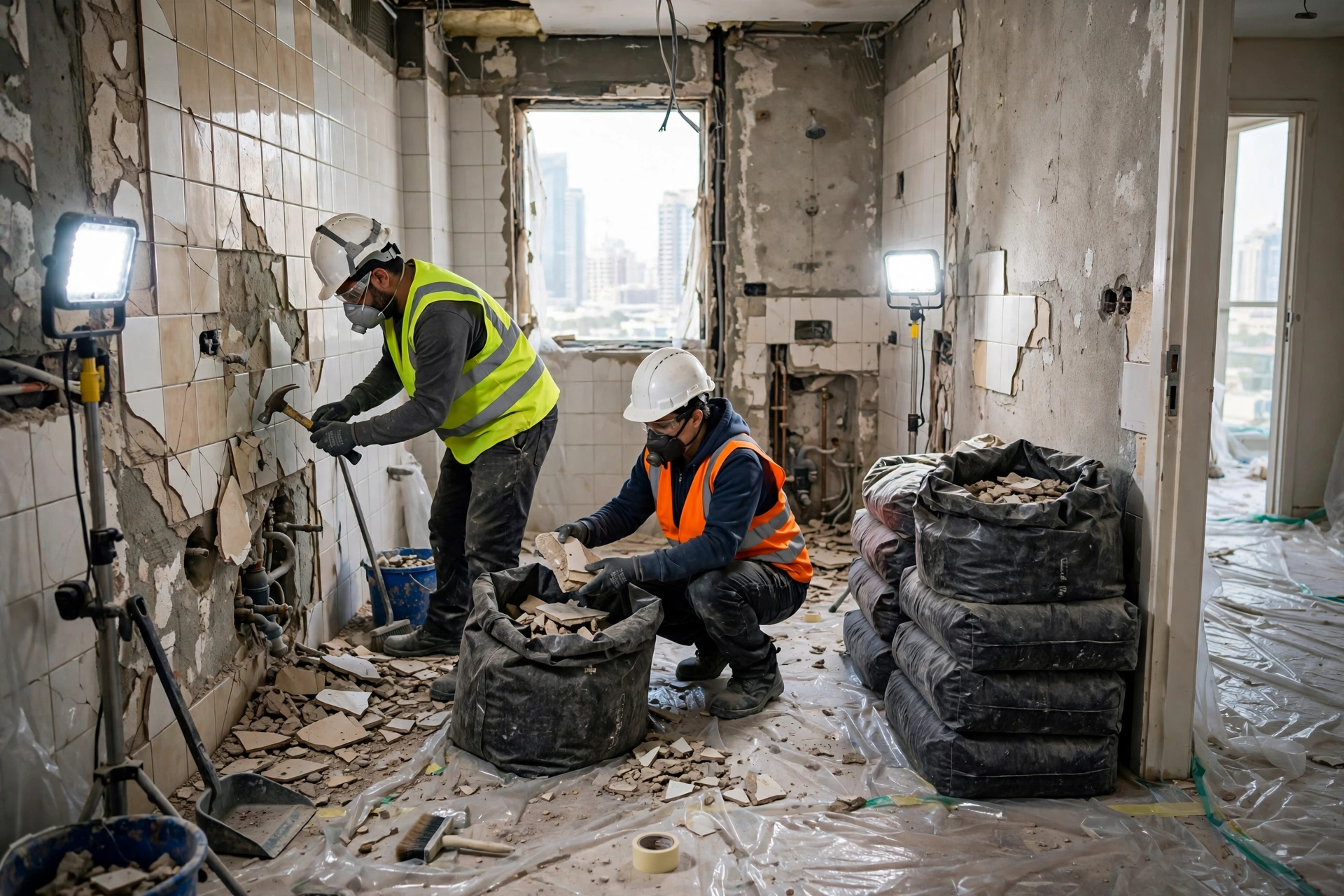
Start With the Layout, Not the Tiles
Most Dubai bathrooms are small. Villa master bathrooms are generous, but guest bathrooms and apartment bathrooms are often five to six square metres of tightly packed fixtures. In a space that tight, every centimetre is a decision.
Before choosing anything, draw the room to scale — or make your contractor draw it — and mark three things: where water enters (supply pipes), where it leaves (drains and soil pipes), and where the ventilation shaft sits. In apartments especially, these are the fixed points of the universe. The soil pipe for the WC connects to the building’s stack; moving it is either impossible or so expensive you’ll wish you hadn’t.
Within those fixed points, ask how the room is actually used. Is it a guest bathroom that needs to look immaculate twice a month? A family bathroom where three people get ready at once? A master ensuite where one person wants a long shower? That answer decides whether you need a double vanity, a bigger shower tray, or just better storage.
One layout mistake we see constantly: the shower door swinging into the WC, or a vanity drawer that can’t open because it hits the door. Tape the layout on the floor with painter’s tape before anything is ordered. Walk through it. Open imaginary doors. It takes twenty minutes and saves weeks of regret.
Waterproofing: The Work You Never See
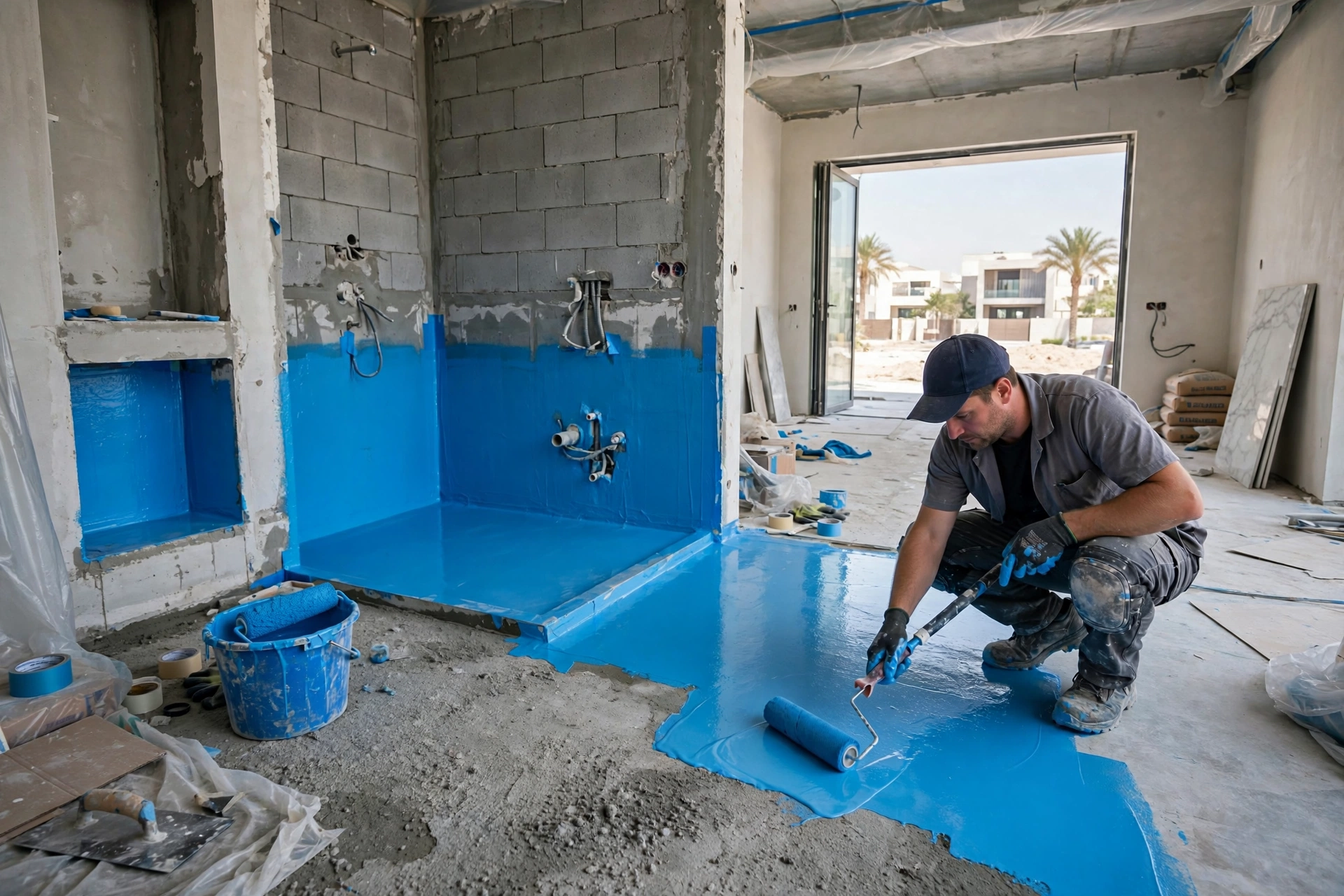
If your bathroom renovation in Dubai includes only one non-negotiable, this is it. Waterproofing is a liquid or sheet membrane applied to the floor and up the shower walls before a single tile goes down. You will never see it again. It is also the only thing standing between your shower and your neighbour’s ceiling.
Dubai’s problem is not rain — it’s daily, concentrated water exposure. A shower runs eight to ten minutes a day, three hundred days a year, in a room that swings between steamy and air-conditioned. Water finds every pinhole. The leaks we get called to fix are almost always the same story: tiles laid directly on concrete or old adhesive, no membrane, and water travelling sideways under the floor until it appears as a stain two rooms away — or drips through the floor slab into the flat below.
Proper waterproofing means the membrane on the entire wet-area floor, up the shower walls to at least 1.8 metres, around every pipe penetration with collars, and a flood test before tiling: the drain is plugged, the floor is filled with a few centimetres of water, and it sits for 24 to 48 hours to confirm zero leakage. Ask your contractor for photos of the membrane before tiling and the flood test. If they look uncomfortable being asked, that’s your answer about their standards.
Moving Plumbing Is Where Budgets Go to Die
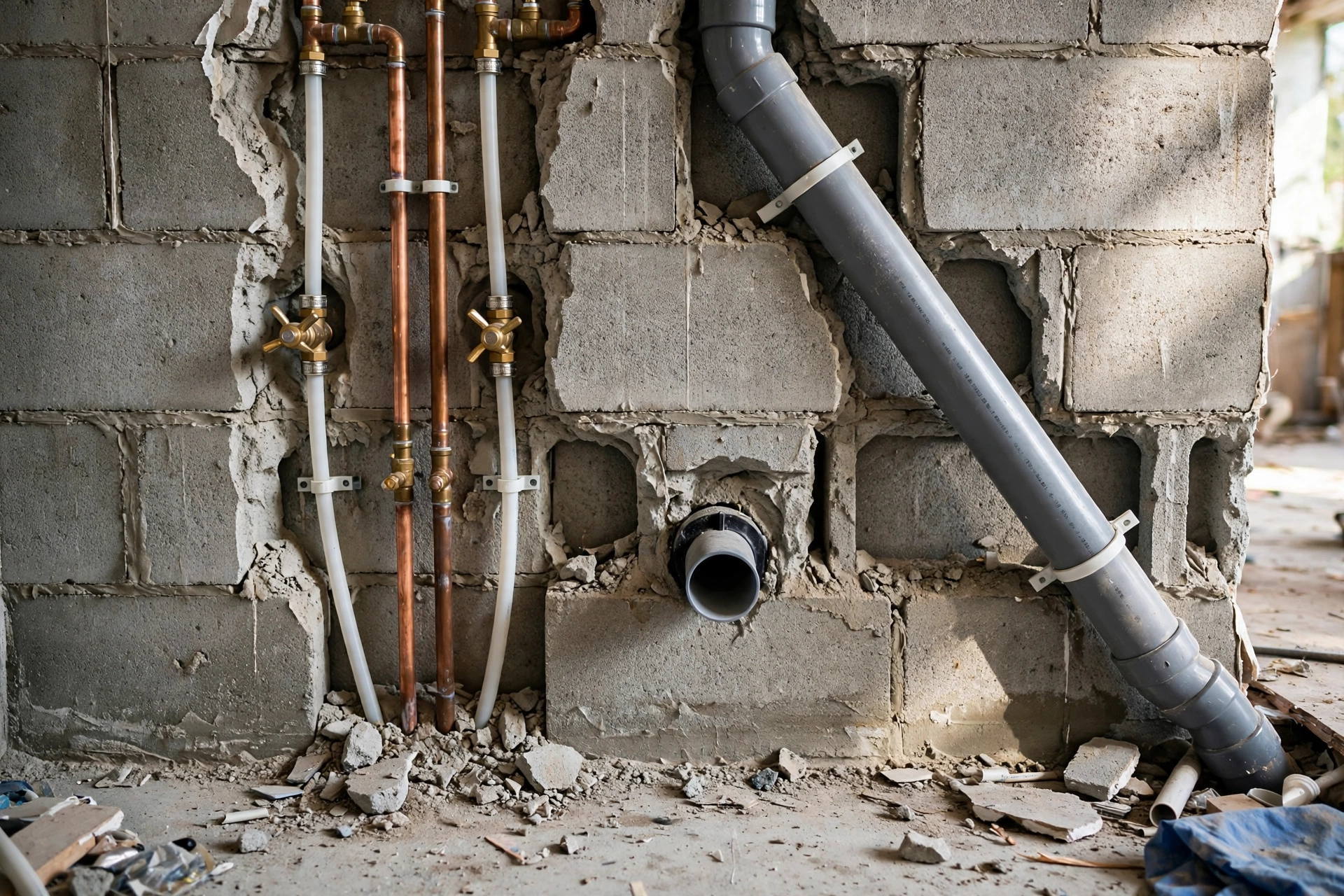
Keeping every fixture where it already is: this is the cheapest renovation. Moving the WC or shower drain: this is the most expensive single decision in a bathroom renovation. Everything else — tiles, vanity, taps — costs roughly the same wherever they sit. Drainage is what moves money.
The reason is simple. Supply pipes (the ones bringing water in) are thin and flexible; rerouting them is easy. Drainage pipes are thick, need a constant downward slope, and connect to fixed points in the building. Moving a shower drain half a metre means cutting the floor slab, and in apartments that slab is shared with the neighbour below — which means their ceiling, their NOC objections, and building management’s very particular opinion on the matter.
So the rule: move fixtures only when the layout genuinely doesn’t work, and budget for it honestly. A straight like-for-like replacement of a vanity or WC keeps the plumbing bill small. Relocating the shower to the other side of the room can add AED 5,000–10,000 in civil work alone, before a single tile is laid.
One thing worth paying for regardless: replace old flexible connectors and angle valves while the walls are open. These are the parts that burst at 2 AM. New brass fittings cost almost nothing during a renovation and everything during an emergency callout.
Materials That Survive Steam, Hard Water and Bleach
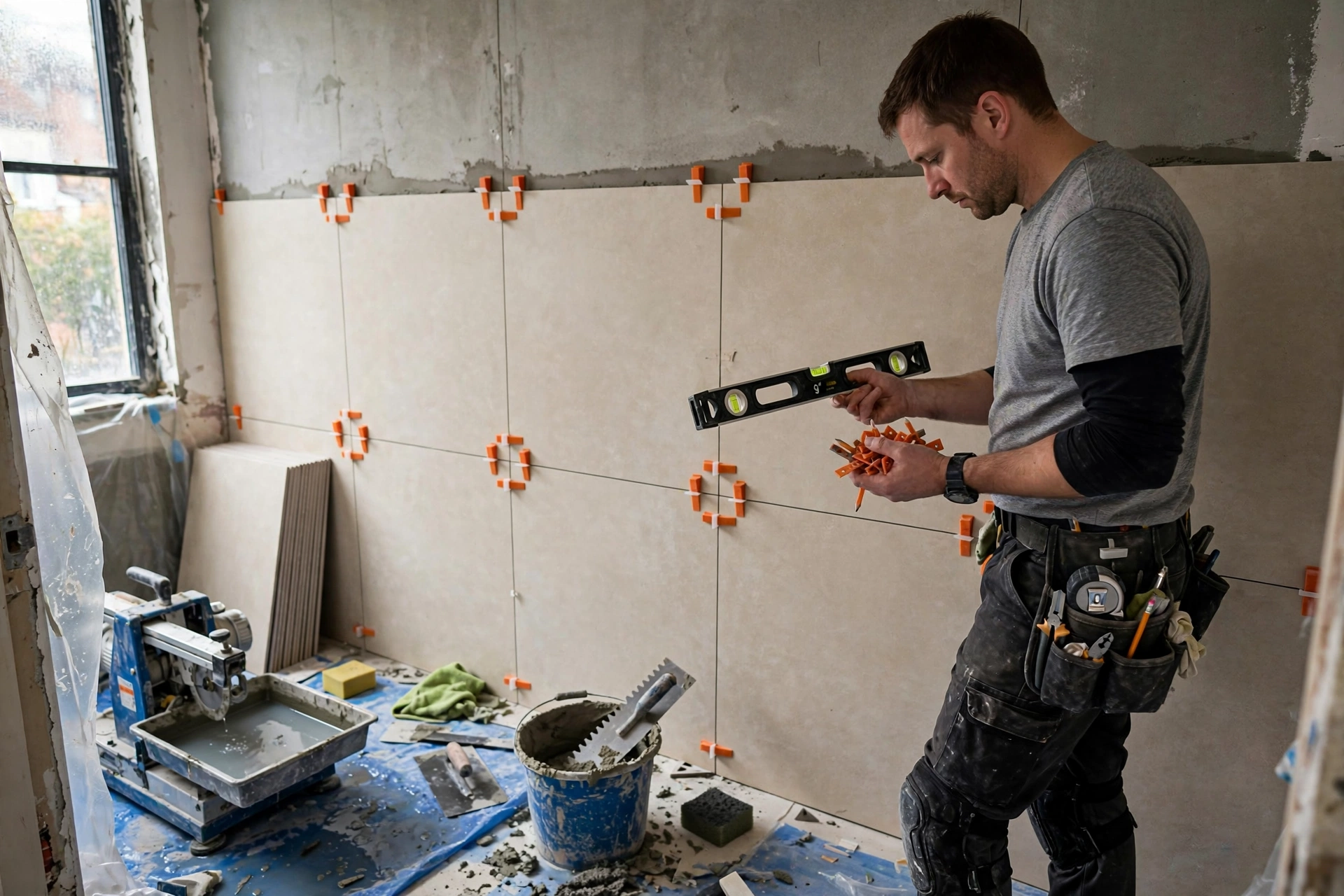
Dubai bathrooms punish the wrong materials fast. Here’s what actually lasts.
Wall and floor tiles: Porcelain is the workhorse — dense, nearly waterproof, shrugs off hard water and harsh cleaners. Large-format tiles (60×60 cm or 60×120 cm) mean fewer grout lines, and grout lines are where mould lives and cleaning time goes. On floors, pick a tile with some texture (R10 slip rating or better); a glossy floor tile plus wet feet is a hospital visit waiting to happen. Natural stone — marble, travertine — is gorgeous and high-maintenance: it stains, it etches with acidic cleaners, and it needs sealing every year or two. If you love the look, use stone-look porcelain and save yourself the grief.
Grout: The most underestimated material in the room. Standard cement grout absorbs water and stains; in a steamy bathroom it goes grey within a year. Epoxy grout costs three to four times more and is worth every dirham in the shower area — it’s waterproof, stain-proof and doesn’t feed mould. Use it at least in the wet zone.
Vanity and cabinetry: Solid wood looks warm and swells eventually. Moisture-resistant MDF or marine plywood with a proper edge-sealed laminate or lacquer finish is the sensible choice. Whatever you choose, the vanity must sit on legs or be wall-hung — a cabinet sitting directly on a wet floor rots from the bottom up, guaranteed.
Ceilings: Moisture-resistant gypsum board or PVC panels. Standard gypsum in a steamy bathroom softens and sags. Paint with a bathroom-grade anti-mould paint, not whatever the painter has left over.
Mirrors: Get a demister pad behind the main mirror if anyone takes hot showers. And buy mirrors with sealed edges — unsealed mirror edges in humidity develop black spots (desilvering) that no amount of cleaning fixes.
Fixtures: Where to Spend and Where to Save
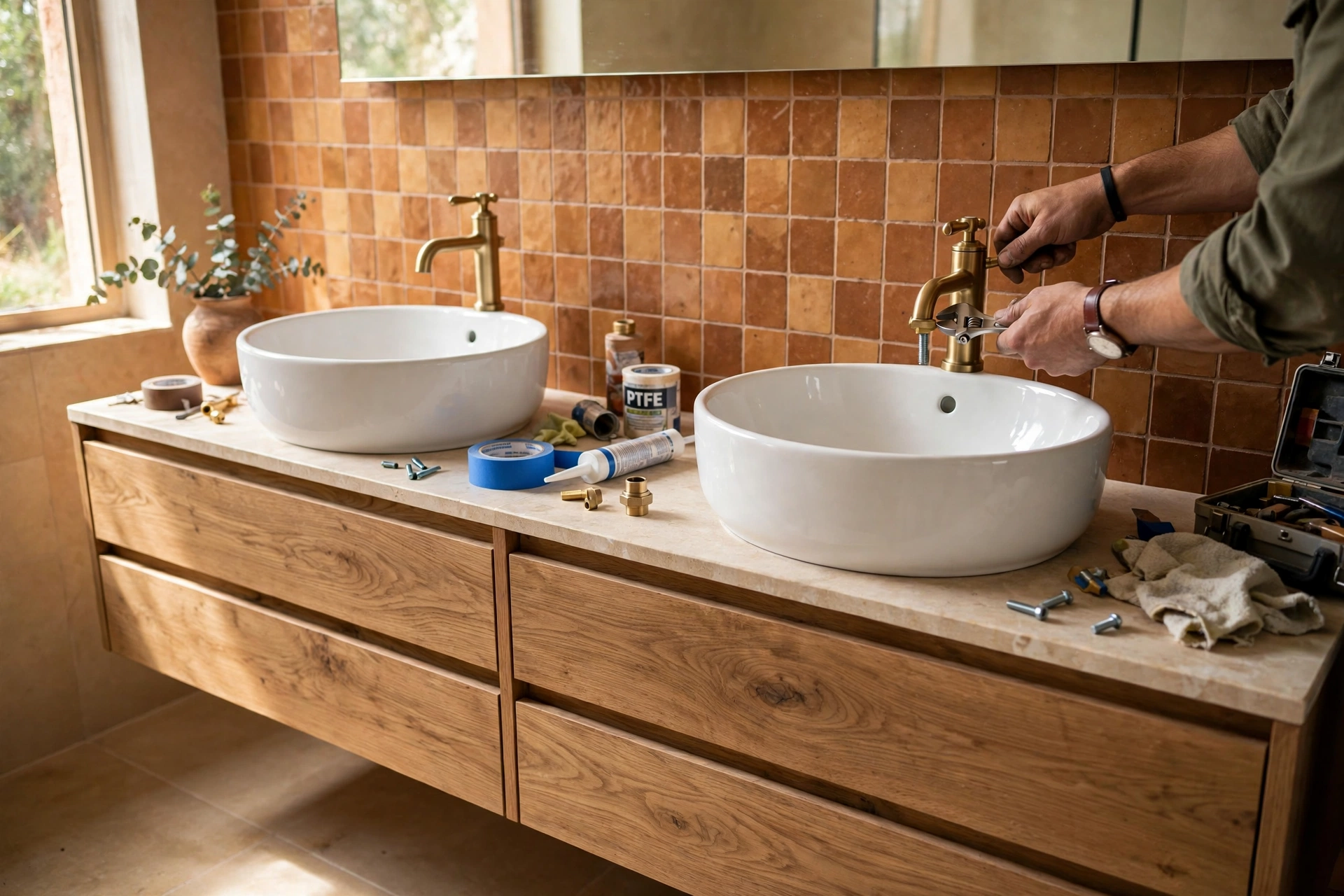
Not all fixtures deserve equal budget. Spend where you touch and see daily; save where nobody notices.
Worth the money: The shower mixer and the WC. A good thermostatic mixer holds temperature steady when someone flushes elsewhere — anyone who’s been scalded mid-shower knows the value. A wall-hung WC makes the floor underneath cleanable with one mop stroke, and the concealed cistern hides in the wall where it never needs dusting. Both get used several times a day for a decade; buy once.
Save here: The towel rail, the toilet-paper holder, the soap dish. Chrome accessories from a mid-range brand look identical to luxury ones from two metres away and cost a fifth. Same for the bathroom door handle — nobody ever admired one.
The bathtub question: Dubai villas often have a tub nobody uses. If yours sits full of dust and laundry, consider removing it during the renovation and gaining a proper walk-in shower plus storage. If you genuinely soak, keep it — but know that a quality freestanding tub plus the plumbing to feed it is one of the pricier line items in the room.
Water pressure: Before choosing rain showers and body jets, check your building’s actual water pressure. A 30 cm rain head on weak pressure is a disappointing drizzle. Your contractor should test pressure first; if it’s low, a pressure-boosting pump for the bathroom line solves it.
Ventilation and Lighting: The Comfort Details
A bathroom without proper ventilation grows mould behind the vanity where you can’t see it until it smells. The extractor fan must vent to the outside or into the building’s ventilation shaft — not into the ceiling void, which just moves the moisture problem out of sight. Run it on a timer or humidistat so it keeps working after you’ve left the room; a fan that only runs while the light is on barely helps.
Lighting deserves more thought than the single ceiling spot most bathrooms get. Plan three layers: bright, even light at the mirror for shaving and makeup (vertical light on both sides beats one harsh downlight above), a general ceiling light, and something softer for evening baths. Waterproof-rated fittings (IP44 or higher) within the splash zones are not optional — they’re a safety requirement.
And one small luxury that costs little during renovation: a heated towel rail. Dubai’s humidity means towels stay damp for hours; a rail dries them in one and stops that musty smell. The electrical point costs almost nothing to add while walls are open.
Approvals: What Your Building Actually Requires
In villas, a straightforward bathroom renovation — same layout, no structural changes — usually needs nothing more than your community’s standard renovation NOC, if that. But apartments are a different world. Nearly every Dubai apartment building requires a renovation NOC before work starts: your contractor submits drawings, their trade licence, and sometimes a refundable deposit. Budget one to three weeks for this.
What actually triggers extra approvals: moving drainage (needs building management sign-off and sometimes Dubai Municipality involvement), any work on the WC soil stack, and changes to waterproofing in a way that affects common areas. Working hours are restricted in almost every residential building — typically no noisy work before 8–9 AM or after 5–6 PM, and often nothing on Fridays. Your contractor should know your building’s specific rules; if they don’t ask, ask them.
Never start demolition before the NOC is in hand. Stop-work orders in a shared building come with fines, angry neighbours, and a building manager who will remember your unit number for years.
What Does It Cost? Honest Bands
All figures are approximate for one standard bathroom (4–6 sq m), labour and materials in Dubai.
- Refresh (AED 12,000–25,000): New taps and accessories, repaint, re-grout or re-silicone, new mirror and lighting, maybe a new WC seat and shower head. No tile changes, no plumbing moves. Makes a tired bathroom feel new.
- Mid-range renovation (AED 30,000–60,000): Full re-tile in porcelain, new vanity and sanitaryware, new mixer and shower set, proper waterproofing membrane, epoxy grout in the wet area, updated lighting and fan. Fixtures stay roughly where they are. Where most Dubai families land.
- High-end renovation (AED 70,000–130,000+): Premium tiles or stone, wall-hung WC with concealed cistern, walk-in shower with frameless glass, freestanding tub, designer brassware, heated towel rail, full lighting design. Possibly layout changes with drainage relocation.
The two classic budget killers: moving drainage (see above), and changing your mind after materials are ordered — a different tile means re-ordering, re-delivery, and days of idle labour you’re still paying for. Finalise every selection before demolition starts.
How Long Does It Take?
A refresh with no tile work: 1 to 2 weeks. A full renovation with re-tiling and new fixtures in the same positions: 3 to 5 weeks of site work. Add layout changes and drainage relocation: 5 to 8 weeks.
The hidden time is in lead times, not labour. Sanitaryware and brassware from European brands can take 4 to 8 weeks to arrive; custom vanities take 3 to 4 weeks to manufacture after final measurements. Order everything before demolition day — a bathroom torn apart waiting for a back-ordered mixer is the most stressful room in the house.
And plan for life without that bathroom. In a one-bathroom apartment, a full renovation means weeks of inconvenience — discuss the schedule honestly with your contractor, including which days you’ll have no water at all.
Before You Start
A bathroom is the smallest room in the house and one of the most technically demanding to renovate well. The visible result — the tiles, the taps, the glass — is maybe thirty percent of the work. The rest is waterproofing, drainage slopes, ventilation routing and material choices that have to survive a decade of steam and hard water.
If you’re planning a bathroom renovation in Dubai, get three things settled before anyone picks up a hammer: a scale drawing of the layout you’re committing to, a contractor who will show you the waterproofing before it’s tiled over, and every fixture ordered and on its way. With those in place, the renovation is straightforward. Without them, it’s a gamble.
If you’re unsure whether your plans need building approval, what the waterproofing standard should be, or what a realistic budget looks like for your bathroom, talk to a qualified contractor first — a good one will tell you what you don’t need to spend money on, not just what you do. You can reach our team through the Contact page or browse what we do on the Services page.
Frequently Asked Questions
How much does a bathroom renovation cost in Dubai?
For a standard 4–6 sq m bathroom, expect AED 12,000–25,000 for a cosmetic refresh, AED 30,000–60,000 for a full mid-range renovation with re-tiling and new fixtures, and AED 70,000–130,000+ for a high-end finish with layout changes. Moving drainage is the biggest cost driver.
Do I need approval to renovate my bathroom in Dubai?
In most apartment buildings, yes — you need a renovation NOC from building management before work starts, which takes one to three weeks. Villa communities are usually simpler for like-for-like renovations. Moving drainage or touching the soil stack can require additional approvals.
How long does a bathroom renovation take?
A cosmetic refresh takes 1–2 weeks. A full renovation with re-tiling takes 3–5 weeks of site work, or 5–8 weeks with layout changes. Order all fixtures before demolition starts — imported sanitaryware can take 4–8 weeks to arrive.
What is the most important part of a bathroom renovation?
Waterproofing. A proper membrane on the floor and shower walls, with a 24–48 hour flood test before tiling, is the only thing preventing leaks into neighbouring units. Ask your contractor for photos of the membrane before tiles go on.
Should I use marble in my Dubai bathroom?
Natural marble is beautiful but high-maintenance in Dubai’s hard water and humidity — it stains, etches and needs regular sealing. Marble-look porcelain gives the same appearance with none of the upkeep and is what we recommend for most homes.
Can I renovate just one bathroom while living in the apartment?
Yes, and it’s common. Plan for 3–5 weeks of disruption for that bathroom, confirm the work schedule (including no-water days) with your contractor in advance, and check your building’s permitted working hours before work begins.