Kitchen Renovation in Dubai: Design Ideas, Costs, and Timelines
Here’s the question every Dubai kitchen renovation needs to answer before a single tile is picked: do you actually cook in your kitchen? There are two kinds of kitchens here — the show kitchen, built for reheating takeaway and hosting guests, and the working kitchen, where someone is frying pakoras at high heat and the masala smell needs somewhere to go. We’ve seen gorgeous open kitchens become unusable the first time a proper tadka hit the pan.
Be honest about how you cook. That answer shapes everything: layout, ventilation, materials, even the budget.
Open or Closed? The Decision That Matters Most
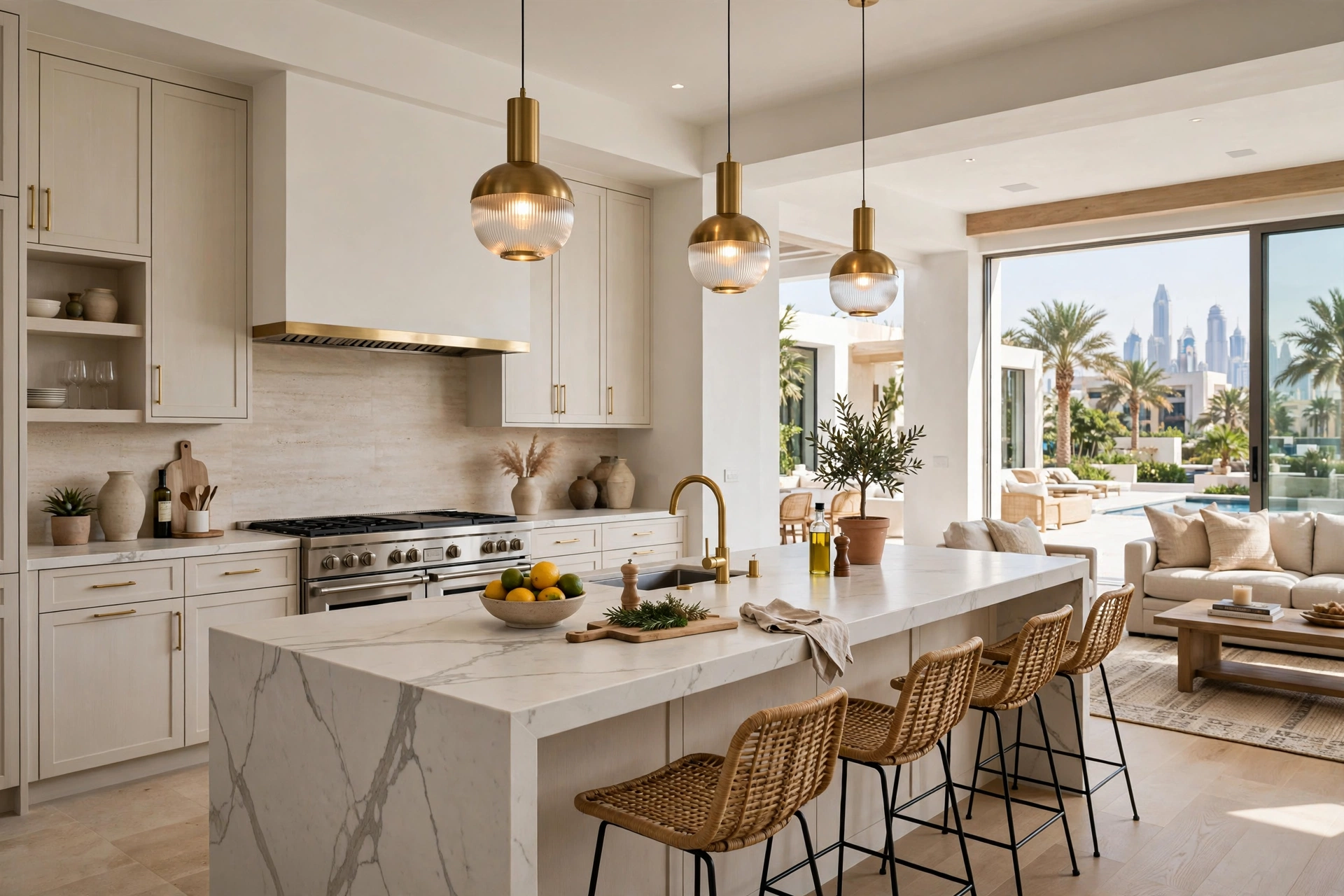
This isn’t really a design debate in Dubai. It’s a lifestyle one.
Open kitchens suit light cooking — salads, pasta, a quick stir-fry. They make smaller spaces feel larger. But heavy frying and slow-cooked curries send smells through the whole living area and into the AC vents. Once grease is in your ducting, you’ll know about it for months.
Closed kitchens are the practical answer for families who cook seriously. A door changes everything: ventilation becomes manageable, the rest of the house stays clean and odour-free. The trade-off is they can feel dark in smaller apartments.
The middle ground works well: a semi-open layout with a wide pass-through window or sliding glass doors. Light and connection when you want them, a closed door when the biryani is on.
Layouts That Fit Dubai Homes
The L-shape is the workhorse — fits most rectangular kitchens, keeps the working triangle (sink, stove, fridge) tight, leaves room for a small table.
The galley suits long, narrow spaces. Efficient for one cook, awkward for two. Don’t overload both sides with deep cabinets or it becomes a corridor.
The U-shape is ideal for larger villa kitchens where serious cooking happens — generous counter space, everything within reach.
The island is where people overspend. It only works with at least 100–120 cm of clearance on every side — in a smaller kitchen it becomes an obstacle you squeeze past daily.
One practical note: many Dubai apartments house the washing machine and dryer in the kitchen. If there’s a utility balcony or laundry room, move them there.
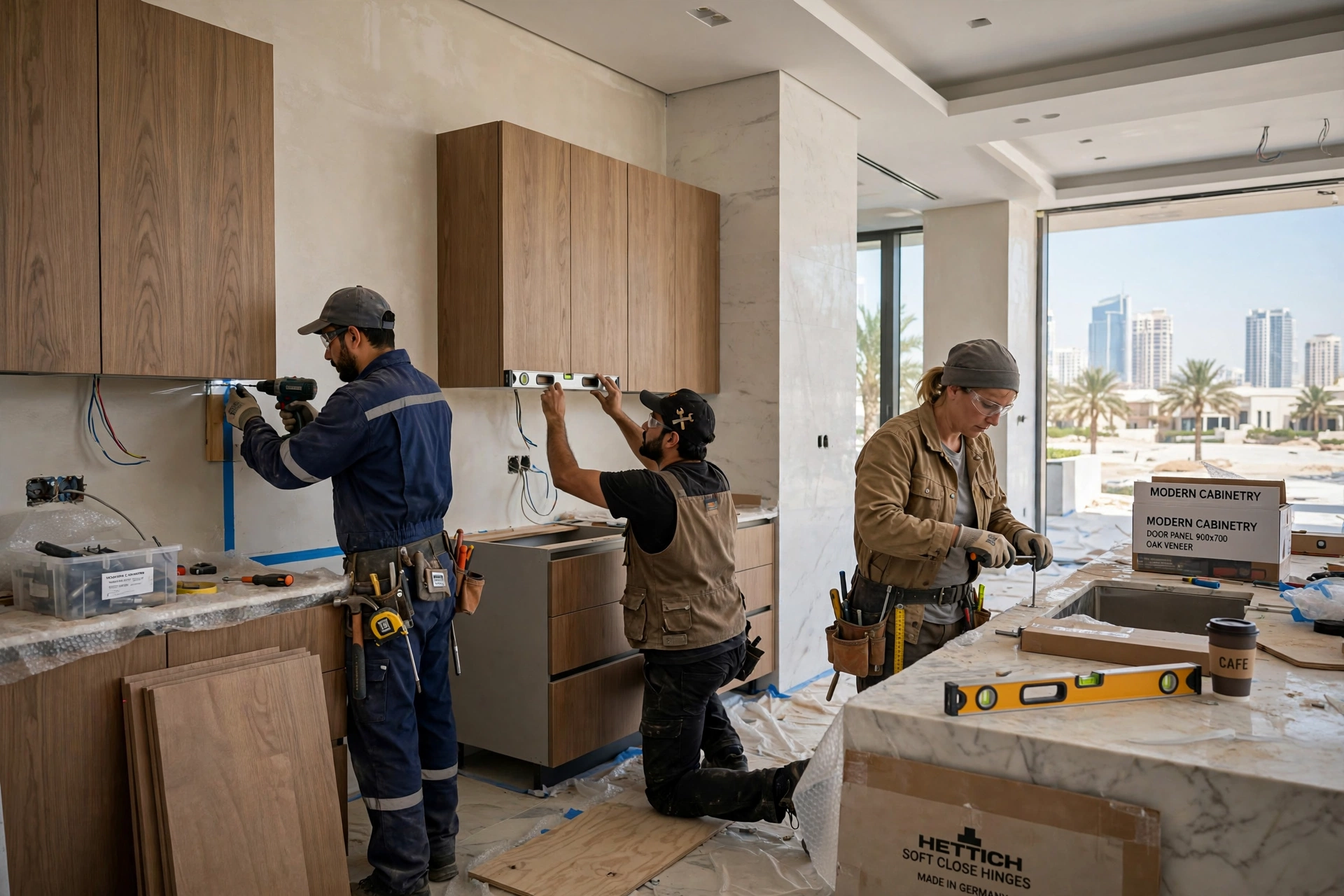
Materials That Survive the Heat and Humidity
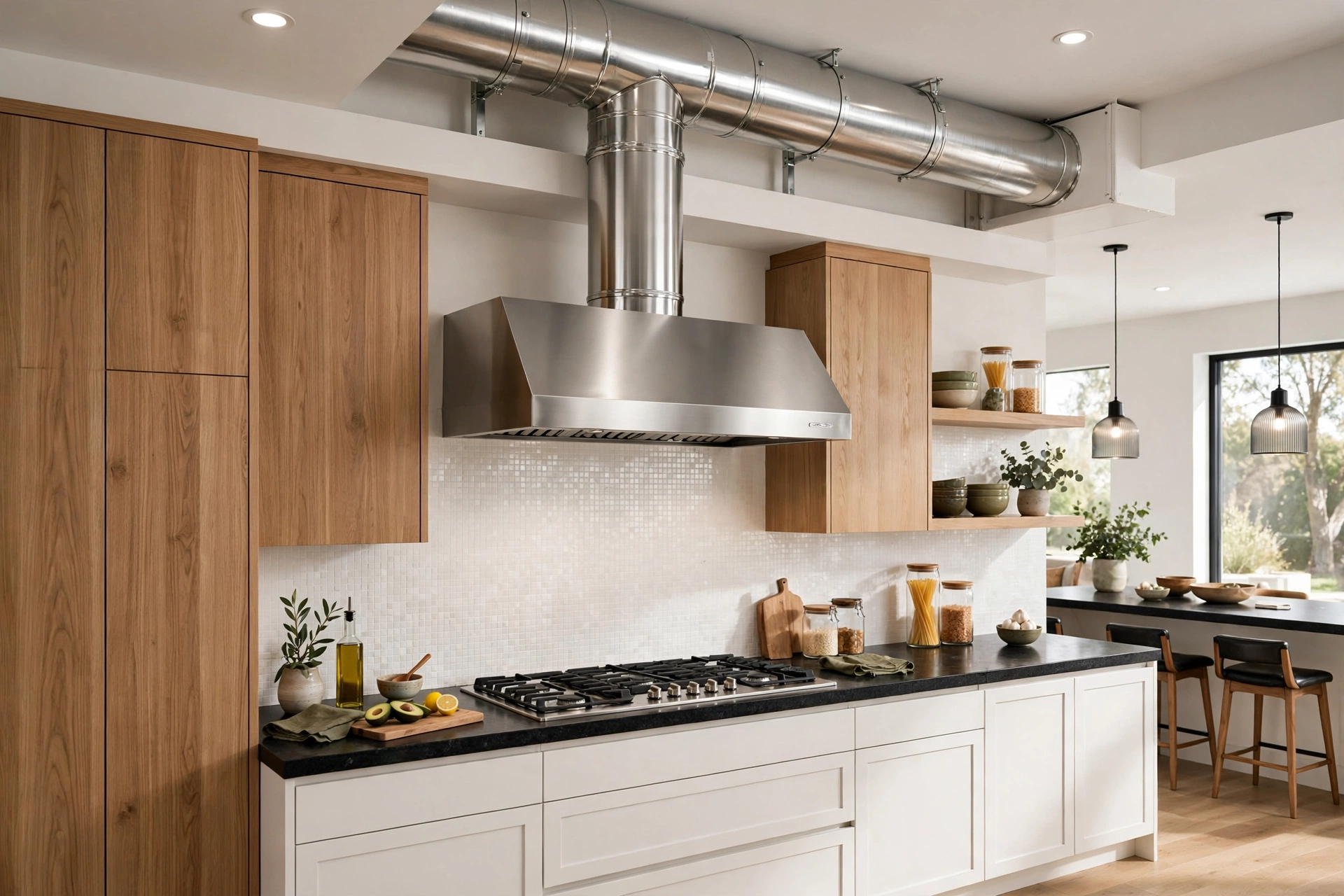
Dubai is not gentle on kitchen materials. Summer humidity runs high, and local cooking puts more thermal stress on surfaces than most Western kitchens see.
Cabinets: Avoid plain MDF — it swells when moisture gets in, and it will get in around the sink and dishwasher. Moisture-resistant MDF or marine-grade plywood cores cost more but last far longer. Solid wood is fine in air-conditioned villas but can warp in humid spots without proper sealing.
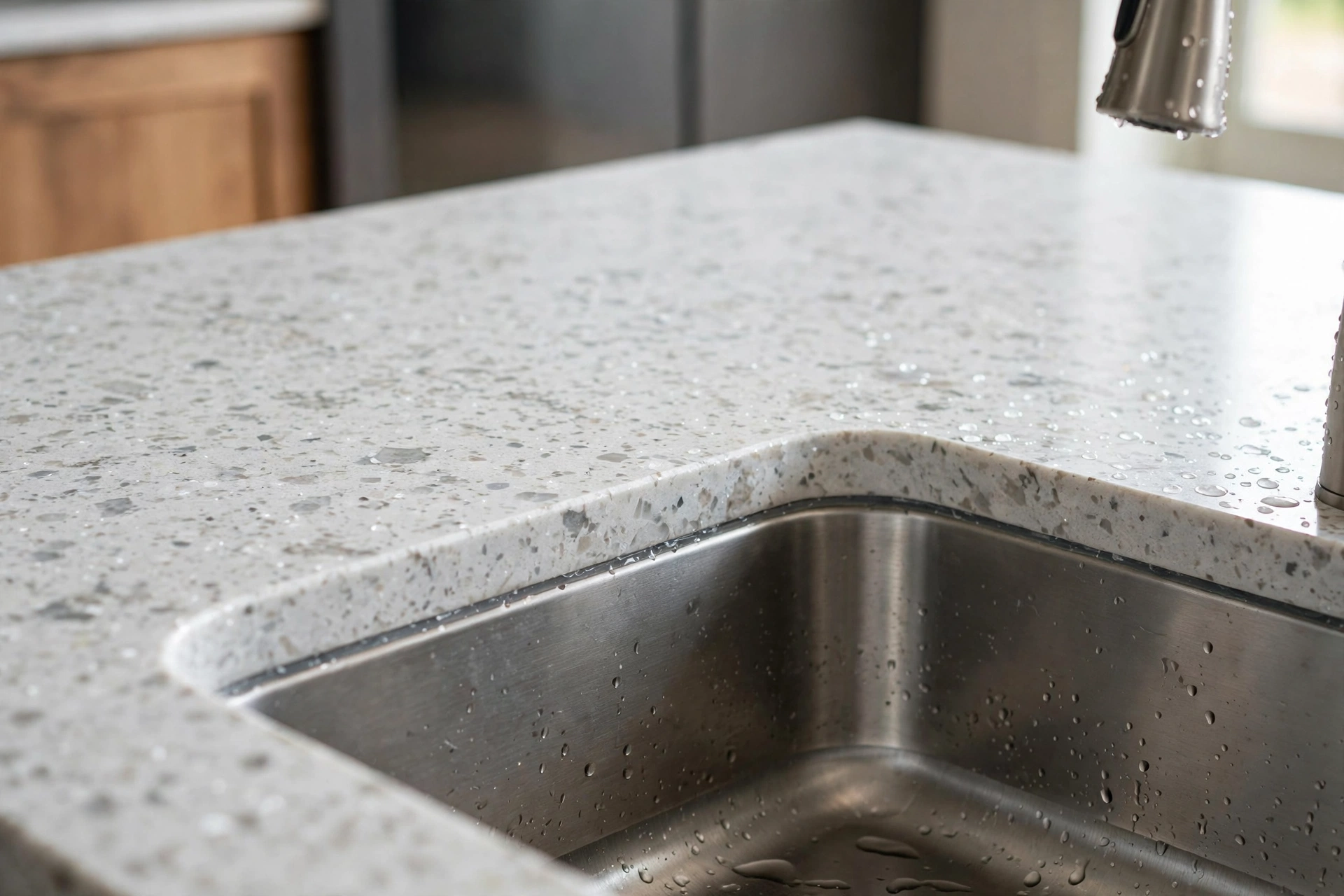
Countertops: Quartz is the popular choice — handles heat reasonably, resists stains, needs no sealing. Granite tolerates direct heat better but needs periodic resealing. Marble is beautiful and impractical; turmeric stains it, lemon etches it.
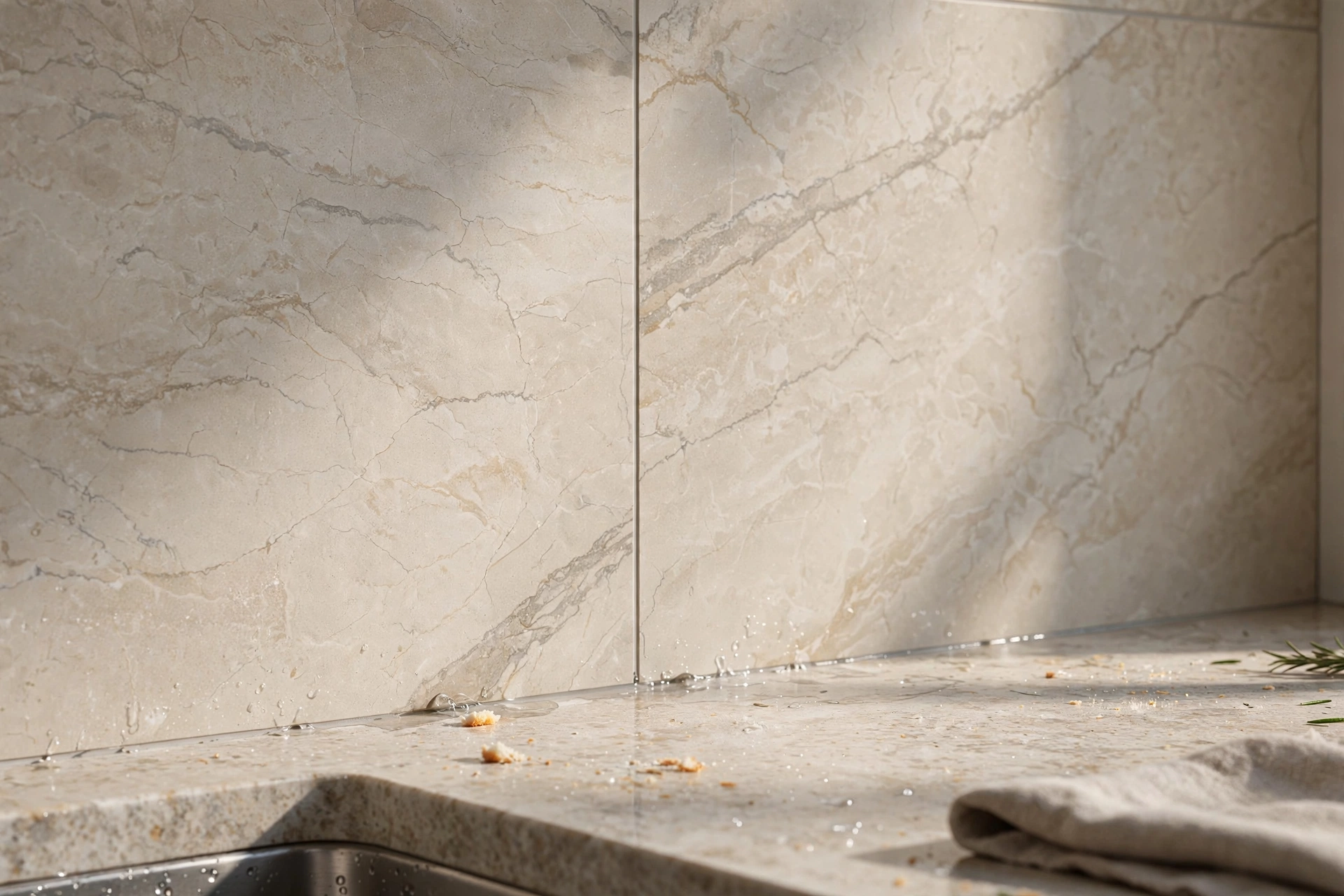
Backsplash: A full-height backsplash in large-format tiles or a single quartz slab means one smooth wipe-down surface. Small mosaic tiles look lovely and take three times as long to clean.
Flooring: Porcelain tiles remain the safest bet — waterproof, handle dropped pots, ignore humidity. Wood-look porcelain gives warmth without warping risk.
Finishes: Dubai is dusty. Matte finishes hide dust and fingerprints far better than high-gloss — a high-gloss black kitchen shows every speck within hours.
Ventilation: The Thing People Underestimate
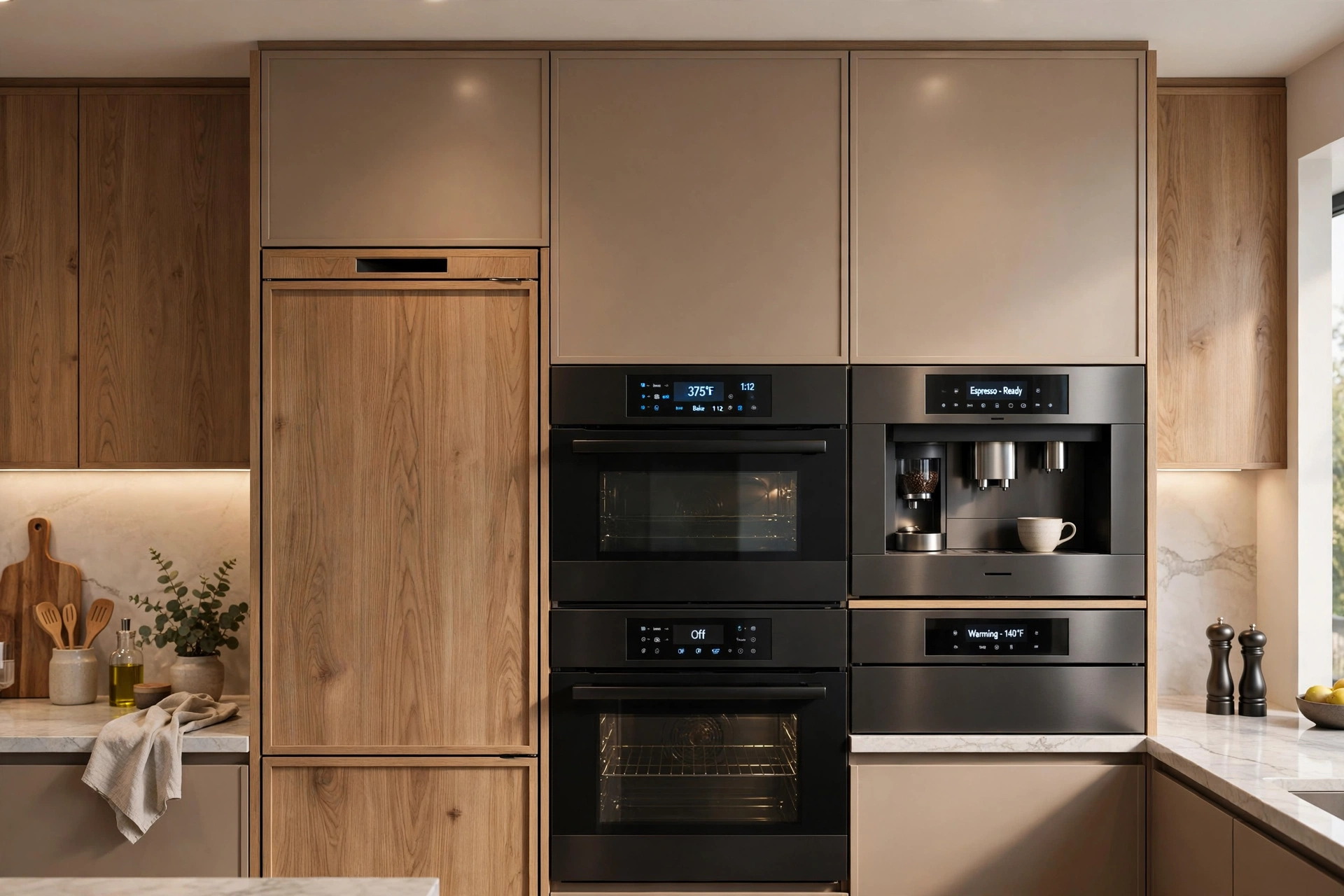
This is where Dubai renovations go wrong most often. A pretty kitchen with weak ventilation is a liability.
A proper ducted range hood vented to the outside is non-negotiable for heavy cooking. Ductless recirculating hoods handle light cooking and do almost nothing against serious frying fumes. The hood should be at least as wide as your cooktop — wider if you cook at high heat.
Confirm with building management whether external ducting is allowed before you plan around it. Some buildings restrict façade penetrations.
Appliances: What Makes Sense Here
Cooktops: Gas remains the preference for serious cooks — instant heat control, works with every pan. But not every building allows piped gas, and installation requires certified installers and safety clearances. Induction is genuinely excellent now: fast, precise, far easier to clean.
Ovens: A built-in wall oven at a comfortable height beats bending down every time. Don’t overspend on features you’ll never touch.
Fridges: Measure twice. Doors need clearance to open fully, and the fridge has to fit through the apartment door on delivery day.
Worth having: A built-in water filter reclaims the counter space bottled water would otherwise claim. And a dishwasher — hand-washing in summer heat is nobody’s idea of fun.
What Does It Cost? Honest Bands
All figures below are approximate — materials, appliances, and scope swing costs widely.
- Budget refresh (AED 15,000–30,000): New cabinet fronts or a repaint, new countertop, new backsplash, updated lighting and taps. No layout changes, plumbing stays put.
- Mid-range renovation (AED 35,000–70,000): New custom cabinets, quality countertop, mid-tier appliances, updated flooring, a proper lighting plan. Where most Dubai families land.
- High-end renovation (AED 80,000–150,000+): Premium materials, integrated appliances, stone countertops, custom carpentry, possibly minor layout changes.
Two things consistently blow up budgets: moving plumbing (every relocated drain means opening walls and floors), and last-minute design changes after items are ordered. Finalise everything before manufacturing starts.
How Long Does It Take?
A straightforward renovation with no layout changes: 3 to 5 weeks once work starts. A full gut renovation with new plumbing, electrical work, and custom cabinetry: 6 to 10 weeks.
The part nobody warns you about is lead times. Custom cabinets take 3 to 6 weeks to manufacture after final measurements. Imported appliances can take 4 to 8 weeks. Stone countertops need templating after cabinet installation, then another week or two. Order materials before demolition starts — and keep a two-week buffer for the unexpected.
Approvals You Actually Need
- Building management NOC: Nearly every apartment building and many villa communities require a no-objection certificate before work begins — drawings, contractor details, sometimes a refundable deposit. Start early; it can take one to three weeks.
- Structural and layout changes: Removing walls or relocating plumbing requires Dubai Municipality approval, submitted through a licensed contractor. Replacing cabinets and tiles in the same positions generally doesn’t.
- Gas work: Must be done by a certified company with proper safety clearances. Not a job for a general handyman.
- Electrical changes: New circuits for additional appliances should go through a licensed electrician, especially if the kitchen’s load is increasing.
Working without the required approvals risks stop-work orders and fines — and in a shared building, neighbours who remember you.
Before You Start
A kitchen renovation is one of the highest-impact projects in a Dubai home, and one of the easiest to get wrong by rushing. Get the layout right for how you actually cook, choose materials that respect the climate, don’t skimp on ventilation, and sort approvals before demolition day.
If you’re unsure about scope — whether your plans need municipality approval or what a realistic budget looks like for your space — speak with a qualified contractor before committing. A good one will tell you what you don’t need to spend money on, not just what you do.