How to Read a Construction Quotation: Spotting Hidden Costs in Dubai
Getting a construction quotation in Dubai can feel like reading a menu where half the dishes have no price on them. You compare three or four totals, pick the friendliest-looking one, then the work starts, the variations start, and suddenly that friendly number has grown a beard.
In our experience, most quotation problems don’t come from dishonest contractors. They come from two people reading the same document and understanding two different things. Here’s how to read one properly, so what you sign is what you pay.
Start With the Structure, Not the Number
Before you look at the total, look at how the quotation is built. In Dubai you’ll mostly come across two formats.

A lump sum quotation gives you one fixed price for the whole job. It looks clean and reassuring. The catch? It only covers exactly what’s described in the attached scope. Anything left out of the description becomes a variation later, and variations on a lump sum job tend to be priced at the contractor’s convenience, not yours.
An itemised quotation breaks the work down line by line: demolition, blockwork, MEP, finishes, each with a quantity and a rate. It’s longer and duller to read. Read it anyway. An itemised quote is the only format that lets you actually compare contractors, and it protects you later because every rate is already agreed. If a variation comes up, you’re negotiating from a locked-in rate, not starting from scratch.
When comparing, never compare totals from different formats. It’s meaningless. Ask every contractor for an itemised version so you can line them up.
The Provisional Sum Trap
You’ll often spot a line that says something like “Provisional sum: AED 25,000 — kitchen equipment allowance.” What does that mean? The contractor hasn’t priced that part properly yet. They’ve put in a placeholder.
Provisional sums are legitimate, sometimes unavoidable, especially when finishes or specialist items aren’t finalised. The danger is that a provisional sum can be wildly optimistic. A quote with AED 15,000 provisioned for bathroom sanitaryware when your taste runs toward imported Italian fittings is not a AED 15,000 line. It’s an AED 40,000 line wearing a disguise.

Ask two questions for every provisional sum: what exactly is assumed inside that number, and what happens if the real cost is higher? If the contractor can’t tell you what brand or specification the sum is based on, treat it as a blank cheque you haven’t signed yet.
“Excluded” Is Where the Real Money Hides

Scroll to the exclusions section. Every honest quotation has one, and every experienced contractor knows this is where misunderstandings are born.
Common exclusions in Dubai quotes include authority fees and NOC charges, DEWA connections, municipality permit fees, temporary utilities, testing and commissioning, and cleaning. None of these are unreasonable exclusions. But each one is a cost you’ll pay regardless, and if three contractors exclude different things, their totals aren’t comparable.
Make a simple table for yourself: list every exclusion from each quote side by side. Add the excluded items back in at a rough estimate. Only then do you know the real comparison number. We’ve seen the “cheapest” quote exclude AED 60,000 in authority fees and testing that the pricier quote had included. The client did the maths too late.
Also watch for vague phrasing like “as per standard” or “to be confirmed.” A scope written in fog produces a price written in sand.
Unit Rates: The Small Print That Grows
Even in an itemised quote, check whether the quantities are fixed or re-measurable. A rate of AED 120 per square metre for tiling means one thing if the quantity is 80 square metres and fixed, and quite another if the quantity is “to be measured on site.” The second version means the final bill depends on measurements taken after the work is done.
Re-measurable quantities aren’t a scam. On renovation work especially, you can’t always know what’s behind a wall until you open it. But the rate itself must be agreed upfront, and there should be a clear process for how extra quantities are measured and approved. Agree a rule with your contractor before work starts: no variation work without a written sign-off on rate and quantity. Verbal approvals on site have a way of being remembered differently by everyone involved.
The Material Question Nobody Asks
Two quotes for the same kitchen can differ by AED 30,000, and the difference is often one word: the brand. “Supply and install kitchen cabinets” without specifying the carcass material, the hardware brand, or the countertop thickness is not a specification. It’s a hope.
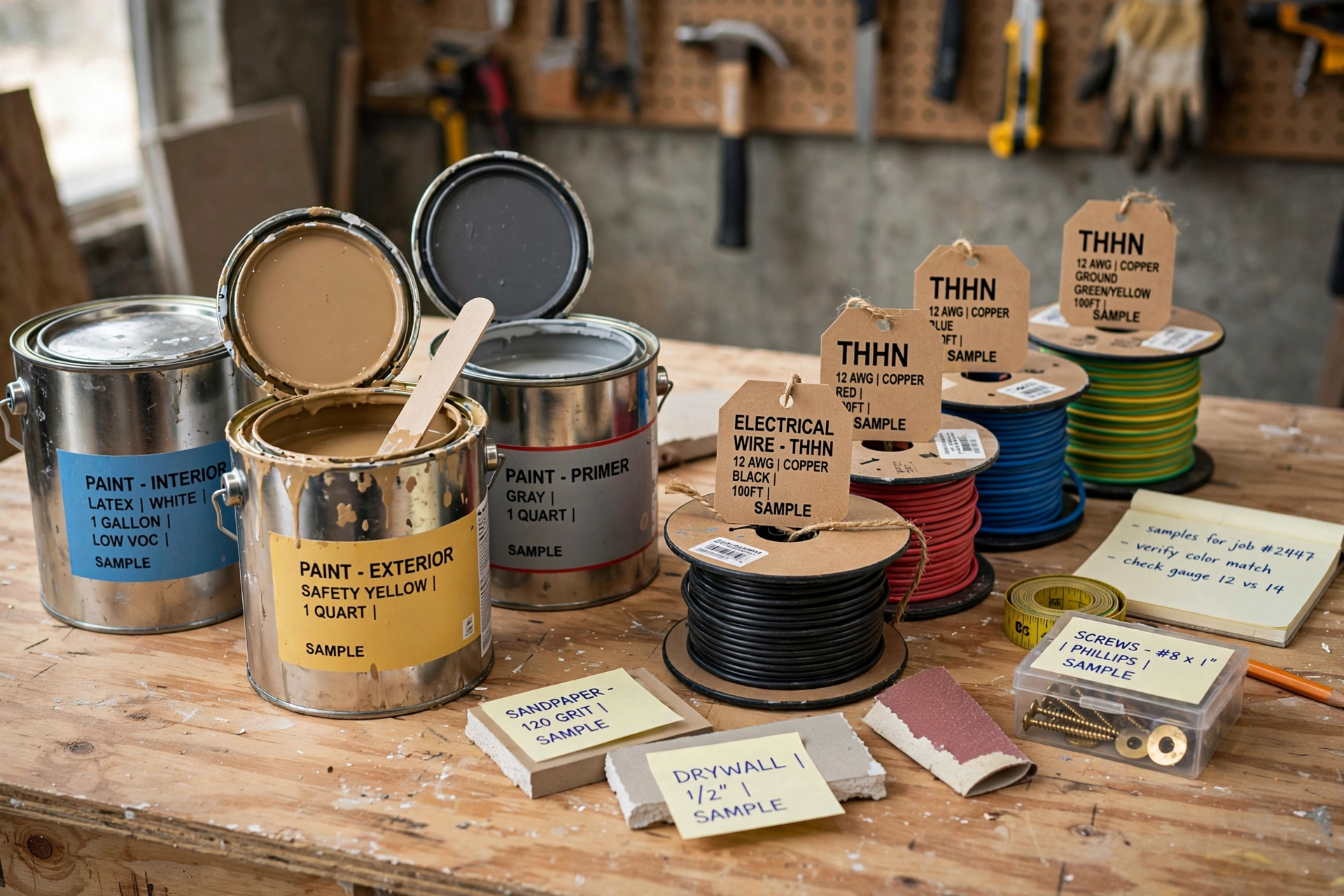
Insist on specifics for anything that touches quality or longevity: the concrete mix where relevant, the waterproofing system brand, the paint brand and number of coats, the wiring and piping brands. In Dubai’s climate, cheap waterproofing or MEP materials don’t fail in month one. They fail in year three, usually during the first real humidity wave, and the repair costs dwarf whatever was saved.
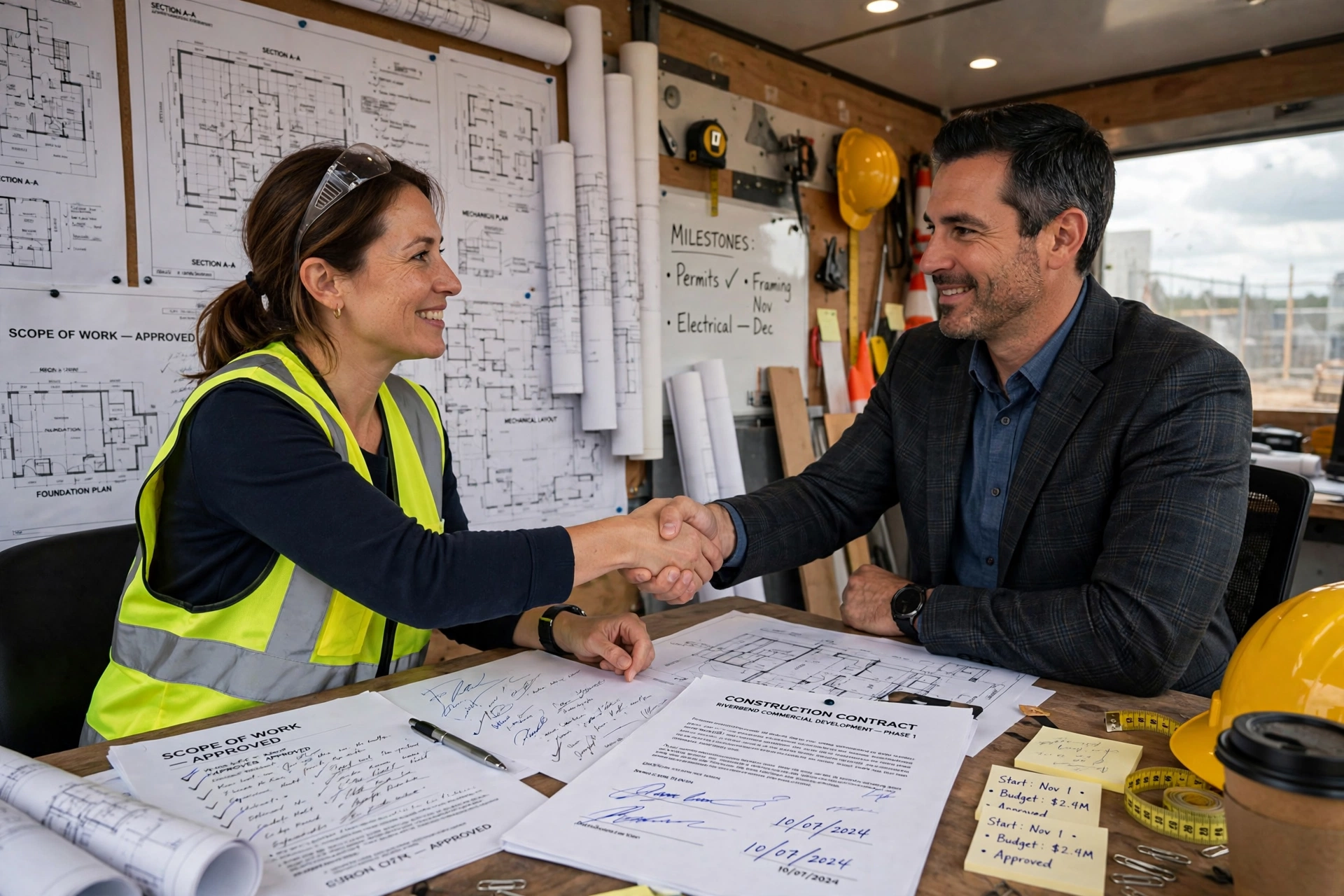
A good test: if you handed the quotation to a different contractor, could they price the same job from it? If not, it’s not detailed enough.
Payment Schedules Tell You a Lot
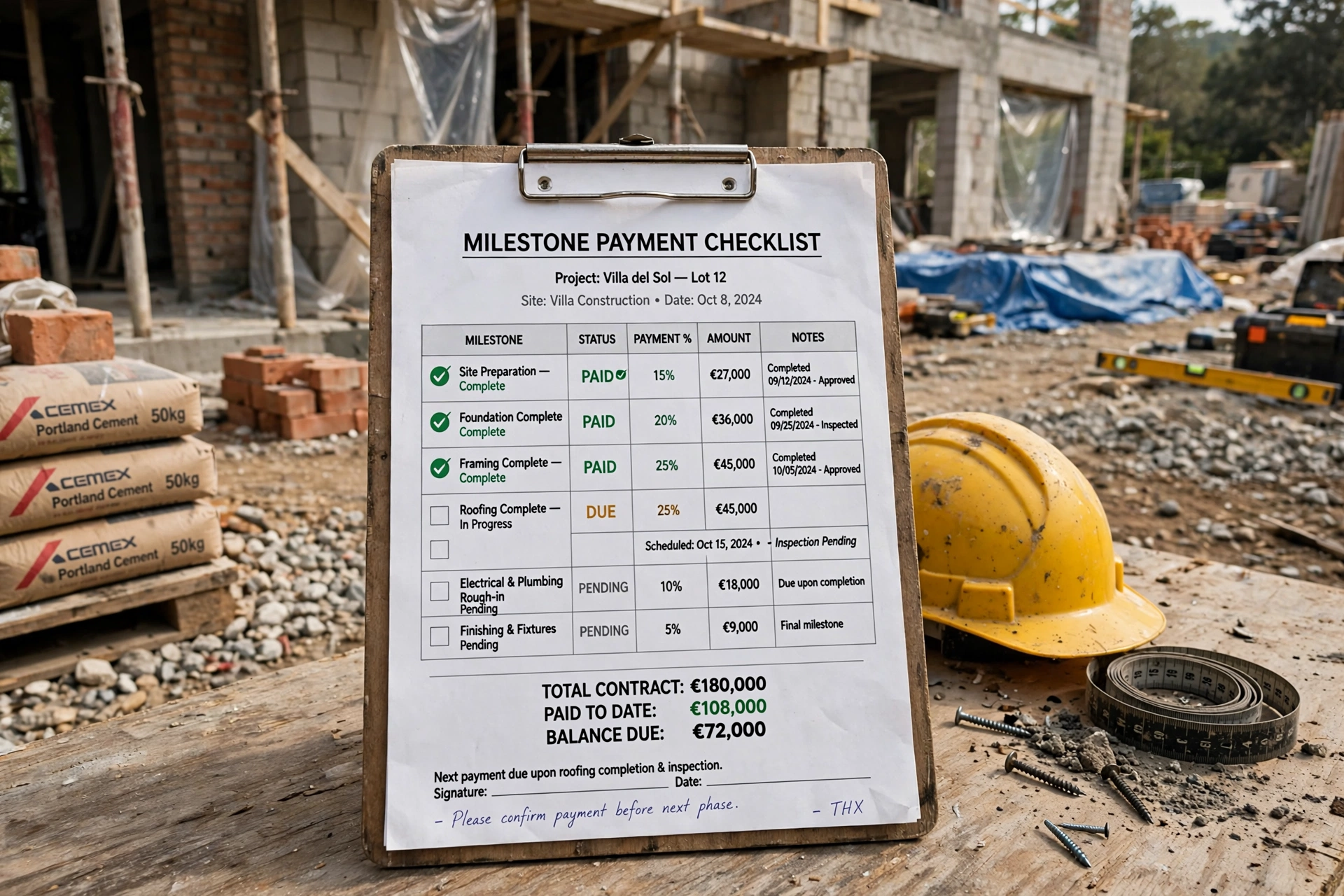
The quotation usually comes with a payment schedule. Read it as a character reference. A schedule tied to completed milestones (say, 10% on mobilisation, 25% on structure completion) is normal and fair. A schedule demanding 50% or more before any meaningful work begins is a warning sign, regardless of how professional the letterhead looks.
Dubai’s standard practice leans toward milestone-based payments, and retention, a small percentage held back until the defects liability period ends, is common on larger jobs. If a contractor refuses any retention at all, ask why. The answer tells you something.
Comparing Like for Like: A Quick Checklist
When you’re sitting with three quotations and a headache, run through this:
- Do they include the same scope, or does one exclude things the others include?
- Are the provisional sums based on comparable assumptions, and are material brands named?
- Are quantities fixed or re-measurable, and is the variation process written down?
- Do the payment schedules follow similar milestone logic?
If one quote is dramatically cheaper than the others, resist the celebration. In this market, a number that’s 20% below the rest usually means scope is missing, not that you’ve found a bargain. The most expensive surprise in construction is the one that arrives halfway through the build.
A Final Thought
A quotation is the first piece of work a contractor does for you, and it’s free. How carefully it’s prepared tells you how carefully they’ll build. A precise document, priced honestly, with exclusions stated plainly, that’s a contractor who’s thought about your project before asking for your money. Read every quotation twice: once for the number, once for everything around it.
Before you sign anything, it’s always worth having the final quotation reviewed by a qualified contractor or an independent quantity surveyor. A second pair of experienced eyes on the fine print costs very little and has saved many clients from expensive lessons.