Choosing Flooring for Your Dubai Home: Tiles, Marble, and Wood Compared
Walk into any Dubai villa and the floor tells you a lot about the household — cool marble sweeping through the majlis, warm wood in a bedroom, big matte tiles in a kitchen that actually gets used. Flooring in Dubai looks like a simple decision, then gets complicated the moment you live with it — it affects how cool the house feels, how much you mop, how safe the bathroom is when wet, and how the place looks when you sell.
So let’s compare the three materials most Dubai homeowners actually choose between — tiles, marble, and wood — in the conditions we deal with here: heat, humidity, dust, sand tracked in from the garden, and AC running most of the year.
Why flooring matters more here
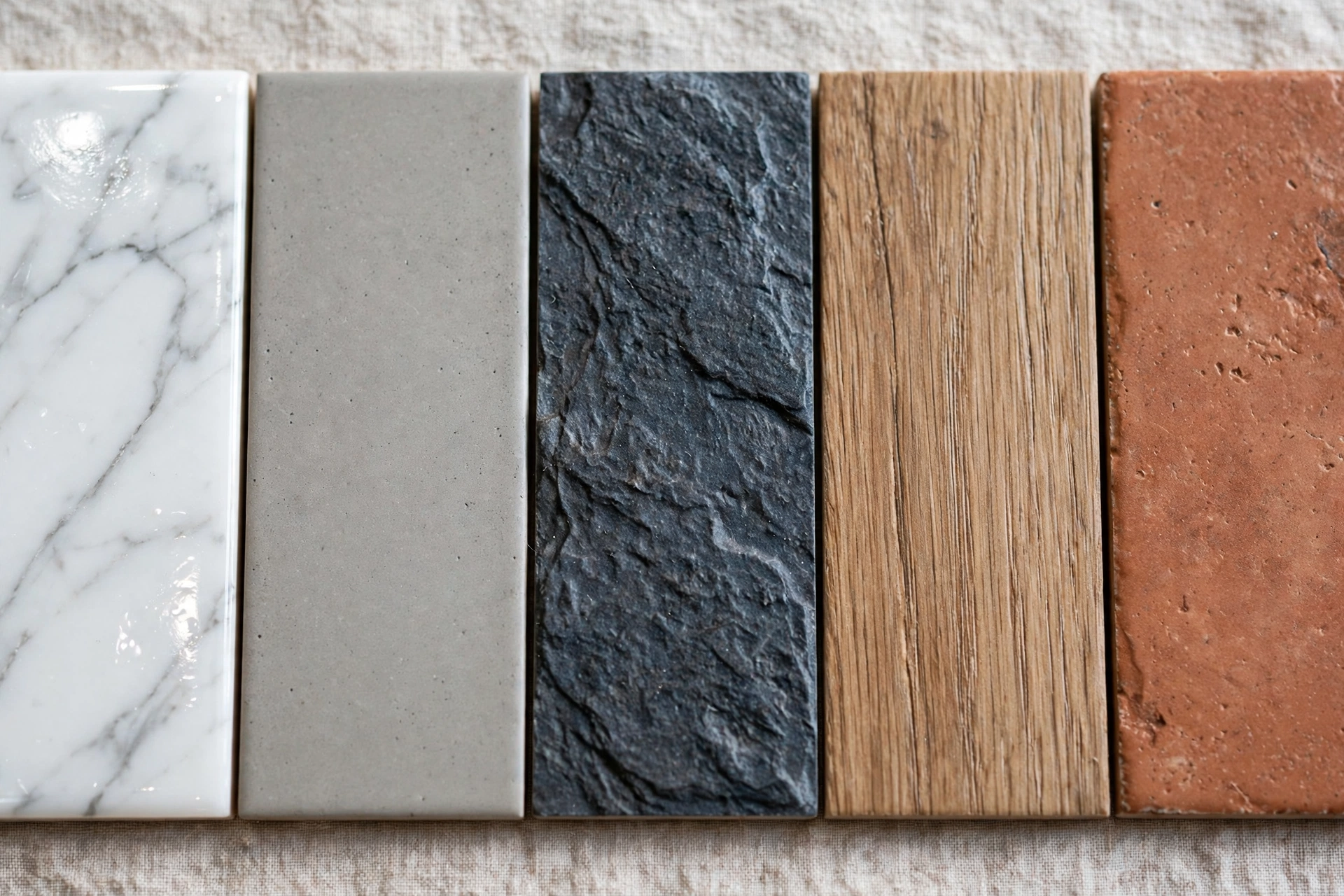
Most of the year, the outside temperature is somewhere you don’t want to visit. That makes your floor one of your biggest comfort assets. Stone and tile stay naturally cool underfoot, which genuinely reduces how hard your AC works. Flip side: in December and January, when some of us switch the AC off, marble floors can feel genuinely cold in the morning.
Sand gets everywhere, no matter how good your door mats are. Some finishes hide it; others scratch. And mopping is a way of life here — a floor that stains easily will drive you mad within a year.
Tiles: the practical workhorse
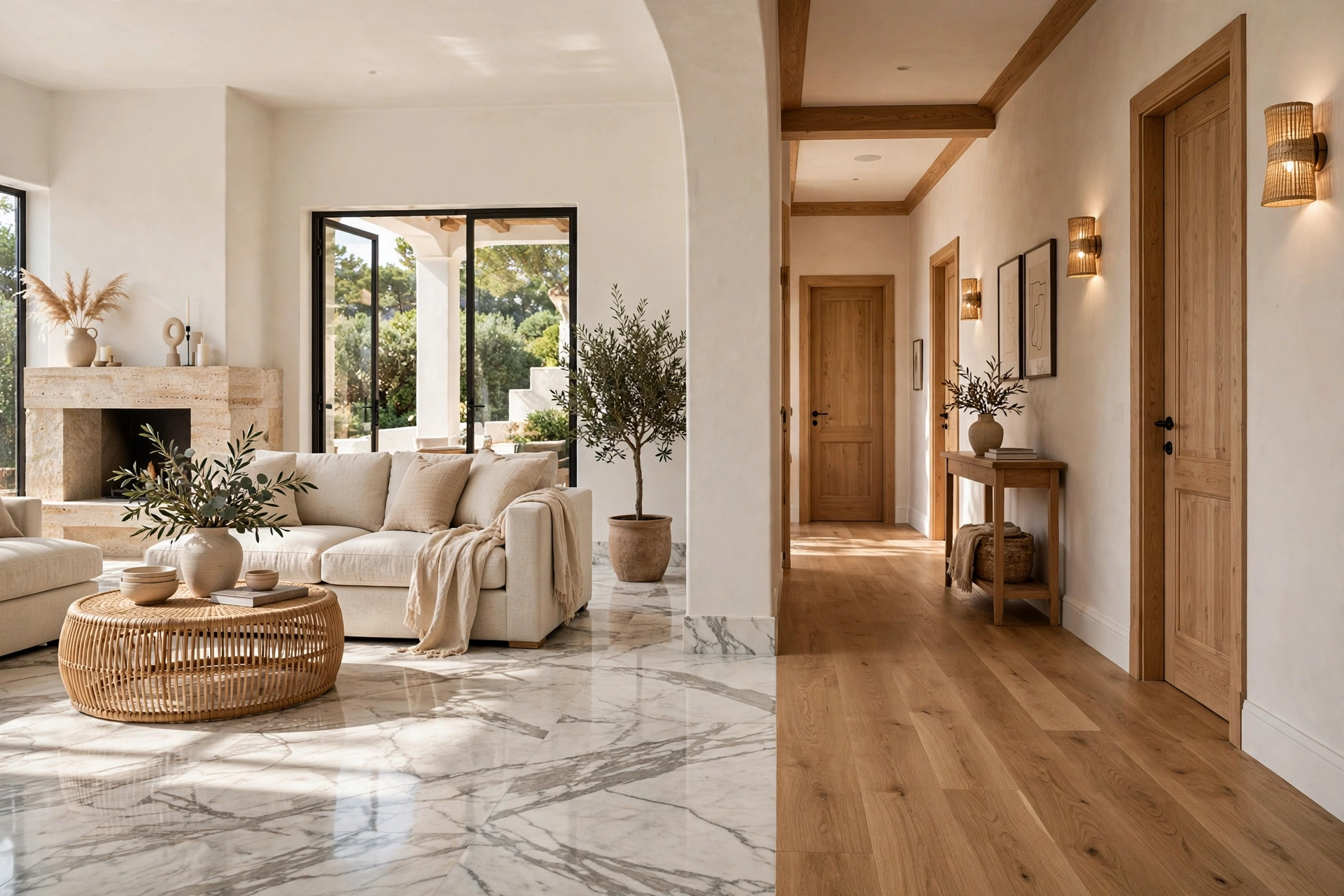
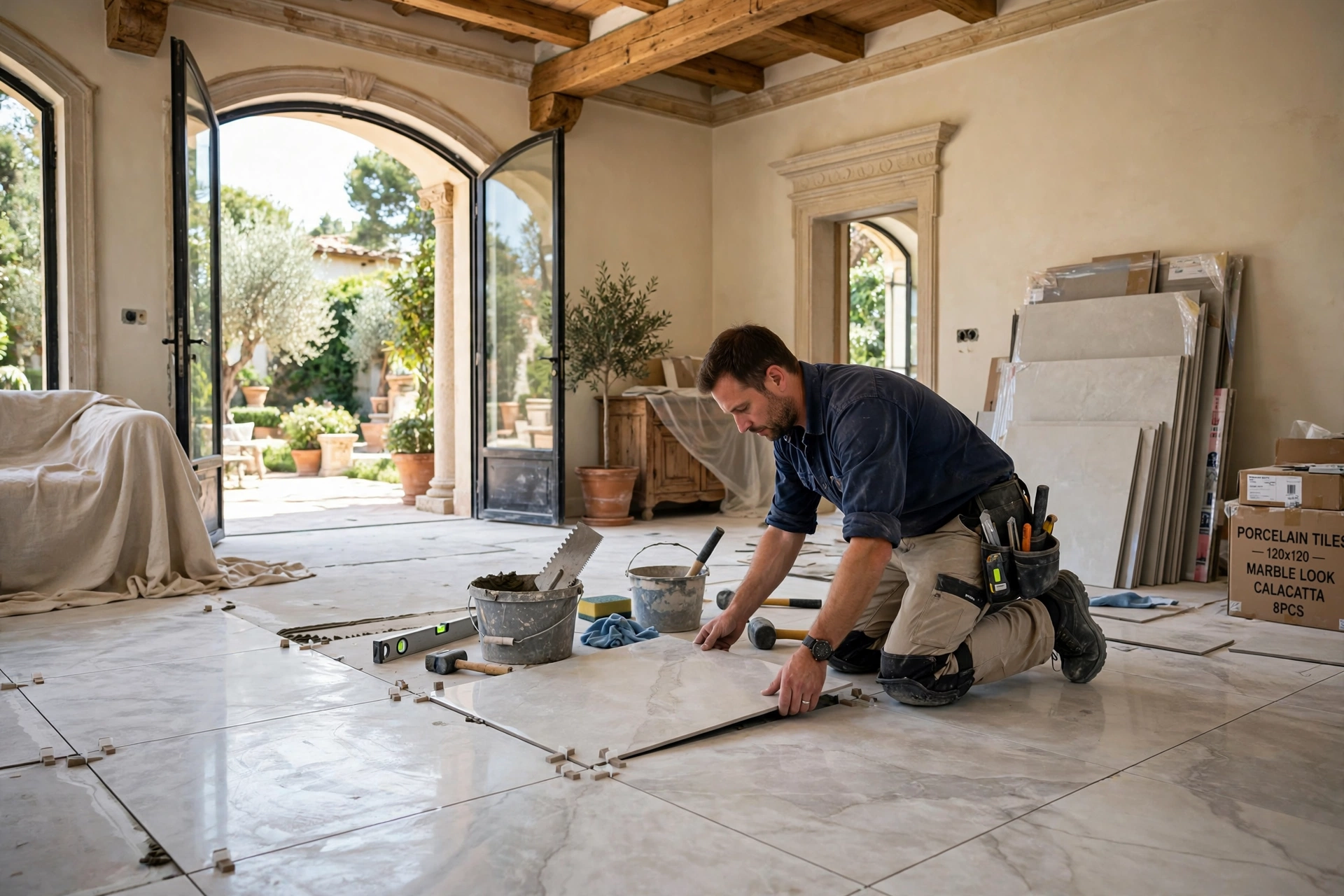
When we say tiles, we mostly mean porcelain. Ceramic still exists, but porcelain is denser, harder, and far better at shrugging off moisture — which matters where humidity spikes and bathrooms double as steam rooms in August.
Porcelain’s honest strength is that it’s the least dramatic material you can choose. It doesn’t stain or scratch easily, and it handles heavy furniture, kids, pets, and dropped pots without complaint. The range now covers marble-look veining that fools most visitors, plus large-format slabs (60×120 cm or bigger) that cut grout lines.
One thing to check: slip resistance. Polished porcelain in a wet bathroom is a skating rink, so ask for the slip rating — R10 or R11 for bathrooms, pool surrounds, and anywhere water lands. Matte and textured finishes give you grip without looking industrial.
Downsides? Hard tiles feel hard — dropped glass doesn’t survive, and long hours standing in a kitchen are tougher on the legs than wood. Cheap tiles also show their limitations fast in a large open-plan space.
Realistic price band in Dubai: decent porcelain, supplied and installed, roughly AED 20–45 per sq ft; high-end Italian or Spanish large-format porcelain can push AED 60+ per sq ft. (Approximate.)
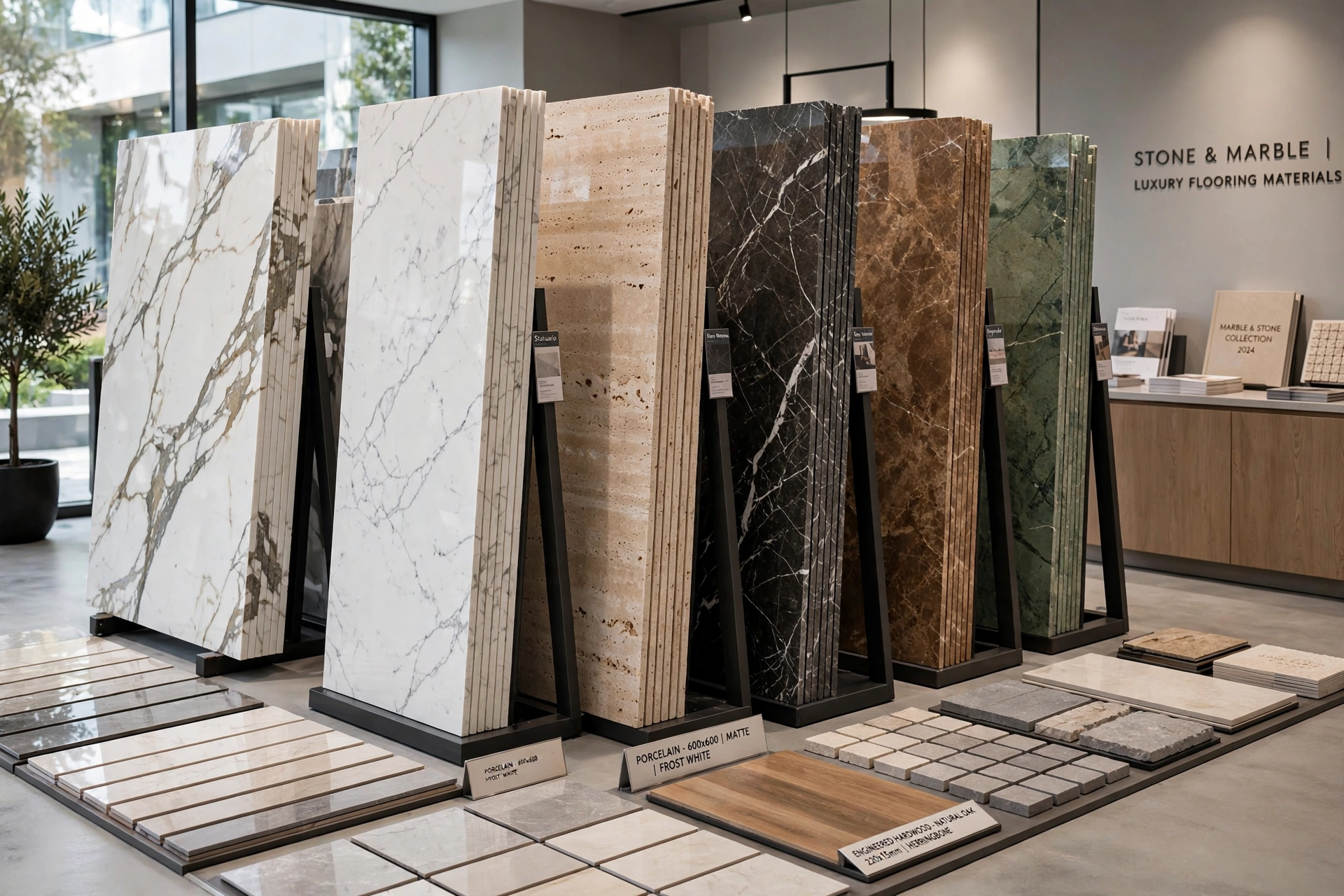
Best rooms: bathrooms, kitchens, entrance halls, and honestly the whole ground floor of a busy family villa.
Marble: the luxury statement
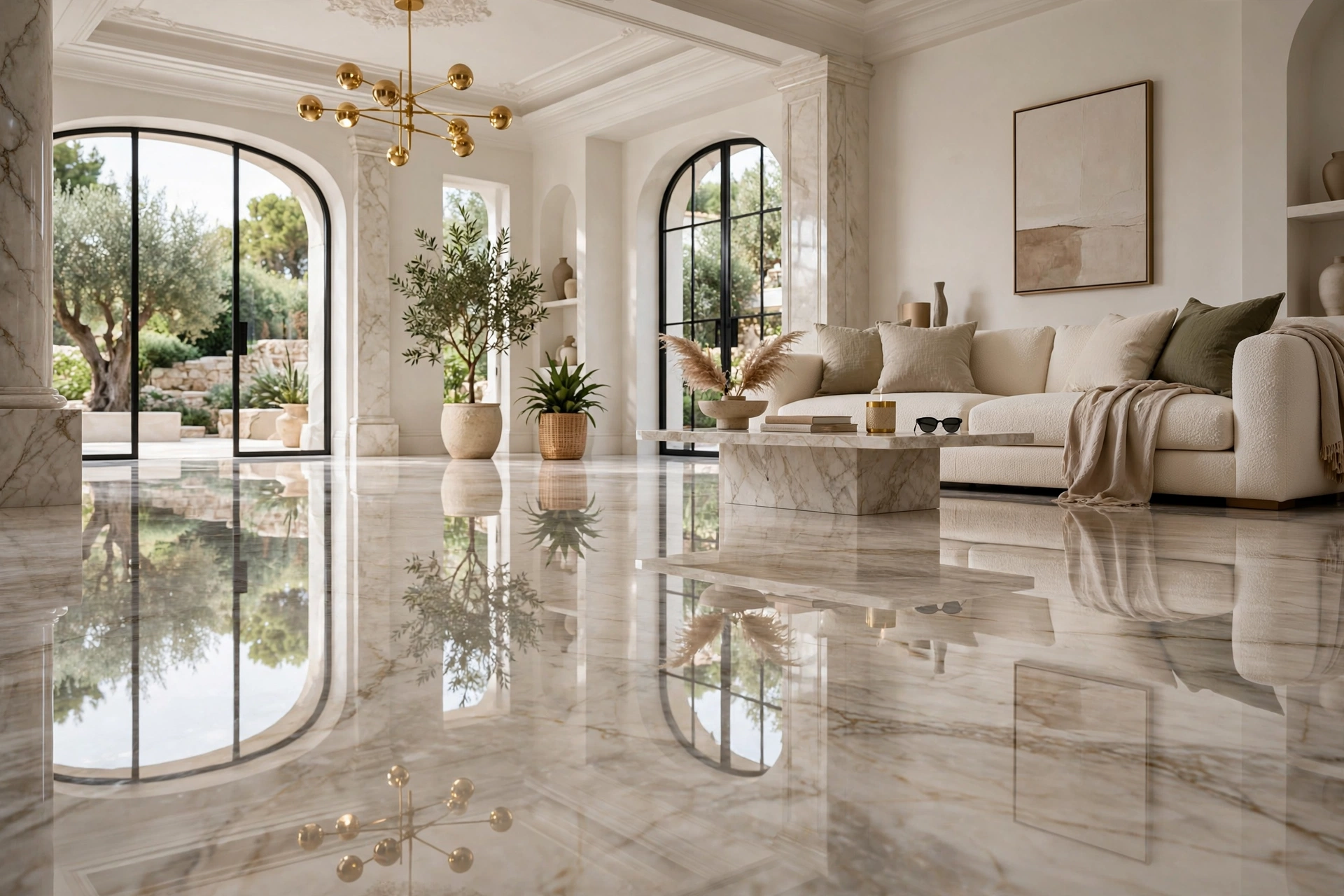
Marble is Dubai’s traditional luxury flooring, and you can see why. Nothing quite matches that deep, luminous look — real stone has a depth printed imitations can’t fully replicate, especially across wide slabs in a large living room. It also stays cooler than anything else underfoot — no small thing on a July afternoon.
But marble is a relationship, not a purchase. It’s porous: coffee, red wine, turmeric, lemon — spills stain if you don’t wipe them up quickly. It etches with acids, so vinegar-based cleaners are out. And gritty sand acts like sandpaper underfoot, so entrance areas need regular honing and polishing to keep their shine. In our experience, marble looks its best when the household commits to real maintenance — sealing on schedule, pH-neutral cleaners, and professional polishing every year or two where traffic is heavy.
Honed (matte) marble hides etching and scratches far better than polished, and it’s less slippery. Some families put polished marble in the formal areas and something tougher in the day-to-day zones — a perfectly sensible compromise.
Realistic price band: basic imported marble, installed, typically AED 45–90 per sq ft; premium varieties (Calacatta, Statuario) can go well past AED 150 per sq ft. Add sealing and periodic polishing to your mental budget. (Approximate.)
Best rooms: formal living rooms, majlis, entrance foyers, master suites — where the “wow” matters and traffic is controlled. Think twice before polished marble in a kids’ playroom or a hard-working kitchen.
Wood and engineered wood: warmth without the warping
Humidity swings and constant AC make real wood expand and contract — that’s how you get gaps, cupping, and creaky boards.
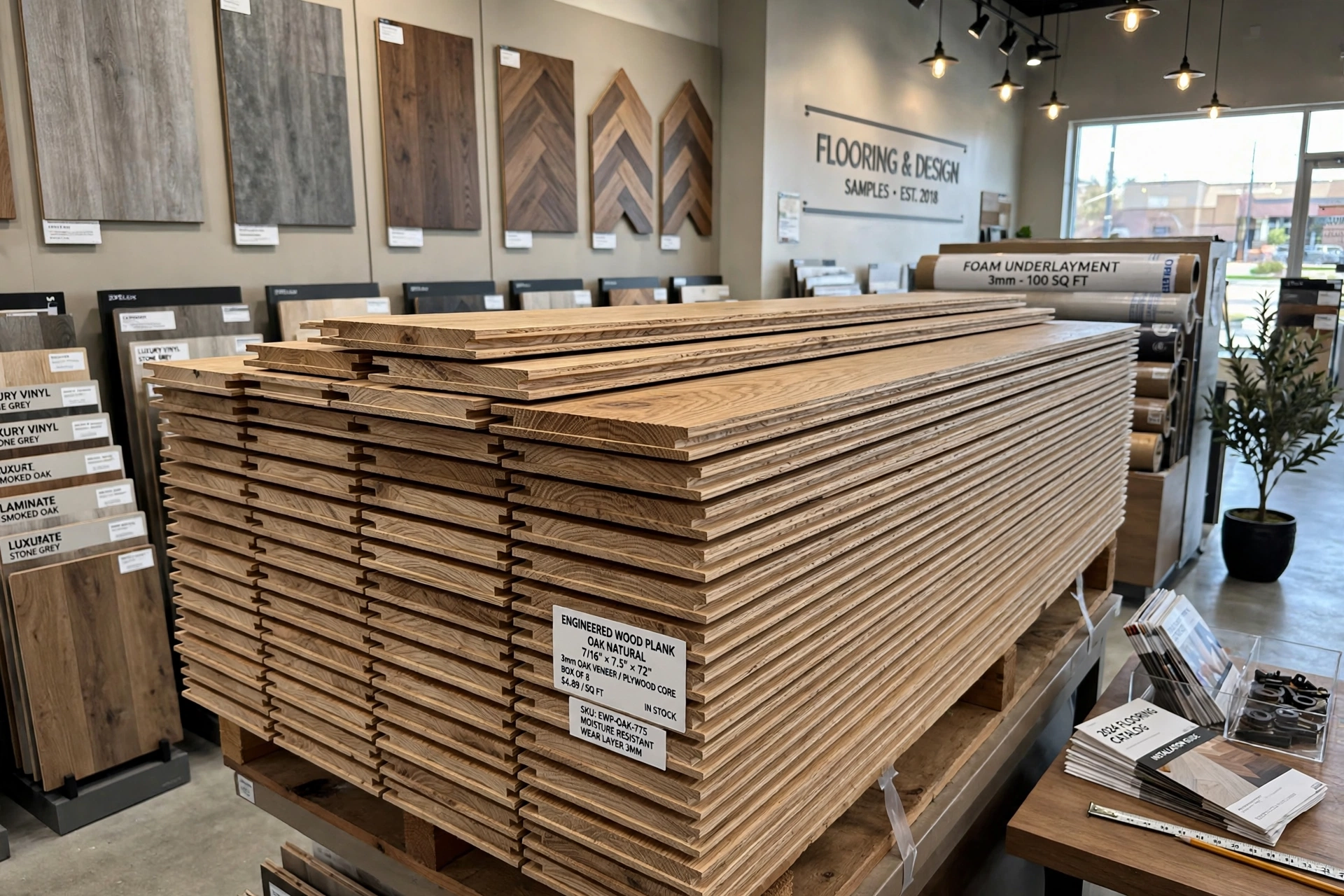
For most homes, engineered wood is the smarter answer. It’s a real wood top layer bonded to a stable core — looks and feels like wood, but handles temperature and humidity changes far better. One detail that matters: wear-layer thickness. Anything under 2mm can’t be sanded and refinished later, so look for 3mm+ if you want the floor to survive a decade of family life and still be refinishable.
Why do people love it here despite the climate? Wood is kinder underfoot than any stone — warmer in the “winter” months, softer for kids playing on the floor, and quieter. In bedrooms and upper floors, where you want a retreat from the cool stone downstairs, timber changes the whole atmosphere of a room.
Maintenance is simpler than with marble: sweep regularly (sand is the enemy of wood finishes too), mop with a barely-damp mop and wood-safe cleaner, and don’t let water sit. Engineered wood doesn’t like standing water, so keep it out of bathrooms.
Realistic price band: decent engineered wood, installed, roughly AED 35–80 per sq ft depending on species and wear-layer thickness; premium European oak goes higher. (Approximate.)
Best rooms: bedrooms, home offices, upper-floor family rooms, studies. Keep it out of bathrooms and ground-floor entrances where wet shoes land.
So which should you actually choose?
The shortcut we’ve seen work again and again in Dubai villas: don’t pick one material for the whole house. The homes that age best mix materials by zone — large-format matte porcelain on the busy ground floor, marble in the formal living room or foyer if the budget allows and you’ll maintain it, engineered wood upstairs in the bedrooms where comfort matters most.
A few practical checks before you commit:
- Get samples home. Showroom lighting lies. Lay samples in the actual room and look at them morning, noon, and evening.
- Ask about the subfloor. Some slabs need levelling before large-format tiles or wide-plank wood go down. Skipping prep is the number one cause of cracked tiles and hollow-sounding wood.
- Budget the extras. Skirting, thresholds, underlay, sealing, polishing visits — these add up. A quote that seems too good usually left something out.
- Think about resale. Neutral, well-installed floors appeal to the broadest pool of buyers. Bold choices are fine in a forever home; if you might sell in five years, restraint pays.
Flooring is one of the few renovation decisions you can’t easily undo — changing a floor means moving the furniture out and living with dust for weeks. So slow down: shortlist two or three options per room, price them honestly including maintenance, and choose for the life you actually live.
If you’re weighing materials for a specific villa or apartment, talk it through with a qualified contractor before you buy anything — they’ll spot the subfloor, moisture, and layout issues that decide whether your first choice is actually the right one.