There is a particular smell to an old Dubai villa when you first walk in. Dust, old paint, a hint of damp from a bathroom that has been leaking quietly since 2009. And underneath it, possibility. The villas built in the eighties and nineties, in places like Al Rashidiya, Al Barsha, Hor Al Anz, and old Jumeirah, were built solid. Thick walls, generous plots, high ceilings. They just need someone to bring them back to life. If you are renovating an old villa in Dubai, the difference between a project you love and a project that eats your savings comes down to order. Do things in the right sequence, and even a tired villa transforms smoothly. Do them out of order, and you will pay for the same work twice.
This is the sequence that works.
Step 1: Read the Villa Before You Touch It
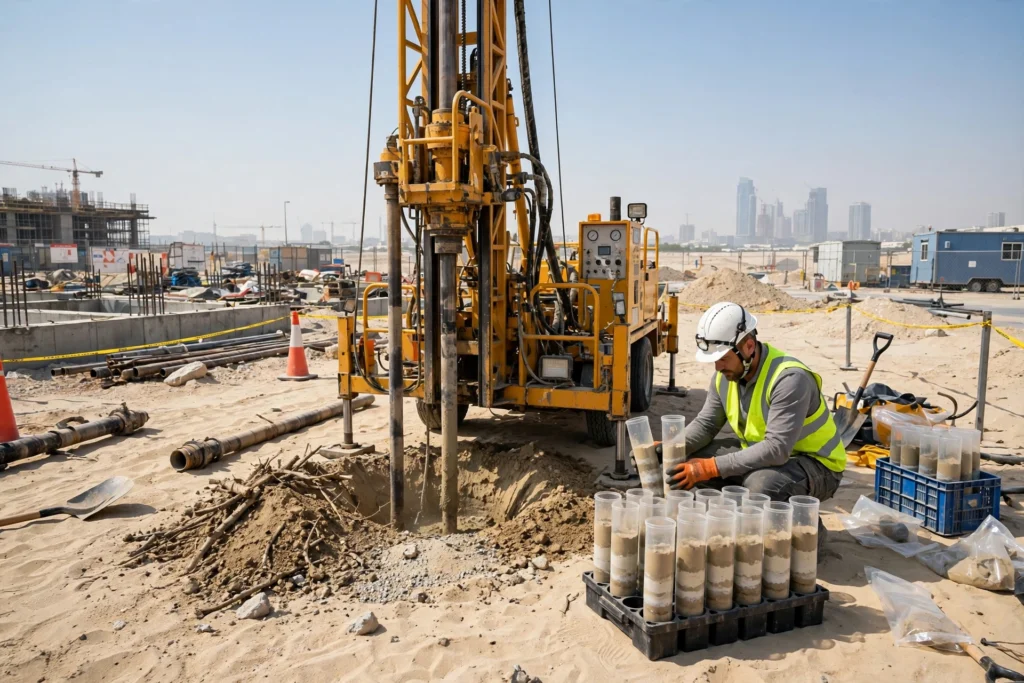
Never start with demolition. Start with reading. An old villa has thirty years of history written into its walls, and you need to understand it before you change anything.
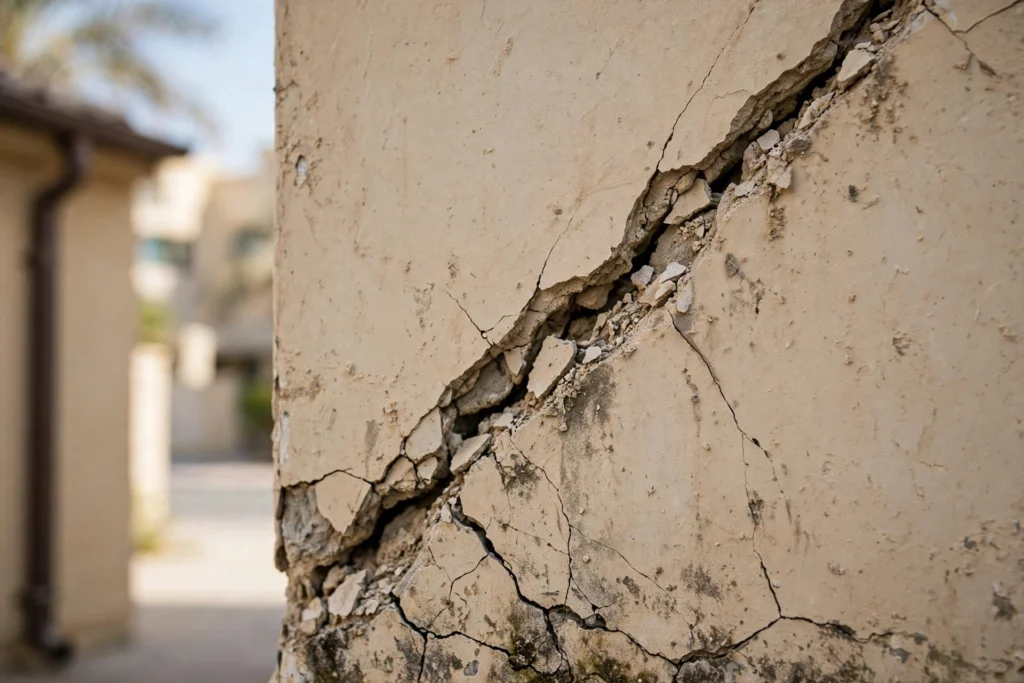
Hire a structural engineer for a proper survey. This costs 2,000 to 5,000 AED and it is the best money in the entire project. The engineer checks for settlement cracks versus structural cracks, tests concrete strength, looks at the roof slab, and tells you what is cosmetic and what is dangerous. Hairline cracks in plaster are usually nothing. A diagonal crack running from a window corner toward the ceiling, wider than a coin’s edge, is something. You want to know which is which before anyone swings a hammer.
Walk the villa yourself too, slowly, with a notebook. Run every tap and flush every toilet. Old galvanized plumbing corrodes from the inside, so water pressure that starts strong and fades in ten seconds tells you the pipes are choking. Switch on every light and socket. Smell each bathroom for damp. Look at the ceilings under every bathroom for stains, because in old villas the waterproofing under bathroom tiles almost always fails eventually, and the ceiling below tells the truth. Check the roof in person. Ponding water, cracked screed, and blistered old waterproofing membrane are all visible to the naked eye if you bother to look.
Step 2: Paperwork First, Hammers Later
This is the step everyone wants to skip, and skipping it is how projects get shut down mid-demolition with a red notice on the gate.
Any structural renovation in Dubai needs a building permit from Dubai Municipality. Cosmetic work like painting and replacing kitchen cabinets usually does not, but the moment you touch structure, plumbing lines, electrical distribution, or the building’s footprint, you are in permit territory. A renovation permit application goes through a licensed contractor or engineering office, includes drawings of the existing and proposed condition, and typically takes two to six weeks for approval. Budget 3,000 to 10,000 AED for the permit and associated engineering fees, depending on scope.
If you live in a developer community, and most villa owners do, you also need a no-objection certificate from the community developer. Emaar, Nakheel, DAMAC, and the others each have their own NOC process with their own forms, fees, and timelines. This usually takes one to four weeks. Start it early, because nothing else moves without it, and developers are particular about working hours, debris removal, and site protection for neighboring villas.
Plan DEWA logistics early too. Disconnection and reconnection each take a few working days to schedule, so build that into the timeline rather than discovering it the morning the electricians arrive.
Step 3: Structure and Waterproofing Come First
With permits in hand, the real work starts at the top and the bones, not the pretty surfaces.
Roof waterproofing is the single most important job in an old villa renovation. Dubai’s sun destroys waterproofing membranes over fifteen to twenty years, and most old villas are on borrowed time. A proper job means stripping the old membrane, repairing the screed, and applying a new system, usually bituminous membrane or liquid-applied polyurethane. For a typical villa roof of 200 to 300 square meters, expect 15,000 to 35,000 AED. Anyone who tells you a coat of paint-on sealant will do it is selling you next year’s leak.
Next, the structural repairs from the survey: stitching cracks with epoxy, treating corroded reinforcement, underpinning a settled corner. It is unglamorous and invisible when finished, which is exactly why people are tempted to skip it. Do not. Everything beautiful you build afterward sits on this.
If you are adding an extension, and many old-villa renovations include one, know the setback rules before you dream too big. Dubai Municipality controls how close you can build to the plot boundary, and your community developer usually adds stricter limits. Extensions also need their own structural design and permit. A modest ground-floor extension of 30 to 50 square meters typically costs 1,500 to 2,500 AED per square meter for structure and basic finishes.
Step 4: The Invisible Systems (MEP)
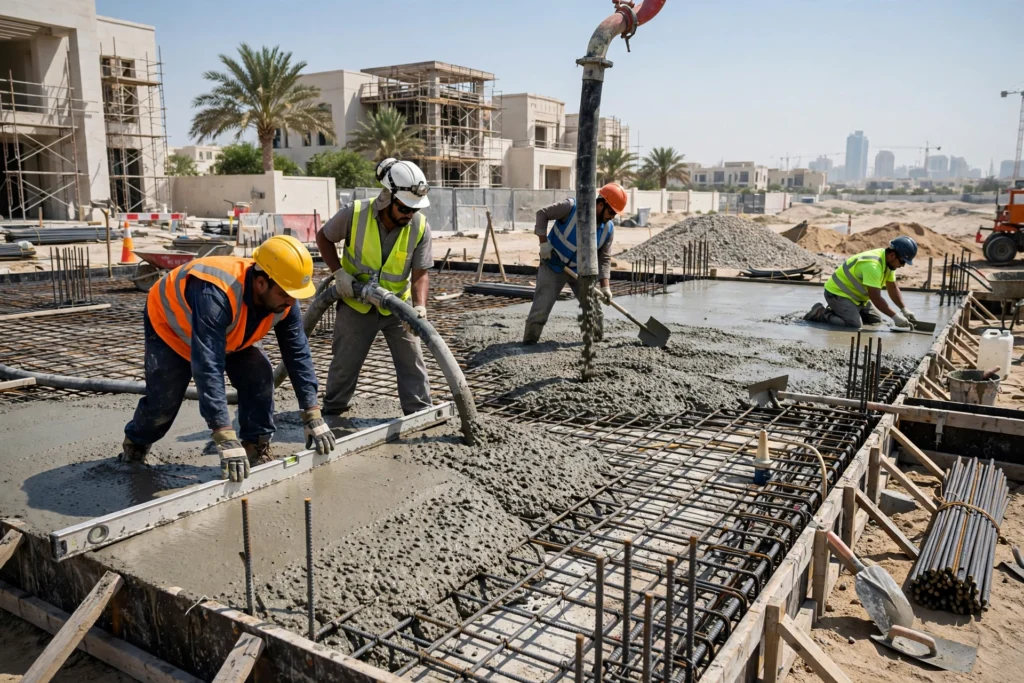
MEP, mechanical, electrical, and plumbing, is the nervous system of the villa. In a thirty-year-old villa, all of it is tired.
Electrical: old villas often have undersized wiring, no proper earthing, and distribution boards that belong in a museum. A full rewire for a four-bedroom villa runs 15,000 to 30,000 AED including a new distribution board, and it is worth every fils. While the walls are open, add what modern life needs: enough sockets, proper kitchen circuits, data points, and AC isolators. Retrofitting a socket after the painting is done costs ten times what it costs during the rewire.
Plumbing: replace old galvanized pipes with PPR or copper. Repiping a villa costs 10,000 to 25,000 AED depending on bathrooms. Replace the water tanks too. New food-grade polyethylene tanks cost 1,500 to 4,000 AED each, and check the tank stand while you are at it. I have seen rusted stands that were one windstorm from disaster.
Air conditioning: this is the big one. Old window units and ancient splits are electricity vampires. Most serious renovations replace the whole system. New high-efficiency split units for a villa run 20,000 to 45,000 AED installed. A ducted central system costs 40,000 to 80,000 AED but gives you even cooling and no ugly wall units. Size it properly either way. Get the load calculation done, not a guess.
Step 5: Layout Changes Worth the Money
Old villas have a particular floor plan: closed kitchen, small windows, a formal majlis nobody uses, and bathrooms the size of cupboards. Renovation is your chance to fix the plan, not just the surfaces.
Opening the kitchen to the living area is the highest-value change most people make. Check structure first, since that wall may be load-bearing. Budget 8,000 to 20,000 AED for the opening, lintel, and making good, before finishes.
Bathrooms deserve generosity. Old villa bathrooms are cramped and dark. Stealing half a meter from an adjacent bedroom or corridor to make a proper bathroom is almost always worth it. A full bathroom renovation with new tiling, sanitaryware, and fixtures runs 12,000 to 30,000 AED per bathroom at mid-range finishes.
Think about how you actually live. That formal majlis used twice a year could become a home office or a proper family room. A dead corridor could become storage. A sound flat roof can become a terrace, an entire extra living space for the price of access stairs and shade.
Step 6: Finishes That Survive Real Life
Only now, with structure, waterproofing, and systems sorted, do you get to the part everyone photographs.
Flooring: large-format porcelain tiles are the workhorse of Dubai renovations. They handle sand, pets, and dropped things without complaint. Budget 60 to 150 AED per square meter for good tiles plus 40 to 70 for installation. If the budget allows, engineered wood in bedrooms adds warmth, but keep it out of wet areas and entrance zones where sand will grind it down.
Kitchens: a proper kitchen renovation runs 25,000 to 60,000 AED for cabinets, countertops, and appliances at mid-range. Spend on the carcass quality and the countertop. Quartz or granite will still look new in fifteen years; the cheapest laminate will not survive five.
Paint: use washable, high-quality paint. With Dubai’s dust, you will wipe walls more than you think. A full villa repaint runs 8,000 to 18,000 AED. And do not paint until every dusty trade is finished and the AC is running. Paint hates dust, and renovation sites manufacture it.
What It Costs, Honestly
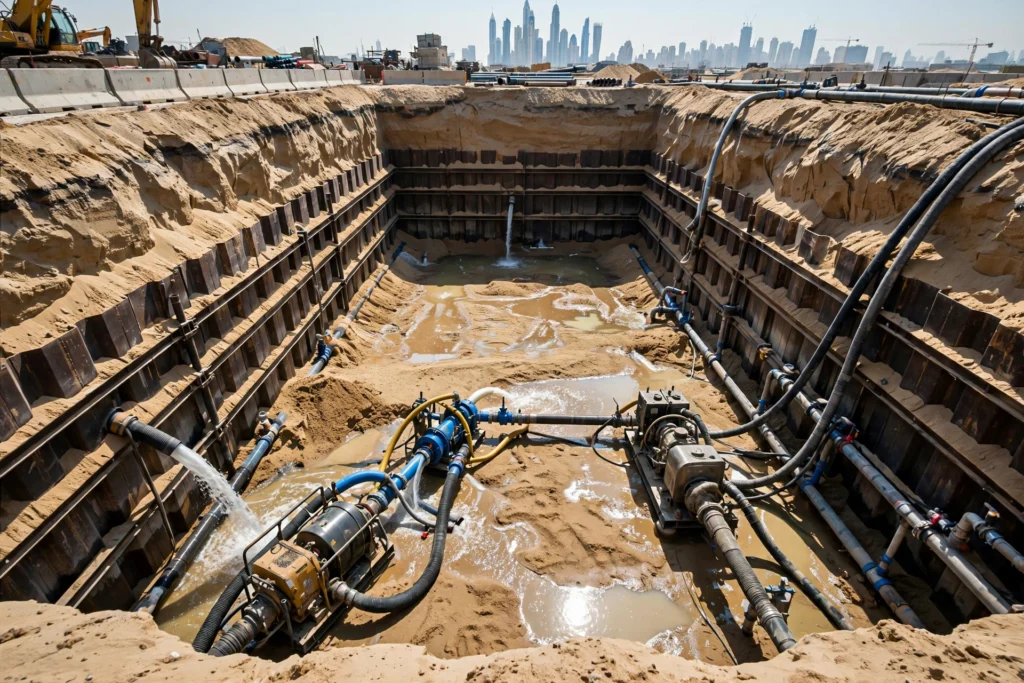
For a typical 350 square meter old villa, here are realistic all-in ranges I see on real projects. A cosmetic refresh, paint, floors, kitchens, bathrooms, no structural work: 400 to 700 AED per square meter, so 140,000 to 245,000 AED. A mid-range renovation with rewiring, repiping, new AC, layout changes, and full finishes: 800 to 1,500 AED per square meter, so 280,000 to 525,000 AED. A full gut renovation with extensions and structural work: 1,500 to 2,500 AED per square meter and up.
Add a 15 percent contingency on top of whatever number you land on. Old villas hide things. The contingency is not pessimism. It is experience.
Timelines
A cosmetic refresh takes two to three months. A mid-range full renovation takes four to seven months including permits. A major structural renovation with extensions takes eight to twelve months. Start paperwork before you pick tile colors, and plan where you will live. Renovating around occupants doubles the timeline and the stress. If you can move out, do.
Mistakes That Cost People Real Money
I will keep this short, because each of these has cost someone I know a five-figure sum. Skipping the structural survey and discovering problems mid-project. Hiring the cheapest contractor, who vanishes after the advance payment; always check a contractor’s trade license and past work. Changing the scope halfway through, which is the fastest way to blow both budget and timeline. Buying all the finishes before the design is finalized, then discovering nothing fits. And starting demolition before the NOC arrives, which can get your site sealed.
The Villa, Reborn
A renovated old villa has something a new build never will: character that cannot be manufactured. Done in the right order, survey, permits, structure, systems, layout, finishes, what you get is a villa with another thirty years in it, built on bones that were good from the start. That is worth doing properly.