Drive through any villa community in August and you can read the paintwork like a timeline. The villa painted last year still looks sharp. The one painted three years ago has a south-facing wall that’s gone chalky and pale, peeling in strips where the sun hits hardest. Villa painting Dubai owners commission isn’t like painting anywhere else, because the enemy here isn’t just time. It’s ultraviolet radiation, surface temperatures that cross 70 degrees on a dark wall, and humidity that swings from desert-dry to coastal-damp in a single day. Choose the wrong paint and you’ll be repainting in two years. Choose right, and prep properly, and you’ll get seven or eight.
This guide is about making the second outcome happen: which paints actually survive here, what preparation really matters, what it costs, and how to hire painters who won’t cut the corners that matter.
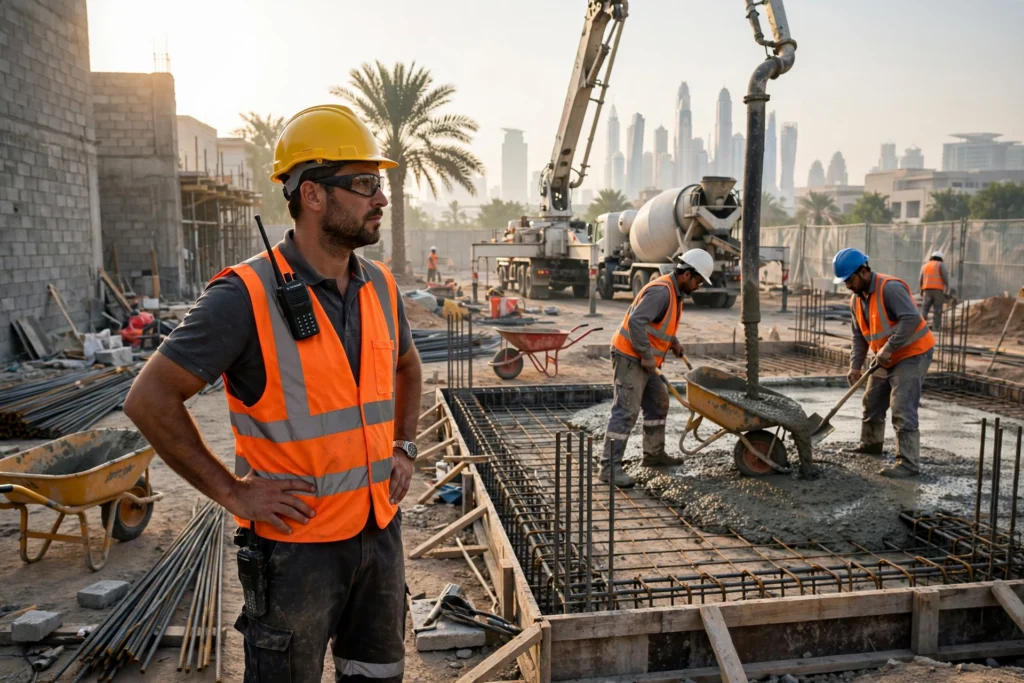
Why Paint Fails Faster in Dubai
Paint doesn’t just fade here; it gets attacked from four directions at once.
Ultraviolet light is the main killer. Dubai’s UV index spends half the year at levels that break down paint binders, the glue that holds pigment to the wall. Cheap paints chalk first: run your hand along the wall and it comes away dusty. That’s the binder disintegrating.
Heat cycling does the structural damage. A villa wall can swing 30 degrees between a summer afternoon and night. Everything expands and contracts, and rigid paint films develop hairline cracks, especially over concrete block and render. Once cracks open, the next problem walks right in.
Humidity and salt finish the job near the coast. Morning humidity condenses on walls, and in communities near the water there’s salt in the air. Moisture gets behind the paint film through those hairline cracks, and you get blistering and peeling in sheets. I’ve seen two-year-old paint jobs in coastal areas bubbling like they’ve got a rash.
Sand and dust sandblast everything slowly. It’s minor compared to the other three, but it’s why darker colors look tired faster; every tiny abrasion shows.
The takeaway: in Dubai, paint is not decoration. It’s the villa’s skin, and it needs to be specified like a protective system, not picked from a color card.
Exterior Paints That Survive the Sun
For outside walls, you want three properties above all else: UV resistance, flexibility (so it moves with the wall instead of cracking), and breathability (so trapped moisture can escape instead of blistering the film).
100% acrylic masonry paints are the baseline for a proper job. The “100% acrylic” part matters; it’s the binder chemistry that resists UV breakdown. Vinyl-acrylic blends are cheaper and they chalk faster. When a painter quotes you, ask what the binder is. If he can’t answer, that’s your answer about the painter.
Elastomeric coatings are the upgrade worth knowing about. These are thick, rubbery coatings that stretch, literally bridging hairline cracks as the wall moves. On villas with older render that’s already crazed with fine cracks, elastomeric is often the difference between a paint job that lasts three years and one that lasts eight. It goes on thicker, costs more per bucket, and needs experienced applicators, but for sun-blasted elevations it’s the professional choice.
Heat-reflective and “cool” paints use pigments that reflect infrared radiation, so the wall surface stays measurably cooler. In practice this means choosing lighter colors does half the job for free; a white or sand-colored wall can run 15 degrees cooler than a dark grey one in peak sun. If your heart is set on a dark facade, a reflective formulation at least fights back.
Silicone-based mineral paints are the premium end: extremely breathable, dirt-resistant, and they don’t peel because they bond chemically with mineral surfaces. Lovely on new render. Overkill on a villa that just needs a refresh, but worth knowing about for new builds.
Whatever you choose, read the technical datasheet, not the brochure. Look for stated UV resistance, elongation percentage (for elastomerics), and a recoat window. A paint that demands recoating within 4 hours in 45-degree heat is a paint your site team will struggle to apply correctly in July; that’s a scheduling note, not a product flaw.
Interior Paints, Room by Room
Inside, the enemies are smaller but the standards are higher, because you live with the result up close.
Living areas and hallways: washable acrylic emulsion in eggshell or satin finish. Hallways take abuse from bags, kids, and furniture; a finish you can wipe down without polishing through the paint is worth the small premium over flat matte. Eggshell hides wall imperfections better than gloss and still cleans up.
Bedrooms: low-VOC or zero-VOC paints. You sleep eight hours a night breathing that room’s air, and in a sealed, air-conditioned villa there’s not much fresh air exchange. The price difference is small and the peace of mind is real, especially with kids.
Kitchens and bathrooms: moisture-resistant acrylics with anti-mould additives. Dubai bathrooms without windows rely entirely on exhaust fans, and steam finds every cold corner. Anti-mould paint won’t fix bad ventilation, but it buys you margin. In kitchens, a satin finish near the stove wipes clean of the grease film that cooking leaves behind.
Ceilings: plain flat white ceiling paint, always. It hides unevenness, reflects light, and nobody ever regretted it. Don’t let anyone talk you into fancy ceiling colors in a villa; it shrinks every room visually.
One more interior note: if your villa has that slightly damp, musty smell in one corner, no paint fixes it. That’s a waterproofing or AC drainage issue wearing a paint disguise. Fix the moisture first, then paint.
Preparation Is Most of the Job
Here’s the uncomfortable truth the cheapest quotes leave out: the paint itself is maybe 30 percent of a lasting job. Preparation is the other 70.
On exteriors, that means pressure-washing every wall to remove dust, salts, and loose material. Then crack repair: hairline cracks get filled with exterior filler, larger ones get opened, cleaned, and filled properly. Chalky old paint gets a stabilizing primer or sealer; painting over a powdery surface is like building on sand. Only then do the topcoats go on, usually two, at the coverage rate on the datasheet, not stretched thin to save a bucket.
On interiors, it means filling every dent and nail hole, sanding smooth, cutting clean lines at ceilings and skirting, and properly masking floors, switches, and furniture. A good crew spends the first full day on a villa doing nothing but prep and protection. A bad crew starts rolling within the hour.
This is exactly why two quotes can differ by 40 percent for the “same” job. They’re not the same job. One includes prep, primer, and two proper coats; the other is a single rushed coat over whatever’s there. The second one looks fine for eighteen months. Then August arrives.
What Villa Painting Costs in Dubai (Real AED Numbers)
For a typical 4-bedroom villa, here are the ranges I see on honest quotations:
Interior repaint: AED 4,000 to 7,000 for walls and ceilings throughout, assuming walls are in reasonable condition. Heavy patching, color changes from dark to light (which need an extra coat), and high ceilings push it up.
Exterior repaint: AED 8,000 to 15,000 depending on villa size, wall condition, and access. Scaffolding or a boom lift for double-storey elevations adds AED 1,500 to 3,000. Elastomeric coatings add 20 to 30 percent over standard acrylic.
Full interior plus exterior: AED 12,000 to 20,000 for a complete refresh of a mid-size villa.
What’s usually extra: woodwork and metalwork (gates, pergolas, window frames need different products), wallpaper removal, and any plaster repair beyond minor filling. Get the quote itemized: product names, number of coats, what’s primed, what’s masked. “Full villa painting, AED 5,000” without a breakdown is not a quote; it’s a wish.
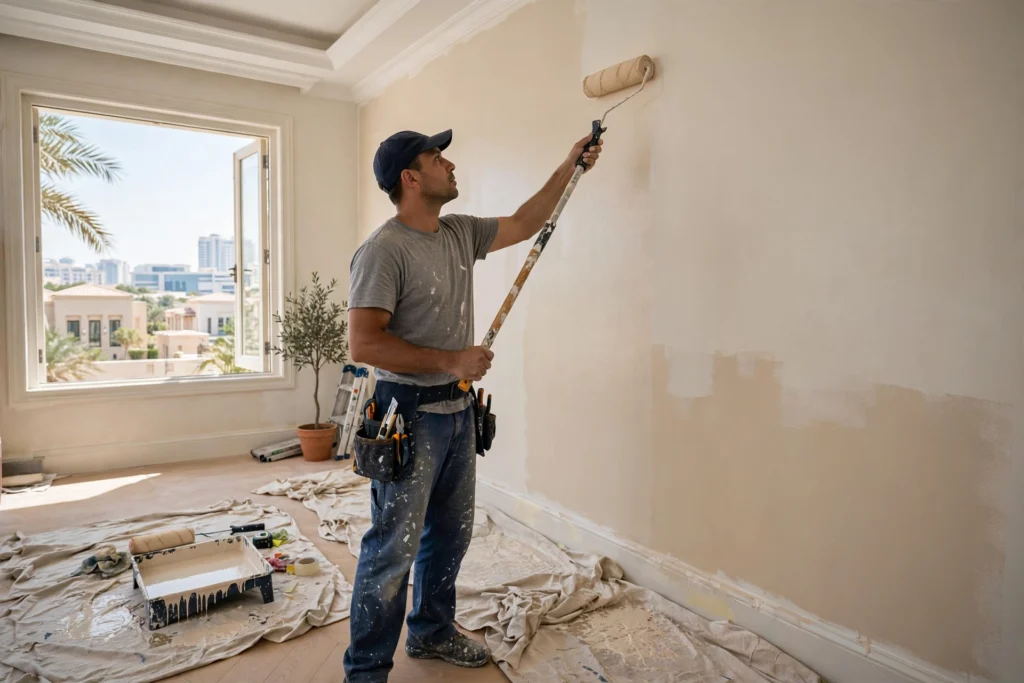
When to Paint
Exteriors: October to April. This is the single easiest win. Paint applied in 45-degree heat can skin over before it bonds, trapping solvents underneath and shortening its life. Cooler months give you proper curing, and crews work faster when they’re not melting. If you must paint in summer, insist the crew works early mornings on sun-struck elevations and follows the datasheet’s temperature limits.
Interiors: any time. Air-conditioning makes interiors season-independent. One practical tip: many painting companies run summer promotions when exterior work slows down, so June to September is often the cheapest window for interior repaints. Ask; the discount is real.

Hiring Painters: Green Flags and Red Flags
Green flags: a written scope naming the products and number of coats; a site visit before quoting; proper protection of floors and furniture; a supervisor who checks lines and coverage, not just speed; daily cleanup; and a warranty stated in plain terms (two years on workmanship is fair for exteriors).
Red flags: “one coat is enough” (it never is, not here); no primer on bare or chalky surfaces; cash-only with no contract; a crew that starts painting before any prep; and a quote dramatically lower than everyone else’s. That last one isn’t a bargain. It’s the prep being deleted.
Ask for two recent villa references in your area and actually drive past them. Paintwork tells the truth from the street.
The Finish That Lasts
A good paint job in Dubai is a system: the right chemistry for the exposure, obsessive preparation, two honest coats, applied in the right season by people who’ll still answer the phone in two years. Get those five things right and your villa holds its color through summer after summer, while the neighbor’s south wall chalks itself into an early repaint. In this city, the sun always wins eventually. The goal is just to make it work for its victory.