Building a Swimming Pool in Dubai: Costs, Permits, and Design Tips
There’s something about a swimming pool in Dubai that goes beyond luxury. With eight months of heat every year, a well-built pool isn’t a status symbol, it’s the most-used room of the house. But building one here is nothing like digging a hole and filling it with water. Between the permits, the soil conditions, and the cost of getting it wrong, this is one project where homework up front saves real pain later.
First: Which Pool Type Actually Suits You?
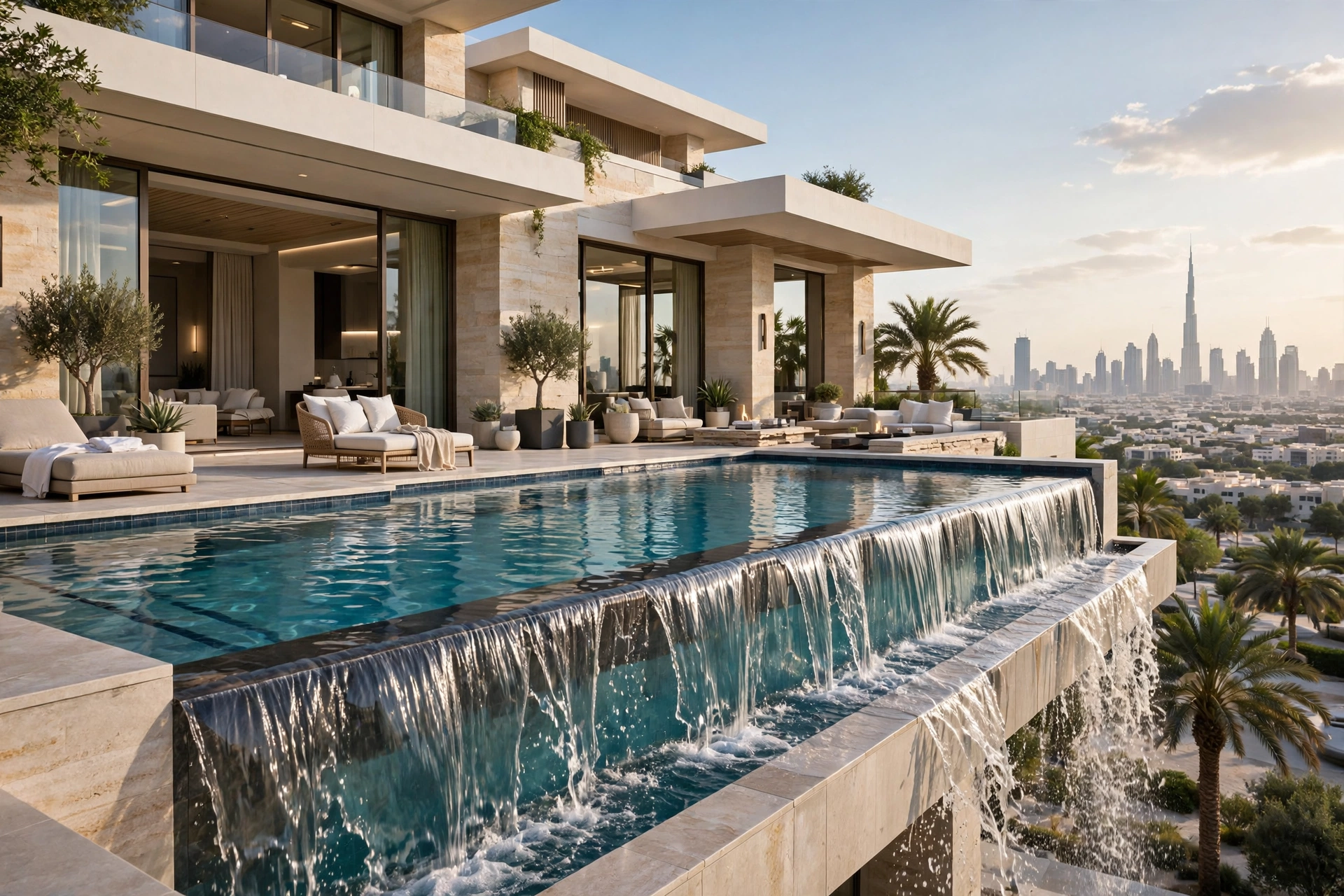
Most residential pools in Dubai fall into two camps, and the choice affects your budget more than almost anything else.
Skimmer pools are the standard. A skimmer pulls water off the surface through a small opening in the pool wall, and the plumbing runs back to the filter. They’re simpler, cheaper to build, and easier to maintain. For most villas, this is the right answer.
Infinity (overflow) pools are the ones you see in hotel brochures — water spilling over one or more edges into a hidden catch basin, then pumped back in. Stunning, yes. But the water chemistry is harder to keep stable, the filtration system is more complex, and the construction cost runs noticeably higher. They make sense when you’ve got a view worth showing off — a waterfront plot or a rooftop with a skyline angle. On a ground-floor villa boxed in by neighbours’ walls, you’re paying a premium for a feature nobody can fully appreciate.
What Does It Actually Cost? (Approximate)
Let’s be direct, because this is the question everyone asks. For a standard residential skimmer pool in Dubai, say 8 metres by 4 metres, built in a villa garden, you’re typically looking at roughly AED 90,000 to AED 180,000 for a complete build, including tiling, coping, equipment, and basic landscaping touch-ups around it. Smaller plunge pools can come in lower, around AED 60,000 to 90,000 approximate. Infinity-edge designs add a premium, often pushing the same-sized pool to AED 150,000 to 250,000 or more, approximate.
Why the wide ranges? The finish alone can swing the price dramatically. Basic ceramic tiles at one end, natural stone or glass mosaic at the other. Then there’s the equipment: pump, filtration, salt chlorinator or UV system, LED lighting, heating. Each line item is a real decision with real money attached.
Heating deserves its own mention. Dubai summers don’t need it, obviously. But if you want to swim comfortably from November through February, you’ll want a heat pump. Budget around AED 15,000 to 30,000 approximate for a decent one, and be honest with yourself about whether you’ll actually swim in winter before you spend it.
Get at least three quotes, itemised the same way. A quote that’s 30% cheaper than the others usually isn’t a bargain — it’s missing something.
Permits and NOCs: The Part Nobody Warns You About
This is where Dubai pool projects get delayed, and it’s almost never the construction itself that causes the hold-up.
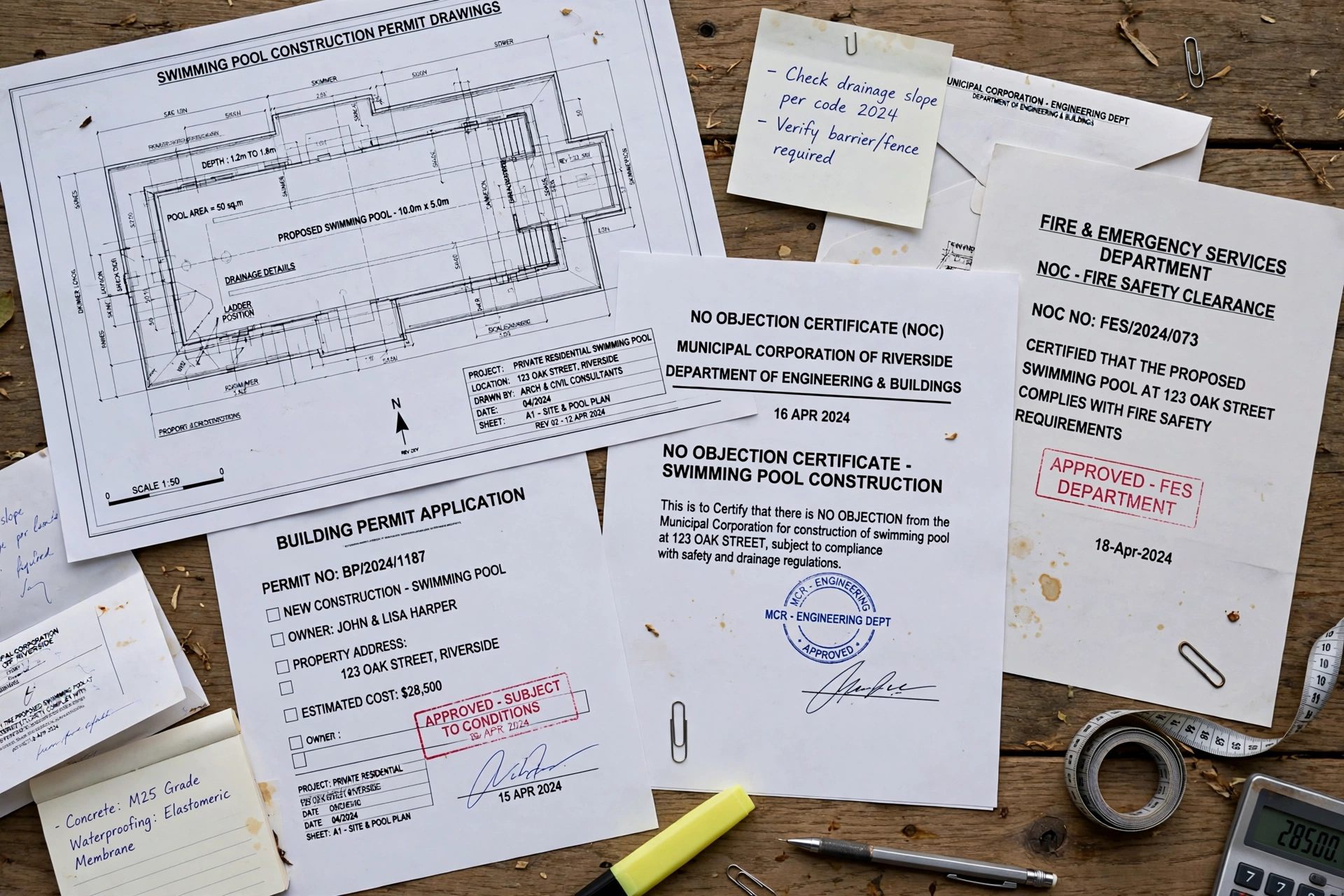
If you’re in a villa community, your developer or community management — think Emaar, Nakheel, Dubai Properties, or whoever manages your area — will require an NOC (No Objection Certificate) before any excavation begins. They’ll want to see drawings, structural details, and confirmation that you’re not cutting into shared infrastructure or utility lines. Allow two to four weeks for this, sometimes longer.
You’ll also need to check municipality requirements depending on your plot. Freehold areas have their own approval layers, and if your pool sits close to a boundary wall or a main road, expect extra scrutiny.
Then there’s the DEWA side. Pools are heavy on electricity and water. Some communities require you to confirm your villa’s electrical load can handle the pool equipment, particularly with a heat pump. Water filling isn’t free either — a standard pool takes thousands of litres, and you’ll see it on the bill.
Filtration and Water Chemistry in This Climate
Dubai’s heat is brutal on pool water. Algae grows fast, chlorine burns off faster than in cooler climates, and dust settles on the surface daily. The equipment you choose matters more here than it would in, say, London.
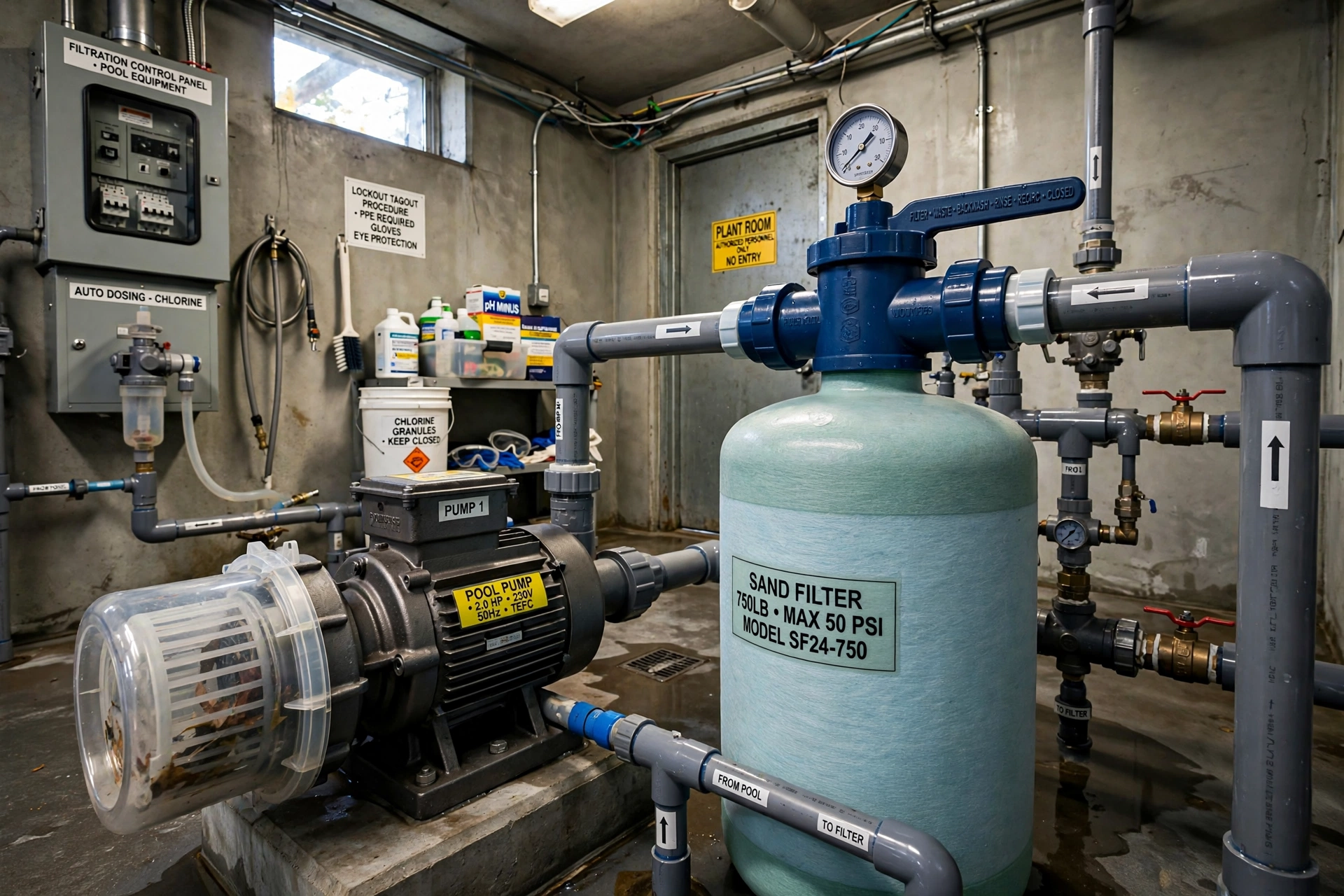
A sand filter paired with a good pump is the workhorse setup, and it’s fine for most homes. Cartridge filters are more efficient but need regular cleaning. A salt chlorinator is worth considering — it converts salt into chlorine automatically, which means steadier water chemistry and less daily chemical handling for you. They’re common in Dubai for good reason.
UV or ozone systems can supplement chlorine, but they don’t replace it. Anyone who tells you a pool in Dubai can run chlorine-free year-round is selling you something.
Here’s the practical reality: plan for weekly maintenance, or budget the time to do it yourself. Skimming, checking chemical levels, backwashing the filter, cleaning the pump basket. A pool that looks perfect in the handover photos can turn green in two weeks of neglected summer heat.
Common Mistakes We’ve Seen
Going too big. The bigger the pool, the bigger the water bill, the chemical bill, and the maintenance. Most families use a fraction of the pool they built. Size it for how you’ll actually use it.
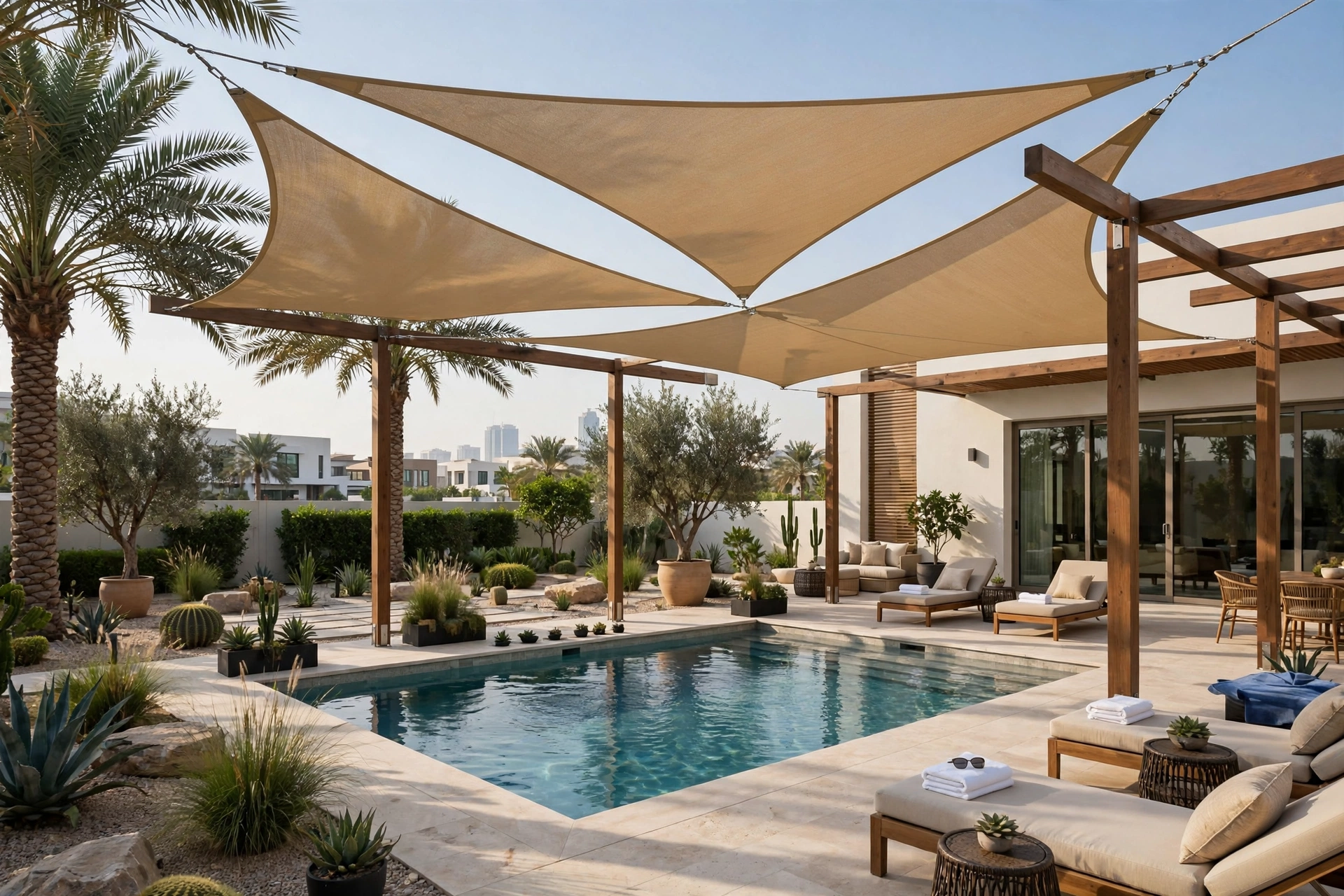
Skipping the shade plan. A pool in full Dubai sun is a hot bath by July. Some form of shade — a pergola, sail shades, strategic planting — makes the pool usable in summer and cuts chemical consumption. Factor it into the design, not as an afterthought.
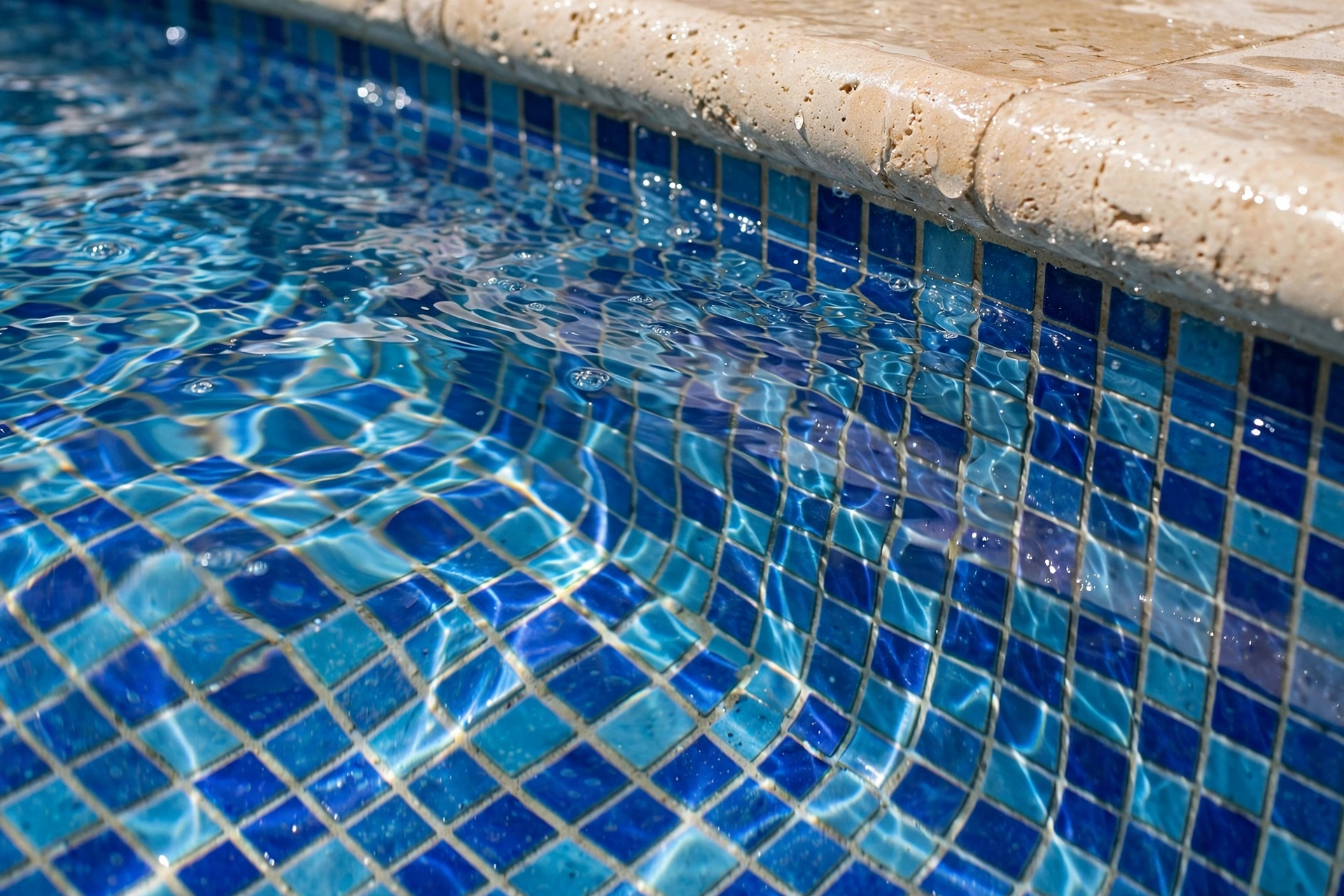
Cheap tiling. This is the most common regret. Poor-quality tiles fade, crack, and stain, and re-tiling a pool means draining it and starting over. The cost difference between “fine” and “good” is small relative to the total project. Don’t save money here.
No overflow planning for rain. Dubai’s occasional heavy rains can flood a pool in hours. Make sure the design includes proper overflow drainage away from the house. It rains rarely, but when it does, it pours.
Forgetting access for equipment. The pump, filter, and chlorinator need a plant room or housing that’s ventilated and accessible for servicing. Tucked away somewhere nobody can reach, they become a maintenance nightmare.
A Word on Timelines
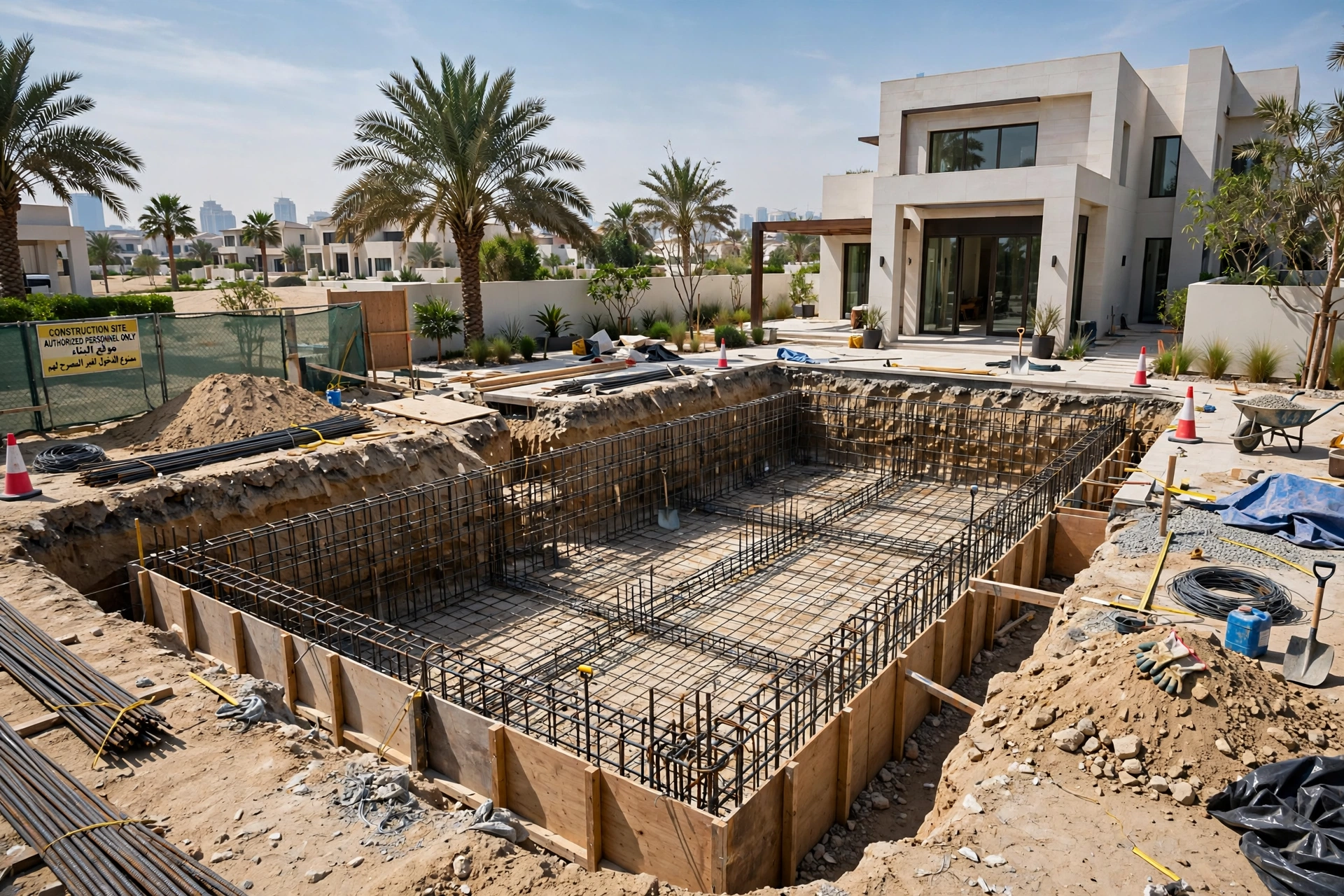
A straightforward residential pool typically takes six to ten weeks from excavation to fill, assuming permits are already in hand. So when a contractor promises “done in a month,” ask whether that includes approval time. It usually doesn’t.
And plan around the seasons. Starting construction in autumn means the pool is ready for the cooler months when swimming is at its best. Starting in June means excavation in 48-degree heat, which slows everything down.
Final Thought
A pool in Dubai is one of the best investments you can make in your home — if it’s designed for this climate, built by people who know the approval maze, and finished with materials that survive the heat. Rush the planning or cut corners on the equipment, and it becomes the most expensive headache on the property.
Before you break ground, consult a qualified pool contractor who can walk your plot, test the soil, and give you an itemised quote that includes every permit you’ll need. The right questions at the start save months of trouble later.